
A guest post by Dr Michael Shaw, Senior Lecturer in English Studies at the University of Stirling.
In his History of Sexuality, Michel Foucault famously critiqued the ‘repressive hypothesis’. Far from simply being repressed or restricted over the nineteenth to twentieth centuries, Foucault argued that there was a proliferation of discussion on sexuality at this time, an ‘incitement to speak about it’. I’ve often wondered about how this idea might apply to Scotland, which is sometimes portrayed as a nation that was either silent or quiet on homosexuality before the 1960s. How extensively would homosexuality have been discussed in Scotland between the end of the nineteenth century and the beginning of the twentieth, and in what contexts? How would it have been alluded to? Was the treatment always hostile? And what materials might still exist to help us understand these discourses today?
Over the past year I’ve been working on a Royal Society of Edinburgh-funded project, titled ‘Homosexuality and the Scottish Periodical Press 1885-1928’, to address the above and related questions. Having done some initial research on the representation of the Oscar Wilde trials in the Scottish press, and knowing how extensively his trials were covered in some Scottish newspapers, I wanted to think more broadly about the ways in which Scottish print culture engaged with homosexuality, beyond criminal trials and police reports. How might queer novels, or sexological writings, have been received in Scotland, for instance? Were poems or stories alluding to same-sex love published in the Scottish press?
I knew I would likely have to confront a range of ‘negative results’ during this project: there would undoubtedly be newspapers and magazines that enforced a studied silence on homosexuality. Those silences themselves are of interest, but I suspected that there would also be more coverage of homosexuality, beyond criminal cases, than tends to be acknowledged.
The project took me to various locations, ranging from Dumfries to Dingwall. Rather than rely on electronic databases, I wanted to work with physical collections as much as possible – making sure that lesser-known titles were consulted as much as the more obvious newspapers and magazines. Given the vibrancy of Scottish periodical culture c.1880-1930, I knew there was no way I could be exhaustive with this study. But I wanted to build a thorough sample, by exploring how periodicals from different locations, with differing political persuasions and religious associations, speaking to different professions or groups, discussed (or didn’t discuss) homosexuality.
What became clear was that there were a number of discussions of, and allusions to, homosexuality in Scotland over this period in the press, although there were differences in the way the topic was handled across different years and locations. It also became clear that discussion of homosexuality and homosexuals was not always hostile (future publications will discuss these findings in more detail).
Sometimes, it was in seemingly unlikely places that expressions of sympathy were found. The Scots Observer (1926-34), for instance, was a weekly newspaper devoted to representing the presbyterian churches of Scotland, hoping to express ‘the collective aims and ideas of the Scottish Presbyterian Churches’. The Scots Observer was also concerned with the Scottish literary renaissance and intellectual developments of the day, and it did not always manage to reconcile its differing concerns. The editor, William Power – who was not only a supporter of the Renaissance, but would go on to become the leader of the Scottish National Party during the Second World War – later noted that the political and intellectual sympathies of the paper drew critique from some of the church leaders.
The Scots Observer’s more provocative dimensions are evident in an anonymous 1927 review of a book titled The Invert and his Social Adjustment by ‘Anomaly’ (who describes himself in the book as a Roman Catholic, aged 40). The review not only discusses homosexuality but calls for greater tolerance of homosexuals:
Of recent years it has been found that a certain proportion of people […] are as instinctively homosexual as the normal individual is heterosexual. […] Such people have special and very difficult problems in life to face, and an idea of what these are and how they may be faced is given in a recently published book “The Invert and His Social Adjustment’. […] The writer, who is himself an invert, and also a devout Roman Catholic, makes it clear that the incidence of immorality among inverts is precisely the same as among normal people, and he also shows how, in the necessary process of “sublimation,” socially valuable qualities may be developed.

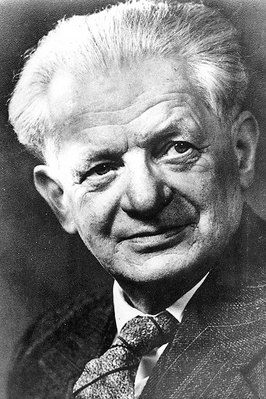
Much like the book, homosexuality is represented as ‘abnormal’ here but it is simultaneously characterised as being as ‘instinctive’ as heterosexuality, and the review highlights the difficulties homosexuals in the early twentieth century had to face. The reviewer also appears to be convinced by the author’s dissociation of homosexuality from immorality. Following these comments, a quote is included from the ‘wisely written’ introduction to the book by Dr Robert H Thouless, a Lecturer in Psychology at the University of Glasgow at that time. Thouless stated that the book helps to ‘approach the problems of inversion with knowledge and charity’, which is the note the review ends on. In his introduction, Thouless also noted that ‘the virtuous love of a homosexual is as clean, as decent, and as beautiful a thing as the virtuous love of one normally sexed’.
The Scots Observer’s review does stress the ‘necessary’ process of sublimation (deflecting sexual thoughts towards non-sexual activities), which appears to depart from the book’s ambivalence around physical intimacy: ‘Anomaly’ focuses on challenging ‘excessive indulgence’, while noting that homosexual love is ‘no more susceptible to sublimation into an absolutely non-physical emotion than the love of man for a woman’. While there is no negative commentary on the ideas voiced in The Invert and his Social Adjustment, The Scots Observer does appear to take a more conservative stance on physical intimacy in its review.
Nevertheless, in choosing to give notice to this book, and in sympathising with its calls for greater toleration of homosexuals, we witness an example of the ways in which Scottish newspapers and magazines, including religious titles, could contribute to expanding awareness of homosexuality in the 1920s, even if – going back to Power – this may have been one of the contributions that certain church leaders disapproved of. It is clear that Scottish periodicals were not always concerned with repressing discourse around homosexuality; not uncommonly, they were sites to discuss, analyse, condemn and sympathise with homosexuals across the 1885-1928 period.
If you would like to provide a guest article for QueerScotland, please do get in touch.

 Queer Scotland
Fascinating.
LikeLike