Reclaim The Frame brings Hettie Macdonald’s much-loved debut feature Beautiful Thing back to audiences for its 30th anniversary.
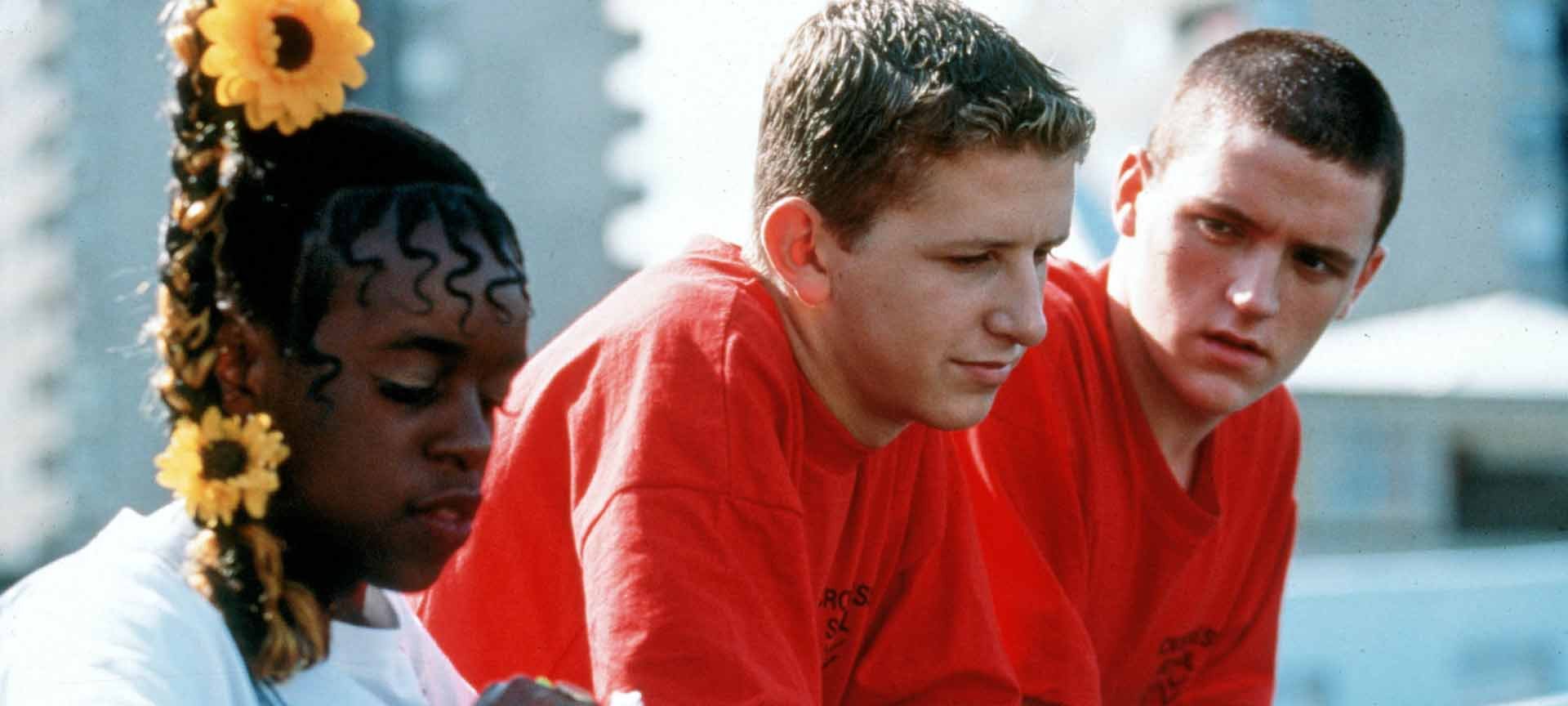
A tender story of first love, belonging and growing up, Beautiful Thing follows neighbours Jamie and Ste as their friendship deepens into romance over the course of one long, hot summer. Alongside them are Jamie’s mum Sandra and friend Leah, two women with humour, struggles and stories of their own.
Directed by Hettie Macdonald and adapted for the screen by Jonathan Harvey from his acclaimed play, Beautiful Thing transforms the familiar landscape of a council housing estate into a world alive with warmth, wit and bold primary colours, with the music of Mama Cass beating at its heart.
Thirty years on, it’s a joy to discover, or rediscover, this much-loved film on the big screen.
Exploring environments across Scotland, 14 writers share the places and spaces which define their queer history.
who will be remembered here reconsiders and reimagines the built and natural environment through a queer lens, uncovering stories full of hope and humanity, and the collection features images from HES archive.
Contributors are Ali Smith, Damian Barr, Ink Asher Hemp, Mae Diansangu, Ashley Douglas, Amanda Thomson, Jeff Meek, Rona Munro, MJ Deans, Louise Welsh, Ever Dundas and Johnny McKnight, along with Lewis Hetherington and CJ Mahony who are also the book’s curators. The book features works in English, Scots and Gaelic.
2025 marks a significant point in LGBTQ history, being 30 years since the first major Pride event in Scotland. Queer history is an important part of Scotland’s past, but it is largely absent from records. By making invisible stories visible, who will be remembered here ‘captures something of the richness, complexity and beauty of a history that belongs to all of us’.
The book will be released in the 14 of August and can be pre-ordered.
How do fancy writing for Queer Scotland? Sadly there is no budget, so we rely on the generosity of strangers. Indeed, recently we had a whip-round for tea-bags. But, if you fancy yourself as budding writer/journalist/busy-body, then this would a step in that direction. If you have ideas for LGBTQ historical content, please get in touch: jeff@queerscotland.com.
This year the National Library of Scotland is 100 years old and we asked people to share the books they love with us. To mark Pride, our panel of LGBT+ individuals will talk about the books and publications that have influenced their lives.
Panellists
Sasha De Buyl (Chair) is a writer and programmer from Cork. Their work has been published in ‘Gutter’ and ‘The Stinging Fly’ among others. and They are currently undertaking a DFA in Writing at the University of Glasgow.
Graeme Hawley (Head of Published Collections at National Library of Scotland) works at the Library and is used to dealing with millions of books. But out of that huge collection some are more personally significant than others. He shares the books that were helpful to him in his coming out, and a tiny entry in ‘The List’ with a big memory attached to it.
Sigrid Nielsen co-founded Lavender Menace, Scotland’s first lesbian and gay community bookshop, as a partnership in 1982. Sigrid managed author readings, mail order lists, and bookshop events. She left as a partner in 1987 and later co-edited ‘In Other Words: Writing as a Feminist’ (Hutchinson Education, 1987) and published articles and short stories. In 2019, she and Bob revived Lavender Menace as an LGBT+ books archive and heritage organisation.
Other panellists to be announced.
Our audience will also be invited to share memories and recommendations of books that have influenced them.
This event has been developed in partnership with Lavender Menace and will be highlighting their queer books archive.
This event has been programmed as part of WestFest – Glasgow’s biggest cultural and community festival.
Gray’s School of Art alumnus, Bart Grabski, hasbeen selected as one of only ten artists to feature in the Queer & Now exhibition, a landmark project organised by Dundee’s Shaper/Caper dance company funded by The National Lottery Heritage Fund.
The exhibition, which runs alongside the acclaimed Small Town Boys choreographed by Shaper/Caper’s Artistic Director Thomas Small, explores the rich and diverse experiences of the LGBTQ+ community, with a particular focus on themes from the 1980s and 1990s, including Section 28 and queer nightlife.
Queer & Now showcases new work created by artists who delved into the LGBTQ+ culture of the past, working closely with OurStory Scotland to collect and curate oral histories that have deeply informed their practice.
Bart’s piece, ‘Oral Portraits’, is a poignant exploration of Aberdeen’s queer club scene during the AIDS crisis, documenting a time when underground spaces offered solidarity, resilience, and joy to the community despite oppressive laws.
Reflecting on his artistic journey, Bart said: “For many, the dance floor wasn’t just a place to escape—it was a place to become. In a world that tried to erase our community, those nights were the loudest forms of existence. This project isn’t just about remembering; it’s about honouring the resilience, the joy, and the unapologetic celebration of life that thrived in those spaces.”
Bart’s work weaves together evocative photographic portraits with a soundscape of audio recordings, featuring intimate interviews that echo the spirit of those times. He further explained, “The oral history recordings have been the soul of this project. Each story is a thread in the tapestry of our collective history, revealing not only the struggles but also the triumphs and moments of joy.”
Jill and Colin, who feature prominently in Bart’s work, offer deeply personal insights into the significance of Aberdeen’s queer nightlife. Jill reflects on her self-discovery and the sanctuary provided by Club 2000, where “music and companionship offered an escape from societal repression.” Colin shares his experience with the Gay Switchboard and health promotion during the AIDS crisis, highlighting the importance of safe spaces like Daisy’s Disco and Castros in fostering a sense of belonging and self-acceptance. Colin noted, “Those spaces were not just clubs; they were our lifelines, places where we could be who we really were without fear.”
In addition to his own personal contribution, Bart also conducted interviews with two LGBTQIA+ alumni of Gray’s School of Art, Mark and Cliff, who reflect on their creative practices during those pivotal decades. Both discuss how queer spaces, art, and creativity within Aberdeen provided an outlet for expression and community in the face of social and political challenges.
Mark shared his experience at Gray’s School of Art saying, “Art School enabled me to facilitate my creativity as an honest reflection of my true queer identity. This creative exploration would not have been possible outwith such a liberating environment.”
Cliff, meanwhile, recalls the vibrant creative community of Gray’s School of Art and how the club scene was a lifeline for many: ” Art school was a lifesaver for me, a place where I could be myself, but the queer club scene was where I found my tribe—people who embraced and celebrated their identities.”
Yolanda Aguilar, Executive Director, Shaper/Caper said: “Sharing the history of the LGBT+ community in Aberdeen is a vital thread in the fabric of the city’s past. Sharing these stories allow us to honour the resilience, struggles, and triumphs of individuals who have often been marginalised.
“Gray’s alumnus, Bart Grabski’s contribution to the Queer & Now project has been most relevant in terms of showcasing his unique artistic and interdisciplinary practice, complementing an impressive team of selected artists, whilst spotlighting the North East of Scotland as the fourth city with the highest LGBT+ population, as revealed by this summer’s census.
“Gray School of Art plays an important role by shedding light on the contribution of the LGBT+ community, promoting inclusivity, and ensuring that future generations see the rich diversity that has always been part of Aberdeen’s identity”
The exhibition has travelled across Scotland, opening in July 2024 at Perth Theatre and moving to Inverness, Stirling, and Glasgow, before arriving in Aberdeen at the Anatomy Rooms Arkade Studios from October. The highly anticipated Artist Talk will take place in Aberdeen at the Anatomy Rooms on Friday, 18th October at 4 pm, offering visitors a chance to hear firsthand from artists about the creative process and the stories that shaped their work.
The ‘Queer & Now’ exhibition runs parallel to the ‘Small Town Boys’ show, which delves into queer nightlife in the 1980s through dance and spoken word, offering a complementary exploration of LGBTQ+ experiences during a turbulent time in history. As part of the tour in Aberdeen, ‘Small Town Boys’ will be showcased at Cheers Bar, ensuring that the city has the opportunity to fully engage with both events.
Gray’s School of Art and the wider RGU community are immensely proud of Bart’s accomplishments. His work continues to elevate underrepresented voices, reinforcing the institution’s role as a vital catalyst for social change and cultural discourse. We invite everyone to attend the exhibition and the artist talk, not only to celebrate the legacy of LGBTQ+ histories but also to witness the profound impact of Gray’s School of Art on its alumni and the community at large.
A guest post by Dr Michael Shaw, Senior Lecturer in English Studies at the University of Stirling.
In his History of Sexuality, Michel Foucault famously critiqued the ‘repressive hypothesis’. Far from simply being repressed or restricted over the nineteenth to twentieth centuries, Foucault argued that there was a proliferation of discussion on sexuality at this time, an ‘incitement to speak about it’. I’ve often wondered about how this idea might apply to Scotland, which is sometimes portrayed as a nation that was either silent or quiet on homosexuality before the 1960s. How extensively would homosexuality have been discussed in Scotland between the end of the nineteenth century and the beginning of the twentieth, and in what contexts? How would it have been alluded to? Was the treatment always hostile? And what materials might still exist to help us understand these discourses today?
Over the past year I’ve been working on a Royal Society of Edinburgh-funded project, titled ‘Homosexuality and the Scottish Periodical Press 1885-1928’, to address the above and related questions. Having done some initial research on the representation of the Oscar Wilde trials in the Scottish press, and knowing how extensively his trials were covered in some Scottish newspapers, I wanted to think more broadly about the ways in which Scottish print culture engaged with homosexuality, beyond criminal trials and police reports. How might queer novels, or sexological writings, have been received in Scotland, for instance? Were poems or stories alluding to same-sex love published in the Scottish press?
I knew I would likely have to confront a range of ‘negative results’ during this project: there would undoubtedly be newspapers and magazines that enforced a studied silence on homosexuality. Those silences themselves are of interest, but I suspected that there would also be more coverage of homosexuality, beyond criminal cases, than tends to be acknowledged.
The project took me to various locations, ranging from Dumfries to Dingwall. Rather than rely on electronic databases, I wanted to work with physical collections as much as possible – making sure that lesser-known titles were consulted as much as the more obvious newspapers and magazines. Given the vibrancy of Scottish periodical culture c.1880-1930, I knew there was no way I could be exhaustive with this study. But I wanted to build a thorough sample, by exploring how periodicals from different locations, with differing political persuasions and religious associations, speaking to different professions or groups, discussed (or didn’t discuss) homosexuality.
What became clear was that there were a number of discussions of, and allusions to, homosexuality in Scotland over this period in the press, although there were differences in the way the topic was handled across different years and locations. It also became clear that discussion of homosexuality and homosexuals was not always hostile (future publications will discuss these findings in more detail).
Sometimes, it was in seemingly unlikely places that expressions of sympathy were found. The Scots Observer (1926-34), for instance, was a weekly newspaper devoted to representing the presbyterian churches of Scotland, hoping to express ‘the collective aims and ideas of the Scottish Presbyterian Churches’. The Scots Observer was also concerned with the Scottish literary renaissance and intellectual developments of the day, and it did not always manage to reconcile its differing concerns. The editor, William Power – who was not only a supporter of the Renaissance, but would go on to become the leader of the Scottish National Party during the Second World War – later noted that the political and intellectual sympathies of the paper drew critique from some of the church leaders.
The Scots Observer’s more provocative dimensions are evident in an anonymous 1927 review of a book titled The Invert and his Social Adjustment by ‘Anomaly’ (who describes himself in the book as a Roman Catholic, aged 40). The review not only discusses homosexuality but calls for greater tolerance of homosexuals:
Of recent years it has been found that a certain proportion of people […] are as instinctively homosexual as the normal individual is heterosexual. […] Such people have special and very difficult problems in life to face, and an idea of what these are and how they may be faced is given in a recently published book “The Invert and His Social Adjustment’. […] The writer, who is himself an invert, and also a devout Roman Catholic, makes it clear that the incidence of immorality among inverts is precisely the same as among normal people, and he also shows how, in the necessary process of “sublimation,” socially valuable qualities may be developed.
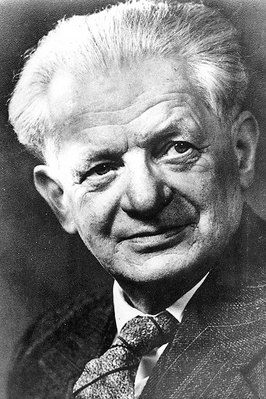
Much like the book, homosexuality is represented as ‘abnormal’ here but it is simultaneously characterised as being as ‘instinctive’ as heterosexuality, and the review highlights the difficulties homosexuals in the early twentieth century had to face. The reviewer also appears to be convinced by the author’s dissociation of homosexuality from immorality. Following these comments, a quote is included from the ‘wisely written’ introduction to the book by Dr Robert H Thouless, a Lecturer in Psychology at the University of Glasgow at that time. Thouless stated that the book helps to ‘approach the problems of inversion with knowledge and charity’, which is the note the review ends on. In his introduction, Thouless also noted that ‘the virtuous love of a homosexual is as clean, as decent, and as beautiful a thing as the virtuous love of one normally sexed’.
Dr Robert H Thouless
The Scots Observer’s review does stress the ‘necessary’ process of sublimation (deflecting sexual thoughts towards non-sexual activities), which appears to depart from the book’s ambivalence around physical intimacy: ‘Anomaly’ focuses on challenging ‘excessive indulgence’, while noting that homosexual love is ‘no more susceptible to sublimation into an absolutely non-physical emotion than the love of man for a woman’. While there is no negative commentary on the ideas voiced in The Invert and his Social Adjustment, The Scots Observer does appear to take a more conservative stance on physical intimacy in its review.
Nevertheless, in choosing to give notice to this book, and in sympathising with its calls for greater toleration of homosexuals, we witness an example of the ways in which Scottish newspapers and magazines, including religious titles, could contribute to expanding awareness of homosexuality in the 1920s, even if – going back to Power – this may have been one of the contributions that certain church leaders disapproved of. It is clear that Scottish periodicals were not always concerned with repressing discourse around homosexuality; not uncommonly, they were sites to discuss, analyse, condemn and sympathise with homosexuals across the 1885-1928 period.
If you would like to provide a guest article for QueerScotland, please do get in touch.
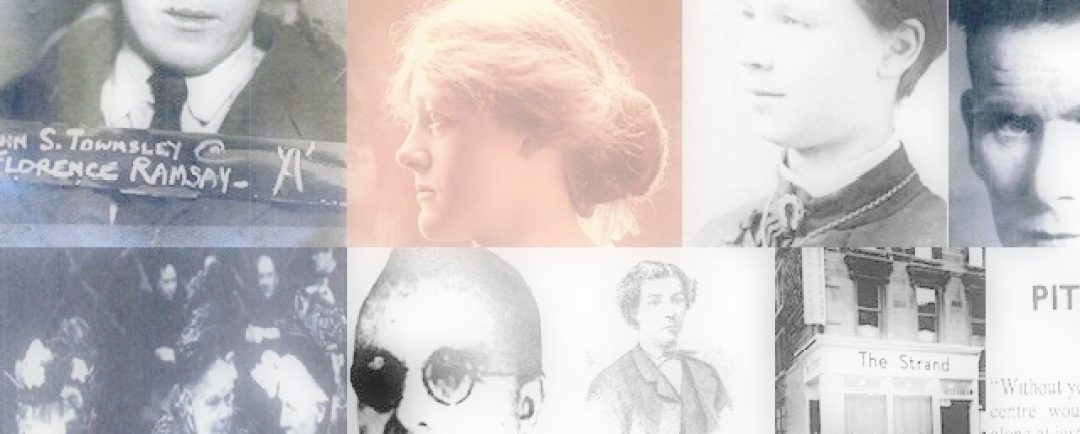
I first encountered the Whitehats in Angus McLaren’s Sexual Blackmail, almost 20 years ago. He noted that the group had caused some anxiety in Glasgow and had exercised local MP George Buchanan. As I was, at the time, undertaking oral history interviews with gay and bisexual men for my PhD, I put the Whitehats to the side. That was until I met Andrew Davies at a conference in St Andrews. I had given a paper in which I had briefly mentioned the Whitehats and he pointed me in the direction of Glasgow police archives. I had already uncovered a trial record for the ‘leader’ of the Whitehats, William Patton or Paton, but at the Glasgow archives, I was able to put a face to the name. Also there, were police records for the other members of the gang, a group of stoney-faced men in their twenties, images that contrasted with their descriptions in the press and trial records. Perhaps ‘stylishly-dressed’ and ‘fashionably-dressed’ looked different then. That is, compared to William Paton (aka Liz Paton), with his wing collars, thin tie and baker’s boy flat cap. But I did not know quite how to categorise men such as Paton, John Townsley (aka Florence Ramsay), Thomas Robb (aka Maria Santoye), Patrick Neville (aka Ella Shields), Joseph McMahon (aka Happy Fanny Fields) ,and the others. While their working or camp names (and their use of ‘powder and paint’) expressed a level of femininity or queerness – and some of them had convictions for homosexual ‘offences’ – most had convictions for other crimes; theft, robbery, violence, and sexual assault. Buchanan had also suggested that the group engaged in (homo)sexual blackmail but had not been prosecuted due to the victim’s unwillingness to appear in court. But this was a group identified by the police and courts as a ‘gang composed of male prostitutes’.
The more I dug, the murkier it became. Paton’s ’empire’ had begun with organising illegal nightclubs and female prostitution in the West End of Glasgow (one being above The Arlington Pub ). Paton would rent premises by presenting himself under a pseudonym, with a ‘fake’ wife (generally one of the sex workers) to the letting agencies, sometimes calling himself William Dallas or Greig or Robertson. Once the premises were secured and furnished with a full bar, and some ladies, Paton and his associates would stake out the main railway stations seeking male visitors to the city, who they entice back to the premises with promises of cheap drink and sex. Once the operation was smashed by the police, Paton would be described in the press as the leader of the underworld of Glasgow (something of an exaggeration) and ‘the dynamic force among a number of notorious men and women of fashionable appearance’. Paton got 18 months. That 18 months added to his considerable criminal record. Paton was by then 31 years of age and he already held a number of convictions in Dundee, Edinburgh and Glasgow. As did his mother Agnes. Agnes ran the ‘legitimate’ side of their enterprise, first a cafe in Stobcross Street and then a fish restaurant on the Broomielaw. The rear living quarters of the restaurant would act as a brothel for male sex work.
Paton was released early from his sentence suffering from colo-rectal cancer. He survived. But his influence and desire had diminished. The restaurant on the Broomielaw was not proving to be a success, so Paton returned to queer male sex work (actually where his criminal career in Glasgow had begun). The restaurant acted as a form of hub for the Whitehats, as the cafe in Stobcross Street had previously. But by now, Paton was a marked man, followed by the police wherever he went. And on one evening in September 1928, it all came to an end. After escorting a soldier back to the Broomielaw ‘brothel’, Paton was caught in the act, thanks to an electric lightbulb, an uncurtained window and a nephew suffering from encephalitis lethargica – the uncurtained window and lightbulb presented the police with a perfect view, and the nephew asleep in the same room, made the act ‘public’. Paton got 3 years. Some of the Whitehats had died while Paton was in prison, others had returned to ‘normal’ trades (some were married with children), while others like John Townsley drifted into petty criminality and alcoholism (he was prosecuted at least once every year between 1926 and 1937 for either theft or assault). The Whitehats may have offered some of these men regular income but perhaps without Paton, the group disintegrated. Agnes held on for couple of years until the restaurant failed and became dependent on poor relief, as did WiIliam on his release from prison. In one application Agnes states that none of her other 5 children were willling or able to assist.
While it is possible to admire some of Paton’s brashness (such as ‘dragging up’ as a Spanish cabaret artiste to fraudulently collect donations for a charity – it was a fancy dress event), he and his confederates engaged in a range of criminal activities. They might well have been ‘queer’ but they posed a threat to to other queer men through blackmail and harrassment. Paton cared for his ageing mother until her death in 1943, aged 90. He then moved to Edinburgh where he worked in a number of hotels including the North British Hotel (now The Balmoral), flirted with marriage, before ending his days living in Stockbridge with his male ‘intimate partner’. He died from heart failure in 1968. The story of the Whitehats offers one interpretation or insight into queer male prostition/sex work. The story of the Rosebery Boys in Edinburgh in the 1930s offers another; a much more human and personal insight into queer male identity and sex work. And you can read more in Queer Trades, Sex & Society. But I will leave you with an extract from a letter from one Rosebery Boy to another.
Well Princes [sic] I met a swell sheik on Sat. and I am madly in love with him. Honest M. I love that chap the way I’ve loved no one else. Gee he is a swell guy. I have been crying all day when I think of the way he was smiling last night […] I told him on Sat. that I loved him and I told him last night […]I give up the game for good. I will camp to men but I won’t go with them. I am serious M., if I can’t get him I don’t want anyone else; he is everything to me.
I have previously written about William Merrilees, the Edinburgh detective, who undertook a ‘war on homosexuality’ in interwar Edinburgh. This triggered a fascination with the memoirs of retired Scottish police officers, particularly any reference to homosexuality and homosexual offences. I recently read works by ex-Detective Chief Superintendent Robert Colquhoun, and Douglas Grant, a former inspector in Glasgow. But it’s Colquhoun’s recollections that I wish to focus on, chiefly because he recounts the arrest of 21 year-old Robert Scott in 1958 for the murder of 51 year-old police informant and car sprayer William Vincent.
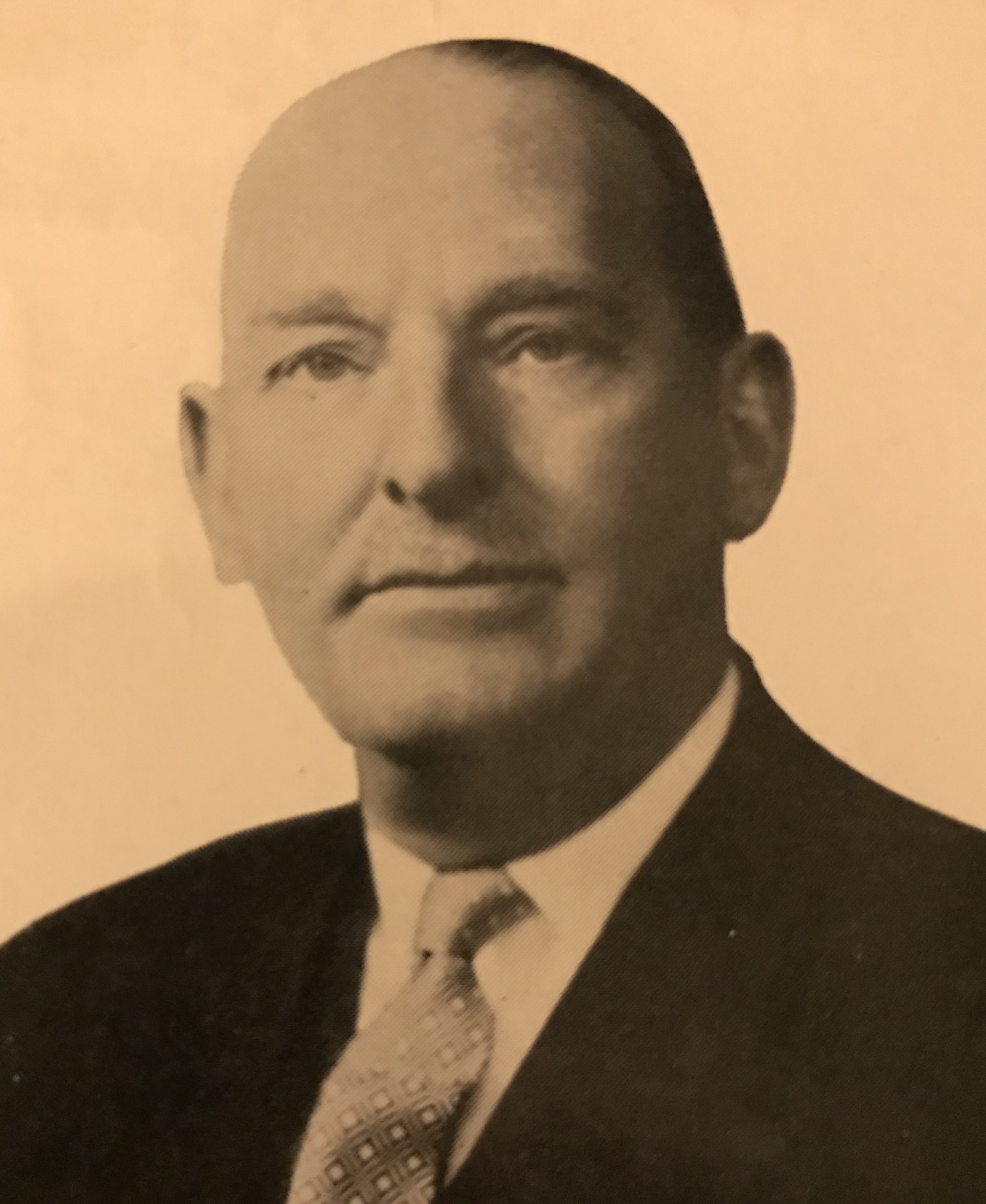
William VincentRobert Colquhoun
As a prelude to his account of the murder, Colquhoun states that ‘police powers are very limited when it comes to consenting homosexuals’, reflecting the difficulties faced by the police and the legal agencies in securing successful convictions in Scotland. It is difficult to determine whether this was a lament or a simple statement of fact. Vincent’s violent end would be mourned by few, even amongst the police force in Glasgow where Vincent had been in receipt of a commendation from Glasgow police for his ‘tip offs’. Yet, for Colquhoun these actions were undoubtedly an attempt by Vincent to protect him from police investigation. For Colquhoun, Vincent was a predator, often luring ‘a young man, friendless, or alone’ with promises of money, accommodation and a job (Colquhoun refers to this as a ‘baited trap’). This was viewed as risky behaviour and Vincent had himself contacted the police on occasion to report being attacked and robbed by men he had invited home. Indeed, in 1957 he had been assualted and restrained by a 19 year-old man, who then proceeded to rob Vincent of money and goods to the value of £260.
Robert Scott had met Vincent at a motor auction when he was 17, and the two had struck up a friendship sparked by a mutual love of cars. A year or so later, when Scott was called to do his national service, Vincent had unsuccessfully attempted to ‘buy him out of the army’, but after being demobbed Vincent was keen for their friendship to continue. Scott was less keen having become uncomfortable about the older man’s apparent obsession with him, which included pestering him with love letters. Five weeks later, a period during which the men had not met, Scott telelphoned Vincent and arranged a meeting at Vincent’s West End mews flat. According to Scott’s testimony, the older man was in an instant ‘a pleading, desperate figure who had abandoned all dignity’ and who had attempted kiss him. The two men struggled, before Scott strangled the slightly built Vincent, finishing him off with a sock tourniquet.
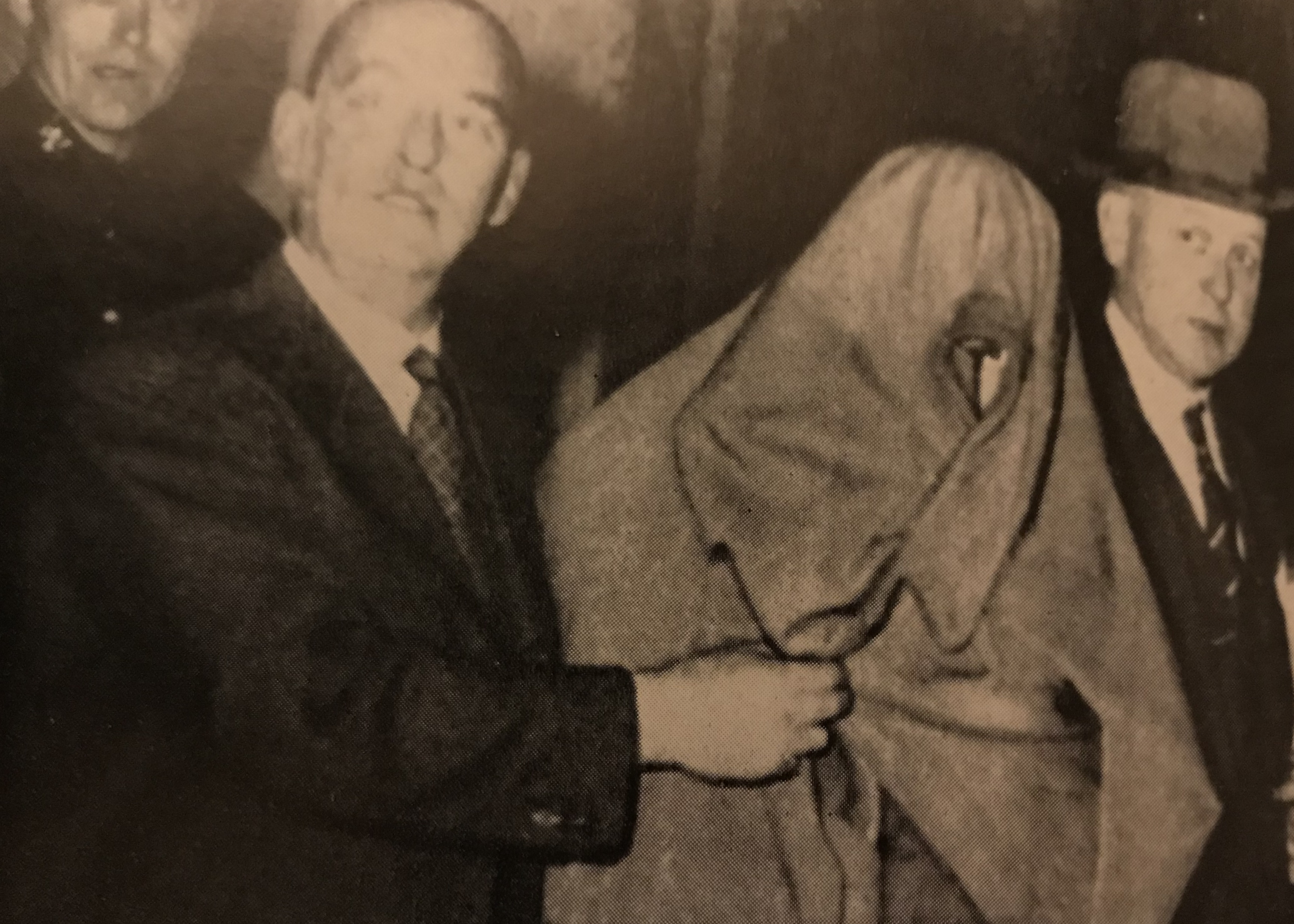
Scott is brought back to Glasgow by Colquhoun
After stealing some valuables from Vincent’s flat, Scott bundled Vincent’s body into the boot of his Sunbeam Alpine and drove it to Longtown in Cumbria, where he abandoned it in a ditch. Phoning the local police, Scott stated “I murdered a man in Glasgow. The body’s in the boot of his car, and I’ll wait till you come.”
At Scott’s trial, the judge, Lord Russell, described the murder as, on one hand, the killing of a worthless man, but stated that the court should not deal in morals. Ultimately, Scott was found guilty and sentenced to life in prison. Eighteen months later Scott was found dead in Perth Prison, having committed suicide. He was described by prison authorities as having been ‘an ideal prisoner’. It is difficult to determine the exact nature of these men’s relationship; Colquhoun ascribed to the view that Vincent was a threat to young working-class men who would be tempted into forming illicit relationships with older men for economic benefit. Andrew Ralston, in his book The Real Taggarts characterises the murder as the result of ‘a deliberate and protracted attempt by an older man to dominate an impressionable youth’, but also highlights the part Vincent’s homosexuality played in proceedings. The former police officer demonstrates considerable empathy for Scott, but none for the victim: “William Vincent died by strangling because he was evil…[the case] show[s] the depravity to which, at times, humans can descend”.
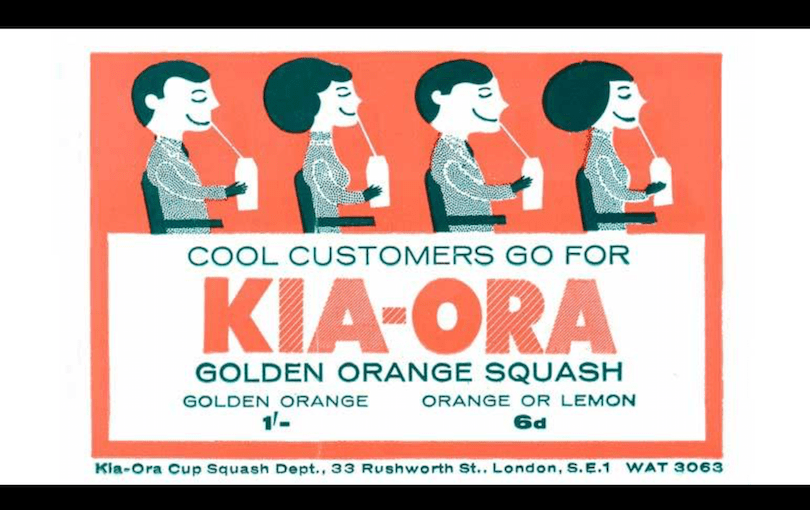
The myth once perpetrated that schooldays are ‘the happiest days of your life’ certainly did not apply to a shy, quiet, non-sporty, spotty youth like me, who wanted to be a fashion designer. I found myself amongst a bunch of growling wannabe engineers and factory workers. Attending a senior secondary in East Kilbride, I wished every schoolday would finish quickly, so I could get back to the safety of home. I only ever felt accepted, and comfortable, in the Art Department, amongst the most gentle, creative, fellow pupils and my very own ‘Jean Brodie’, Mrs Barclay. You could go to her classroom any lunchtime, and she would be playing classical records on her Dansette record player, while we ate peanut butter sandwiches and drank diluting orange juice. The only time I felt happiness and acceptance was in the 5th year, in that class.
Dansette Junior Deluxe Record Player
He wore a leatherette coat, green corduroy trilby with feather, and a pair of leather driving gloves
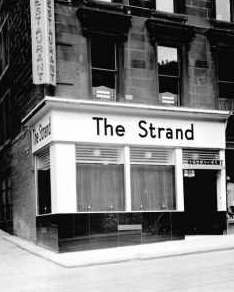
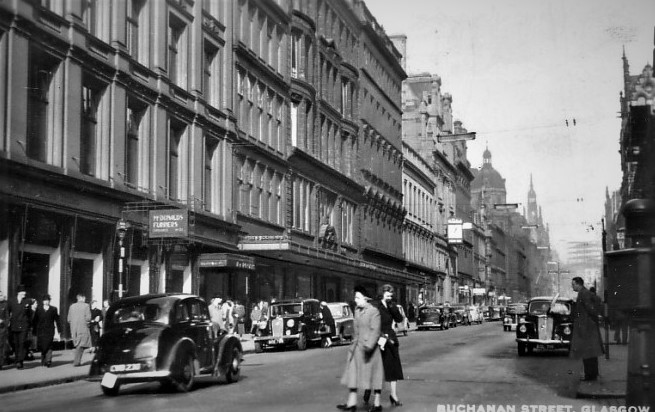
1966 saw me starting work, aged 17, as a junior sales assistant in the menswear department of an upmarket shop in Buchanan Street, Glasgow. For the princely wage of £5 10s 6d a week, I was to learn more about life working in that shop, from a man who would change my perception of myself and other people. He instilled within me the belief that no one was better than you. This was Mr Robertson, the senior salesman, who interviewed me initially for the position. Whilst I had no idea I was gay, he clearly did, possessing a ‘gaydar’ long, long before the birth of the internet dating site. He was 37, quite small, slim, bald, with slightly protruding front teeth, and wore thick horn-rimmed spectacles. He arrived for work drunk most mornings, having spent the evening before on a journey though the 1960s Glasgow gay scene. Starting at the cocktail bar in The Royal, he would then move onto Guys, or The Strand. He wore a leatherette coat, green corduroy trilby with feather, and a pair of leather driving gloves (he had neither a driving licence nor car and bussed it everywhere).
The Strand bar, Hope StreetBuchanan Street
Most mornings Mr R would head straight into the changing room, dim the lights and send me to Ferguson’s (a high-class grocers) in Union Street, for a tin of Epicure white peaches in brandy. It was a long narrow can containing 4 whole fruits in the alcohol liquor. I would hand him the opened can, and having scoffed the contents with a spoon, he would drink the brandy. Then, with an adjustment of his tie knot, and with alcohol level topped up – hey presto! – he was ready to face his public at 9-15am.
Every day in the shop was a performance. You simply did not know what he would say next to the customers (who adored him, I might add). I was both terrified and in awe of him, and could not wait to get in to work every day, just to see what would happen next. He just didn’t care!
He would tell customers he was ‘just back from Tangier’, and ask ‘don’t you love my tan?’, when in fact he had bought a tin of Max Factor Creme Puff, and slathered it on his face.
Mr R lived with his elderly mother in a rented tenement flat in Govan. Yet, when dealing with the mostly wealthy customers in the shop, he spun a web of fantasy about his life. It was so convincing that even I who worked with him, and knew a little about him and his circumstances, had to ask if his stories were true. He would give me a withering look and send me off to make him a coffee. He would tell customers he was ‘just back from Tangier’, and ask ‘don’t you love my tan?’, when in fact he had bought a tin of Max Factor Creme Puff, and slathered it on his face.
Govan
One morning he sent me to his mother’s flat for something he had forgotten, and over a cuppa, I said it sounded as if Mr R’s latest holiday in Greece had been fabulous. ‘You must be mistaken’, she said, ‘he spent that two weeks at home, and anyway, he has never owned a passport.’
Mr R would exclaim, ‘Here he comes, all high kicks and low morals’.
Mr R had a frequent visitor to the department, a man called Frank, who in hindsight must have been his boyfriend. Frank was pleasant enough, but a ‘hard ticket’, who was frequently drunk, and black-eyed. They seemed to have been friends for years. They knew a really fun guy, Derek, who was, as they say, ‘a chorus boy’ in variety theatre. He would high-kick his visits to the menswear department, which didn’t go down too well. Mr R would exclaim, ‘Here he comes, all high kicks and low morals’. But actually, he was the sweetest, kindest guy. He was always ‘just going off’ to do summer season in Bridlington or Skegness, and his stories were outrageous.
I worked with Mr R for three of the happiest, funniest years of my life, and before he died, I happened to visit a small menswear boutique on the southside of Glasgow. Thirty years had passed but he still looked pretty much the same. The shop ‘wasn’t quite his style’ and as we chatted, he started sipping on a whiskey he had poured from the side of the till. It was ‘for his nerves’ since he was ‘held up at gunpoint’ a few weeks previously. Held up for some coins and a few pairs of socks? Was that true, or was it right up there with his Moroccan or Greek travels? I have no idea. But I believed it. That’s how good he was.
I understand why the “Mr Robertsons” of those times invented “worlds” for themselves, to just lose themselves in a nicer place where they were safe from harm
Those far off days of the swinging ’60s: Free love, The Beatles, Liberalism. That’s what the media would have you believe anyway. Sure, it was the decade of ‘free love’ but lest we forget, gay men were still going to prison, having to hide their sexuality at work or lose their jobs, were being thrown out of the house for being gay, beaten up…the list is endless and shameful. And all while, Dusty was topping the charts, and having to pretend to be hetero to have a career. I understand why the “Mr Robertsons” of those times invented “worlds” for themselves, to just lose themselves in a nicer place where they were safe from harm.
So, that was my journey: from dreading school, to loving work. Amazing, and all down to him. He would be amazed to be remembered today, but whatever I am today, I owe to him. Here’s to you, Mr Robertson.