Our Myriad lgbtqi+ Lives

3pm, Wednesday 12th February, Dalhousie 2F11

Speaker, Brian Dempsey, School of Law

All welcome, registration required. Please visit here to register.   

We have always been part of Scottish history, and we continue to make Scottish history.

  • From the 6th century man-loving priest Findchän to the unnamed trans or intersex person (‘skartht’) whose very existence was supposedly a portent of James II’s death (1460)
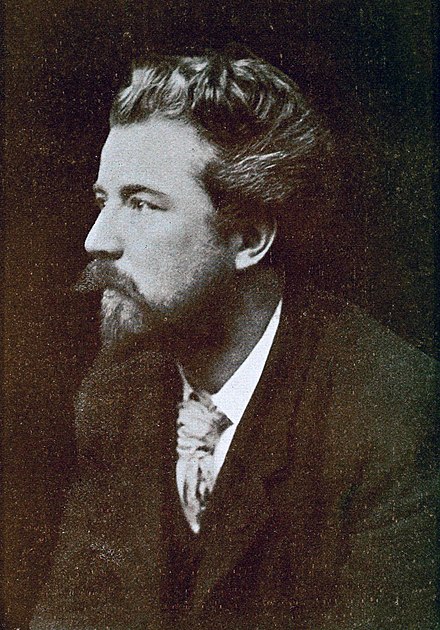
  • via the ‘female sodomites’ Elspeth Faulds and Margaret Armour (1625), the ‘lesbian         schoolmistresses’ Jane Pirie and Marianne Woods (1810) and the gender fluid paganist William Sharpe/Fiona Macleod (d. 1905)
  • to the fight for repeal of ‘Section 28’ (2000), for marriage rights (2014) and for respect for trans autonomy (ongoing) and infinitely more.

Let’s share and celebrate some of Scotland’s many lgbtqi+ lives.

Exploring queer histories and the diverse experiences of Scotland’s LGBTQ+ community

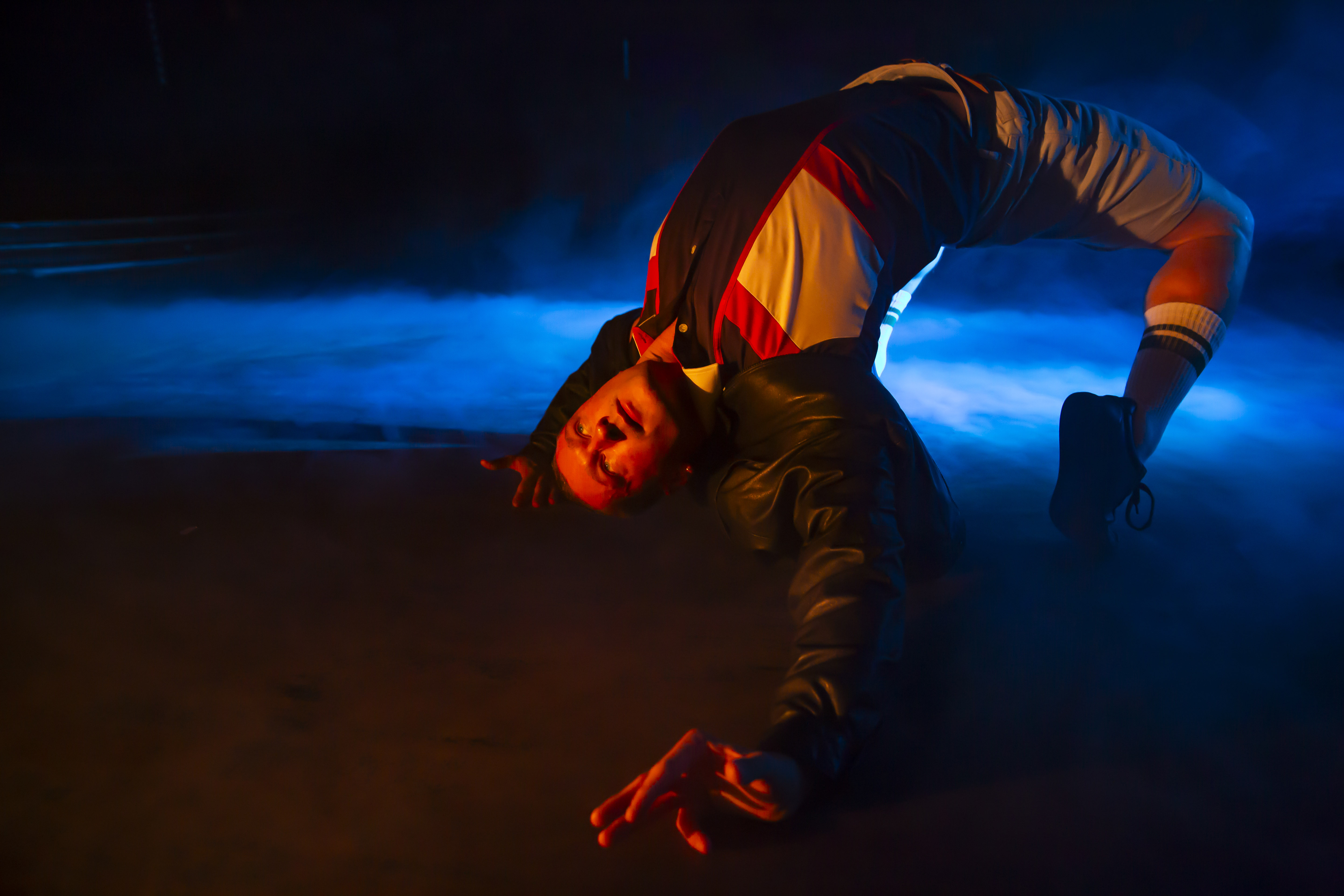
Gray’s School of Art alumnus, Bart Grabski, hasbeen selected as one of only ten artists to feature in the Queer & Now exhibition, a landmark project organised by Dundee’s Shaper/Caper dance company funded by The National Lottery Heritage Fund.

The exhibition, which runs alongside the acclaimed Small Town Boys choreographed by Shaper/Caper’s Artistic Director Thomas Small, explores the rich and diverse experiences of the LGBTQ+ community, with a particular focus on themes from the 1980s and 1990s, including Section 28 and queer nightlife.

Queer & Now showcases new work created by artists who delved into the LGBTQ+ culture of the past, working closely with OurStory Scotland to collect and curate oral histories that have deeply informed their practice.

Bart’s piece, ‘Oral Portraits’, is a poignant exploration of Aberdeen’s queer club scene during the AIDS crisis, documenting a time when underground spaces offered solidarity, resilience, and joy to the community despite oppressive laws.

Reflecting on his artistic journey, Bart said: For many, the dance floor wasn’t just a place to escape—it was a place to become. In a world that tried to erase our community, those nights were the loudest forms of existence. This project isn’t just about remembering; it’s about honouring the resilience, the joy, and the unapologetic celebration of life that thrived in those spaces.” 

Bart’s work weaves together evocative photographic portraits with a soundscape of audio recordings, featuring intimate interviews that echo the spirit of those times. He further explained, “The oral history recordings have been the soul of this project. Each story is a thread in the tapestry of our collective history, revealing not only the struggles but also the triumphs and moments of joy.”

Jill and Colin, who feature prominently in Bart’s work, offer deeply personal insights into the significance of Aberdeen’s queer nightlife. Jill reflects on her self-discovery and the sanctuary provided by Club 2000, where “music and companionship offered an escape from societal repression.” Colin shares his experience with the Gay Switchboard and health promotion during the AIDS crisis, highlighting the importance of safe spaces like Daisy’s Disco and Castros in fostering a sense of belonging and self-acceptance. Colin noted, “Those spaces were not just clubs; they were our lifelines, places where we could be who we really were without fear.”

In addition to his own personal contribution, Bart also conducted interviews with two LGBTQIA+ alumni of Gray’s School of Art, Mark and Cliff, who reflect on their creative practices during those pivotal decades. Both discuss how queer spaces, art, and creativity within Aberdeen provided an outlet for expression and community in the face of social and political challenges.

Mark shared his experience at Gray’s School of Art saying, “Art School enabled me to facilitate my creativity as an honest reflection of my true queer identity. This creative exploration would not have been possible outwith such a liberating environment.”

Cliff, meanwhile, recalls the vibrant creative community of Gray’s School of Art and how the club scene was a lifeline for many: ” Art school was a lifesaver for me, a place where I could be myself, but the queer club scene was where I found my tribe—people who embraced and celebrated their identities.”

Yolanda Aguilar, Executive Director, Shaper/Caper said: “Sharing the history of the LGBT+ community in Aberdeen is a vital thread in the fabric of the city’s past. Sharing these stories allow us to honour the resilience, struggles, and triumphs of individuals who have often been marginalised.

“Gray’s alumnus, Bart Grabski’s contribution to the Queer & Now project has been most relevant in terms of showcasing his unique artistic and interdisciplinary practice, complementing an impressive team of selected artists, whilst spotlighting the North East of Scotland as the fourth city with the highest LGBT+ population, as revealed by this summer’s census.

“Gray School of Art plays an important role by shedding light on the contribution of the LGBT+ community, promoting inclusivity, and ensuring that future generations see the rich diversity that has always been part of Aberdeen’s identity”

The exhibition has travelled across Scotland, opening in July 2024 at Perth Theatre and moving to Inverness, Stirling, and Glasgow, before arriving in Aberdeen at the Anatomy Rooms Arkade Studios from October. The highly anticipated Artist Talk will take place in Aberdeen at the Anatomy Rooms on Friday, 18th October at 4 pm, offering visitors a chance to hear firsthand from artists about the creative process and the stories that shaped their work.

The ‘Queer & Now’ exhibition runs parallel to the ‘Small Town Boys’ show, which delves into queer nightlife in the 1980s through dance and spoken word, offering a complementary exploration of LGBTQ+ experiences during a turbulent time in history. As part of the tour in Aberdeen, ‘Small Town Boys’ will be showcased at Cheers Bar, ensuring that the city has the opportunity to fully engage with both events.

Gray’s School of Art and the wider RGU community are immensely proud of Bart’s accomplishments. His work continues to elevate underrepresented voices, reinforcing the institution’s role as a vital catalyst for social change and cultural discourse. We invite everyone to attend the exhibition and the artist talk, not only to celebrate the legacy of LGBTQ+ histories but also to witness the profound impact of Gray’s School of Art on its alumni and the community at large.

For more details on the Shaper Caper Queer & Now exhibition and project overview visit:  https://www.shapercaper.com/queerandnow.

Buy your ticket to the Small Towns Show:  https://www.aberdeenperformingarts.com/whats-on/dancelive-2024-small-town-boys/#book

Learn more about Our Story Scotland – https://www.ourstoryscotland.org.uk

Bart Grabski, is a Gray’s School of Art alumnus with a MA in Curatorial Practice and a Digital Media Engagement officer at Look Again at Gray’s.

If you would like to write content for Queer Scotland, please get in touch.

Homosexuality and the Scottish Press 1880-1930

A guest post by Dr Michael Shaw, Senior Lecturer in English Studies at the University of Stirling.

In his History of Sexuality, Michel Foucault famously critiqued the ‘repressive hypothesis’. Far from simply being repressed or restricted over the nineteenth to twentieth centuries, Foucault argued that there was a proliferation of discussion on sexuality at this time, an ‘incitement to speak about it’. I’ve often wondered about how this idea might apply to Scotland, which is sometimes portrayed as a nation that was either silent or quiet on homosexuality before the 1960s. How extensively would homosexuality have been discussed in Scotland between the end of the nineteenth century and the beginning of the twentieth, and in what contexts? How would it have been alluded to? Was the treatment always hostile? And what materials might still exist to help us understand these discourses today?

Over the past year I’ve been working on a Royal Society of Edinburgh-funded project, titled ‘Homosexuality and the Scottish Periodical Press 1885-1928’, to address the above and related questions. Having done some initial research on the representation of the Oscar Wilde trials in the Scottish press, and knowing how extensively his trials were covered in some Scottish newspapers, I wanted to think more broadly about the ways in which Scottish print culture engaged with homosexuality, beyond criminal trials and police reports. How might queer novels, or sexological writings, have been received in Scotland, for instance? Were poems or stories alluding to same-sex love published in the Scottish press?

I knew I would likely have to confront a range of ‘negative results’ during this project: there would undoubtedly be newspapers and magazines that enforced a studied silence on homosexuality. Those silences themselves are of interest, but I suspected that there would also be more coverage of homosexuality, beyond criminal cases, than tends to be acknowledged.

The project took me to various locations, ranging from Dumfries to Dingwall. Rather than rely on electronic databases, I wanted to work with physical collections as much as possible – making sure that lesser-known titles were consulted as much as the more obvious newspapers and magazines. Given the vibrancy of Scottish periodical culture c.1880-1930, I knew there was no way I could be exhaustive with this study. But I wanted to build a thorough sample, by exploring how periodicals from different locations, with differing political persuasions and religious associations, speaking to different professions or groups, discussed (or didn’t discuss) homosexuality.

What became clear was that there were a number of discussions of, and allusions to, homosexuality in Scotland over this period in the press, although there were differences in the way the topic was handled across different years and locations. It also became clear that discussion of homosexuality and homosexuals was not always hostile (future publications will discuss these findings in more detail).

Sometimes, it was in seemingly unlikely places that expressions of sympathy were found. The Scots Observer (1926-34), for instance, was a weekly newspaper devoted to representing the presbyterian churches of Scotland, hoping to express ‘the collective aims and ideas of the Scottish Presbyterian Churches’. The Scots Observer was also concerned with the Scottish literary renaissance and intellectual developments of the day, and it did not always manage to reconcile its differing concerns. The editor, William Power – who was not only a supporter of the Renaissance, but would go on to become the leader of the Scottish National Party during the Second World War – later noted that the political and intellectual sympathies of the paper drew critique from some of the church leaders.

The Scots Observer’s more provocative dimensions are evident in an anonymous 1927 review of a book titled The Invert and his Social Adjustment by ‘Anomaly’ (who describes himself in the book as a Roman Catholic, aged 40). The review not only discusses homosexuality but calls for greater tolerance of homosexuals:

Of recent years it has been found that a certain proportion of people […] are as instinctively homosexual as the normal individual is heterosexual. […] Such people have special and very difficult problems in life to face, and an idea of what these are and how they may be faced is given in a recently published book “The Invert and His Social Adjustment’. […] The writer, who is himself an invert, and also a devout Roman Catholic, makes it clear that the incidence of immorality among inverts is precisely the same as among normal people, and he also shows how, in the necessary process of “sublimation,” socially valuable qualities may be developed.

Much like the book, homosexuality is represented as ‘abnormal’ here but it is simultaneously characterised as being as ‘instinctive’ as heterosexuality, and the review highlights the difficulties homosexuals in the early twentieth century had to face. The reviewer also appears to be convinced by the author’s dissociation of homosexuality from immorality. Following these comments, a quote is included from the ‘wisely written’ introduction to the book by Dr Robert H Thouless, a Lecturer in Psychology at the University of Glasgow at that time. Thouless stated that the book helps to ‘approach the problems of inversion with knowledge and charity’, which is the note the review ends on. In his introduction, Thouless also noted that ‘the virtuous love of a homosexual is as clean, as decent, and as beautiful a thing as the virtuous love of one normally sexed’.

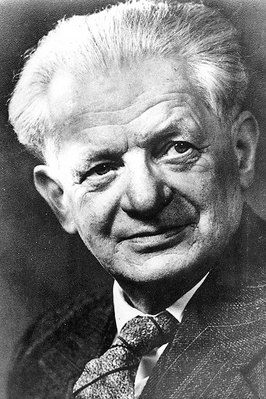
Dr Robert H Thouless

The Scots Observer’s review does stress the ‘necessary’ process of sublimation (deflecting sexual thoughts towards non-sexual activities), which appears to depart from the book’s ambivalence around physical intimacy: ‘Anomaly’ focuses on challenging ‘excessive indulgence’, while noting that homosexual love is ‘no more susceptible to sublimation into an absolutely non-physical emotion than the love of man for a woman’. While there is no negative commentary on the ideas voiced in The Invert and his Social Adjustment, The Scots Observer does appear to take a more conservative stance on physical intimacy in its review.

Nevertheless, in choosing to give notice to this book, and in sympathising with its calls for greater toleration of homosexuals, we witness an example of the ways in which Scottish newspapers and magazines, including religious titles, could contribute to expanding awareness of homosexuality in the 1920s, even if – going back to Power – this may have been one of the contributions that certain church leaders disapproved of. It is clear that Scottish periodicals were not always concerned with repressing discourse around homosexuality; not uncommonly, they were sites to discuss, analyse, condemn and sympathise with homosexuals across the 1885-1928 period.

If you would like to provide a guest article for QueerScotland, please do get in touch.

Fear, Shame and Hope: AIDS in 80s and 90s Scotland

In a recent blogpost John D’Emilio argued that AIDS and its impact upon LGBT individuals and organisations, the militancy it provoked, and the heightened attention it drew to LGBT causes needs to be more fully documented and appreciated. This is certainly applicable to Scotland, and its responses, both social and medical, to the significant challenges that HIV/AIDS brought.

My research engaged with the impact that HIV/AIDS had upon gay and bisexual men in Scotland, many of whom were relatively young when their lives were touched or influenced by this new and sinister threat to life. Scotland had only decriminalised consensual gay sex between male adults in 1980, and the drive for equality was realistically still in its infancy. This blog post is not an attempt to document Scottish responses to HIV and AIDS but to reflect the experiences of gay and bisexual men during the 1980s and 1990s.

Chris was in his early 20s when the HIV/AIDS ‘dark cloud’ settled over Scotland:

It was horrendous, absolutely horrendous. Fear, fear of something you had taken for granted that was a big part of your identity and how you find joy and happiness and intimacy with other people that could suddenly wipe you out and do it horribly, you know, horribly…it was specifically, gay men who were isolated at that time, so there was another bit of ammunition for people who had a big grudge against gay men or didn’t like homosexuality for whatever reason, there was another huge big bit of ammunition.

Although the majority of early HIV/AIDS cases in Scotland affected another marginalised group – intravenous drug users, especially in Edinburgh – it was not long before the illnesses began to affect Chris much more directly. The impact was felt on a personal and emotional level, but also in the way that gay men saw themselves and were seen by wider society:

JM – Would you say that it impacted on people’s attitudes towards gay men?

Chris – [And] gay men’s attitudes towards themselves, yeah, definitely, and quite negatively, you know. [There was] the condom issue and the campaign with the tombstones and everything else and a leaflet going through every door in Britain, you couldn’t escape it, you really couldn’t escape it, and very quickly from ’80, ’81 people were actually being diagnosed and the first gay man who was diagnosed that I knew, was a friend, and of course then you think, ‘Oh my God!’. He was ill when he was diagnosed so he already had liver complications with diagnosis and deteriorated within a year and a half, two years, and died. His then long-term partner was positive and other really close friends that had been in that circle and had been intimate, one by one were being diagnosed positive.

Chris saw the impact that the disease was having on individuals he cared about but also the impact that it was having on attitudes to homosexuality. Yet, despite increased opprobrium directed at gay men, responses from LGBT organisations were not tempered by hostile attitudes:

JM – How did that impact on a political level in your life?

Chris – Yeah, I think that was just another injustice really. It all goes back to London, the sort of Stonewall era and Terrence Higgins Trust and a lot of the things that came up then I don’t think would have surfaced in such a strong, such a political way had it not been for HIV.   HIV and the reaction or the backlash against, particularly, gay men at the time meant [that in a way] those organisations gained incredibly in power and status. [That happened in] Scotland as well because Scottish Aids Monitor were seen as coming and doing something for a community and were put there and funded because they were there to prevent or limit this outbreak within a community but I don’t think even at that stage there was the acknowledgment that the gay scene is not the only the ‘scene’… there’s a far larger percentage of men who have sex with men who don’t and will not put that tag on themselves or be put in that box.

For Ed, who spent time in Australia as well as Scotland, the emergence of HIV/AIDS had a cataclysmic impact upon his life and the lives of his partner, friends and family. Ed was not out to his closest family members and an HIV+ diagnosis prompted him to attempt to tackle issues relating to his sexuality and his health:

Well, it was a double whammy actually: my partner had died of AIDS and I got tested and [the test result] came back positive and I thought, ‘Right! I’ve got to tell them all’, so with my mother it was a double whammy, with her letter I wrote, ‘Dear Mum blah, blah, blah, not only am I gay but I’m HIV positive’ and she wrote back saying that ‘the main thing is that you keep healthy but I think it’s against nature that you’re gay’, just a short reply…

Ed has now been living with HIV for over 20 years, something that was unthinkable at the time:

Well, I was thinking about that a few weeks ago and thinking that it now all seems like a dream…you were going to so many funerals from that period, the late 80s right through to 2000, 2001, so many friends that had died. Well, you knew it was there and you were going from week to week to see who the next one was going to be and so you just had to get on with your life and basically, em, accept and deal with what was happening….and I look at it this way: you either accept what is happening or you just turn your back on it and go off and end it all…

Duncan recalled how the appearance of HIV/AIDS in Scotland impacted upon the attitudes and behaviour of many gay men:

I went doon to see a pal in London recently who had moved down from Glasgow and….he says, “Duncan, do you remember the days in Glasgow when it was just like a chocolate box and you could pick and choose any flavour or any variety you wanted, hard, soft?” and it was true, it was a very carefree…no awareness of AIDS and HIV and anything like that, you know, in these days and everybody was…I cannae say promiscuous, because that isn’t the right word for it, but there was a lot of people who were very active…But then, quite quickly, all of my friends were talkin’ about they’ve maybe knew somebody who actually had contracted HIV an’ once ye knew maybe one person or maybe two it really shoots it home to you and you just started to change your behavior.

Other gay men were overwhelmed by the power of AIDS, not just relating to illness, but the way in which terms such as HIV and AIDS had the potential to obscure the individual, their personalities, who they were:

Greg – I had a friend, who was quite ill herself, who volunteered at a hospice, and one afternoon she brought two guys with AIDS to a café near where I worked. I had met them both before, and my friend invited me to join them for a coffee. I’m ashamed to admit that I didn’t really want to face them. I went and I felt so powerless, so impotent. One of the guys was really very poorly and had mild dementia, and being frank, I couldn’t handle it. I’m ashamed of that, as gay man, I am ashamed of that.

HIV and AIDS also had an impact upon the LGBT rights movement in Scotland during the 1980s and 1990s. As mentioned, decriminalization had only occurred in 1980 and just as LGBT organisations were beginning to find their feet, and their voices, the hysteria amongst sections of British society and the British press had implications for non-heterosexual Scots.

Ed – Oh the nonsense, the sensationalism, the terrible way they treated children who were positive and they weren’t allowed to go to schools, and people were terrified to touch, you know. How they treated [them] in hospital at the beginning was terrible, sliding paper trays through the door to the patients, that sort of stuff, thank God that’s all gone.

Ken too lamented the emergence of further stigmatising discourses concerning the ‘gay plague’ just as confidence amongst sexual minorities was growing.

I think that was a sad thing and a difficult thing…there was parity in 1980 but things don’t change overnight, Joe Public was [still largely homophobic]…so maybe by ’82 we were starting to get somewhere but then [there was] the ‘gay plague’ in America, by ’86 it was here, so there was only that little window [of hope].

These recollections of the 1980s and 1990s are not peculiar to Scotland, but it is notable that the threat of HIV and AIDS emerged in Scotland so soon over after decriminalisation. This had implications for the development of LGBT movements, but despite considerable hostility and homophobia the pressing need for directed health services, and advocacy groups meant that voices silent for so long still demanded to be heard.


Copyright © Jeff Meek 2014

All Rights Reserved.

Please do not reproduce  content from this blog in print or any other media without the express permission of the author.
Risk, Embarrassment, Democracy! Glasgow’s ‘Queer’ Scene, 1955-2008

By the mid 20th century Glasgow was home to a growing non-heterosexual population, and wherever such groups exist there are platforms for social engagement. When I interviewed 2 dozen gay and bisexual men in the mid 2000s, stories emerged which detailed the history and development of the queer scene in Glasgow. I have already produced a map which details many of the venues which catered, publicly or privately, for the city’s non-heterosexual population, but in this blog post I want to flesh out beyond the structural history and engage with the emotional and social history of the queer scene in the city.

Stephen (b. 1939) recalled how he became aware that ‘gay’ bars existed in the city, during the mid 1950s:

I was in about 19 maybe 20 and I had overheard a conversation with my father and they were speaking about a local celebrity and my father’s colleague had told him about this celebrity being a ‘nancy-boy’ and he also told where this celebrity drank. So, I made up my mind then that I would need to get to this pub to get to know him, this celebrity, because then I would be on equal terms, I would be in a pub on chatting terms and maybe he would put me wise to things. It wasn’t a notorious gay pub, it was a classy pub and lounge bar and cocktail bar, and that’s where I went. It was the ‘Top Spot Mexicana Bar’ at the top of Hope Street.

Top Spot

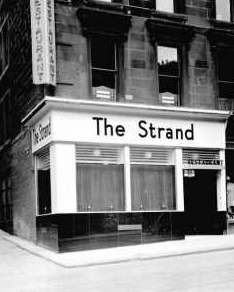
Stephen was keen to underline that although bars such as the Top Spot attracted a small gay clientele, discretion was still important as many of the patrons were unaware of this. However, in some bars there was an opportunity to be a little less discreet, such as in The Strand bar in Hope Street:

Stephen – When I first went in to ‘The Strand’ bar I didn’t realise …that you got ‘names’….you were either given a name or you were to pick a film star that you admired a lot, female, and they gave you that name. I had picked a film star who I looked nothing like but I did admire and they said ‘you don’t look nothing like her; you’ll need to pick somebody else’. I picked another film star and they thought this was ideal and I got her name.

Queer-friendly bar, Glasgow, 1950-60s

When I asked Stephen if all the gay men took female film star names, he told me that it was generally dependent on sexual role and personality:

Say a lad of 19 or 20, blond hair, came into the bar and he was nice and pretty and polite, they would probably have called him ‘Doris Day’. Whereas, if another lad came in who wasn’t blessed with the best of looks but kept himself as well as he could and was always rather acid when he was speaking to anyone, he would probably been called ‘Bette Davis’.

While Stephen indicated that being able to socialise with other non-heterosexual men gave him ‘confidence’, ‘reassurance’ and ‘psychological comfort’ there was always risk attached to meeting men in bars, even in gay bars.

In these days don’t forget, it was also very dangerous because you got people who were called ‘queer bashers’. So they would pretend [to be gay] until they got the guy up a lane or something and they would [beat him up].

While Stephen became a regular visitor to Glasgow’s queer scene during the 1950s and 1960s, other interviewees preferred to mix with a social group who generally avoided ‘popular’ haunts. Alastair (b. 1948), considers himself fortunate that he was able to become part of a group of largely middle-class men in Glasgow who preferred attending the theatre to socialising with the men in the pubs:

Well, you know, some of them were very attractive people but they were a bit rough. Now, let’s define what we mean by rough here, there is nothing nicer than a bit of ‘rough trade’ but they weren’t. As my late elderly gay friend would say, ‘Not quite in our garden’. I didn’t feel I had anything in common with them and then of course I met one or two pivotal people who introduced me to some very interesting, well-connected people.

There does appear to have been an element of a ‘clash of cultures’ on the Glasgow scene, which was largely the result of class differences.

Alastair – A lovely story about a gentleman in Edinburgh: he and his friend had picked up a long-distance lorry driver who was drop dead gorgeous and he brought him to a dinner party and he wouldn’t eat anything. Our host eventually opened a tin of Heinz Tomato Soup and threw a few croutons in and he wouldn’t eat it because of the croutons and the line of the evening was, ‘I’m a mince and tatties man myself’. So, predominantly I would go to these parties and there was a group of people round the city who almost every Saturday night would have a party. [They were] like-minded, probably slightly more effete men would go to them.

Another of my interviewees viewed the social diversity of the queer scene in Glasgow as something of great importance; where economic and social divisions were overcome through a shared sense of belonging.

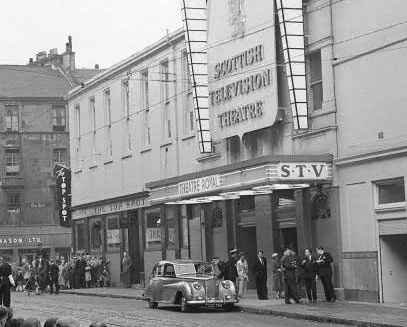
Brian (b. 1936) –I went to a gay bar from time to time in town…it was in West Nile Street, it was at the back of a restaurant called The Royal. I remember going to this gay bar in The Royal when by that time I was a local celebrity and [I met] two boys who were an item…one was a joiner from Partick who told me wonderful stories about his early years in Partick, about wandering up Byres Road on a Sunday, and it was deserted – because there was nothing in those days – looking for a pick-up. He knew he’d find it in Botanic Gardens. He came from a working-class family living in Partick probably in one of the tenements just along Dumbarton Road. His mate was a boy who had come up from Ayrshire to work in one of the big stores in Glasgow as a window-dresser or something like that, and whose family had thrown him out when they had discovered that he was gay. The extraordinary thing was that the joiner’s family, who as I say were perfectly ordinary working-class family living on the Pollok estate, had taken him in knowing what the situation was between the two of them. I think one of the things about homosexuality is that it is probably one of the most democratic things…it is a sub-section of society that was probably ahead of its time in terms of the way that the social classes mixed, partly because we were all, if you like, aliens together so whether you came from a working-class background or whether you came from [another] it didn’t matter.

As they gay scene developed in Glasgow during the 1970s and into the 1980s, it took on a political edge, and offered a level of support and socialisation. For Chris (b. 1958) his initial visits to Glasgow’s scene offered more than simple entertainment.

It was really exciting, I think that’s the only word I can really describe it as, it was really different, really, really exciting and it wasn’t like anything else you could experience outside the gay scene and probably the gay scene today but I think as a young man today just coming out and feeling okay in his own skin it felt as if all the shackles had just disintegrated.

As a young gay man, Chris also noticed that the scene in Glasgow also equipped the less experienced with sets of guidelines and advice to maintaining your reputation:

You [were advised not to] pick people up in toilets, you know, there were 3 gay bars in Glasgow and the way to have your reputation absolutely trashed was to go to St Vincent’s Street and pick people up in toilets so there were other rules as important if not more important than the law…

What was occurring during the 1970s and 1980s was the further commercialisation of a queer scene in Glasgow, in an effort to provide (profitable) safe spaces for non-heterosexual men and women to meet and socialise. While some of my interviews viewed this development as a stride forward others felt a sense of disconnect, as Joseph (b. 1959) commented:

You go to [named bar] today and you hear young people say, “What’s that old bastard doing in here?”

What is interesting about these recollections is the diversity of experience. The queer scene in Glasgow during the 1950s & 1960s was governed by discretion. Some interviewees spoke of the democracy of the scene, whilst others noted some elements of division. In the 1970s and 1980s a more confident and identifiable scene emerged, but it still contained something like a paternalistic concern for individual and group welfare. This is not to say that the contemporary queer scene lacks any of these features; individual responses and interactions still govern, to some extent, individual experiences.

Copyright © Jeff Meek 2014

All Rights Reserved.

I’m always interested in hearing more experiences of Scotland’s ‘queer scene’, from the 1940s through to the 1990s.  You’ll find my email address here.