The Killing of a Worthless Man

I have previously written about William Merrilees, the Edinburgh detective, who undertook a ‘war on homosexuality’ in interwar Edinburgh. This triggered a fascination with the memoirs of retired Scottish police officers, particularly any reference to homosexuality and homosexual offences. I recently read works by ex-Detective Chief Superintendent Robert Colquhoun, and Douglas Grant, a former inspector in Glasgow. But it’s Colquhoun’s recollections that I wish to focus on, chiefly because he recounts the arrest of 21 year-old Robert Scott in 1958 for the murder of 51 year-old police informant and car sprayer William Vincent.

IMG_1160
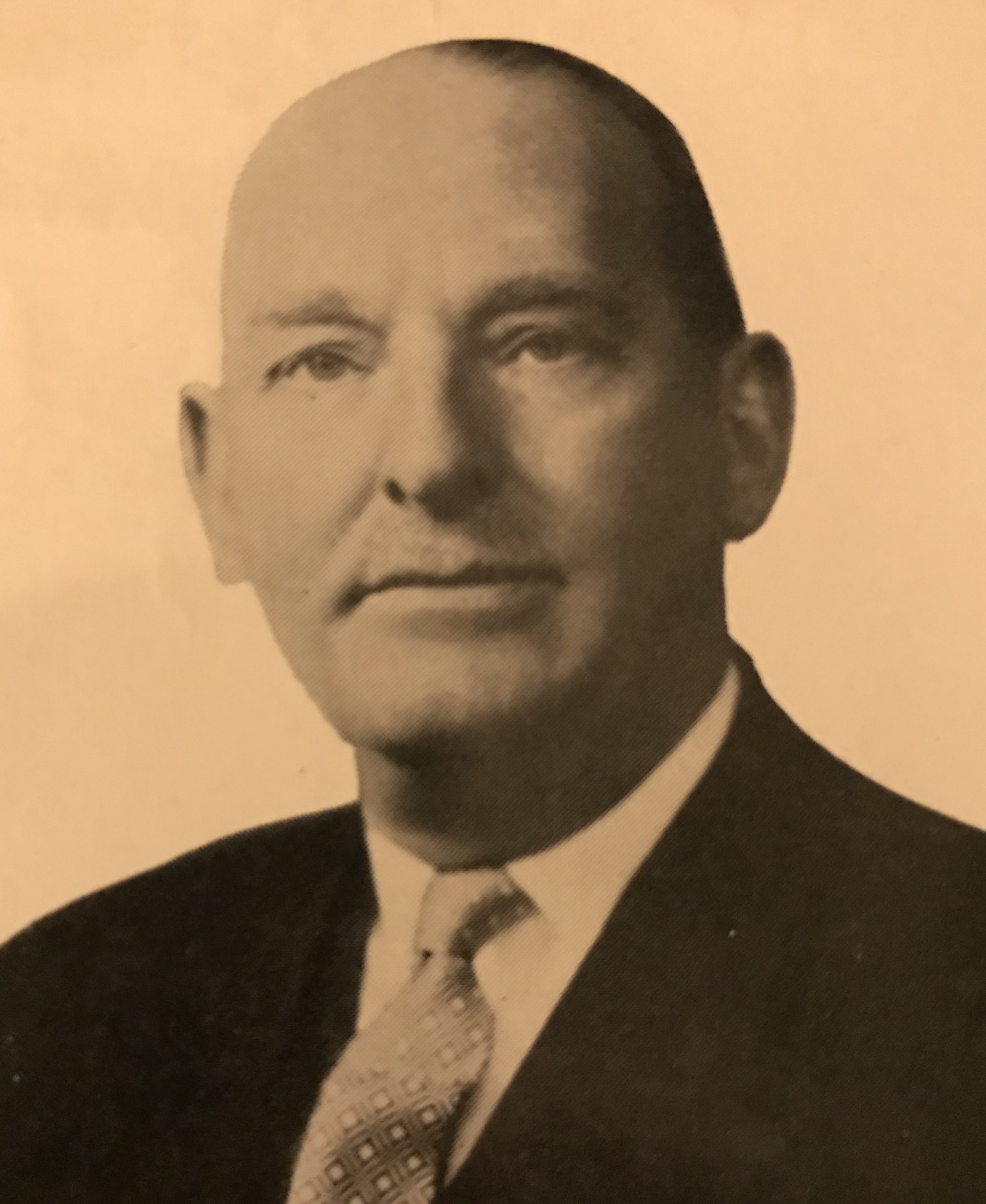
William Vincent
IMG_1158
Robert Colquhoun

As a prelude to his account of the murder, Colquhoun states that ‘police powers are very limited when it comes to consenting homosexuals’, reflecting the difficulties faced by the police and the legal agencies in securing successful convictions in Scotland. It is difficult to determine whether this was a lament or a simple statement of fact. Vincent’s violent end would be mourned by few, even amongst the police force in Glasgow where Vincent had been in receipt of a commendation from Glasgow police for his ‘tip offs’. Yet, for Colquhoun these actions were undoubtedly an attempt by Vincent to protect him from police investigation. For Colquhoun, Vincent was a predator, often luring ‘a young man, friendless, or alone’ with promises of money, accommodation and a job (Colquhoun refers to this as a ‘baited trap’). This was viewed as risky behaviour and Vincent had himself contacted the police on occasion to report being attacked and robbed by men he had invited home. Indeed, in 1957 he had been assualted and restrained by a 19 year-old man, who then proceeded to rob Vincent of money and goods to the value of £260.

Robert Scott had met Vincent at a motor auction when he was 17, and the two had struck up a friendship sparked by a mutual love of cars. A year or so later, when Scott was called to do his national service, Vincent had unsuccessfully attempted to ‘buy him out of the army’, but after being demobbed Vincent was keen for their friendship to continue. Scott was less keen having become uncomfortable about the older man’s apparent obsession with him, which included pestering him with love letters. Five weeks later, a period during which the men had not met, Scott telelphoned Vincent and arranged a meeting at Vincent’s West End mews flat. According to Scott’s testimony, the older man was in an instant ‘a pleading, desperate figure who had abandoned all dignity’ and who had attempted kiss him. The two men struggled, before Scott strangled the slightly built Vincent, finishing him off with a sock tourniquet.

IMG_1162
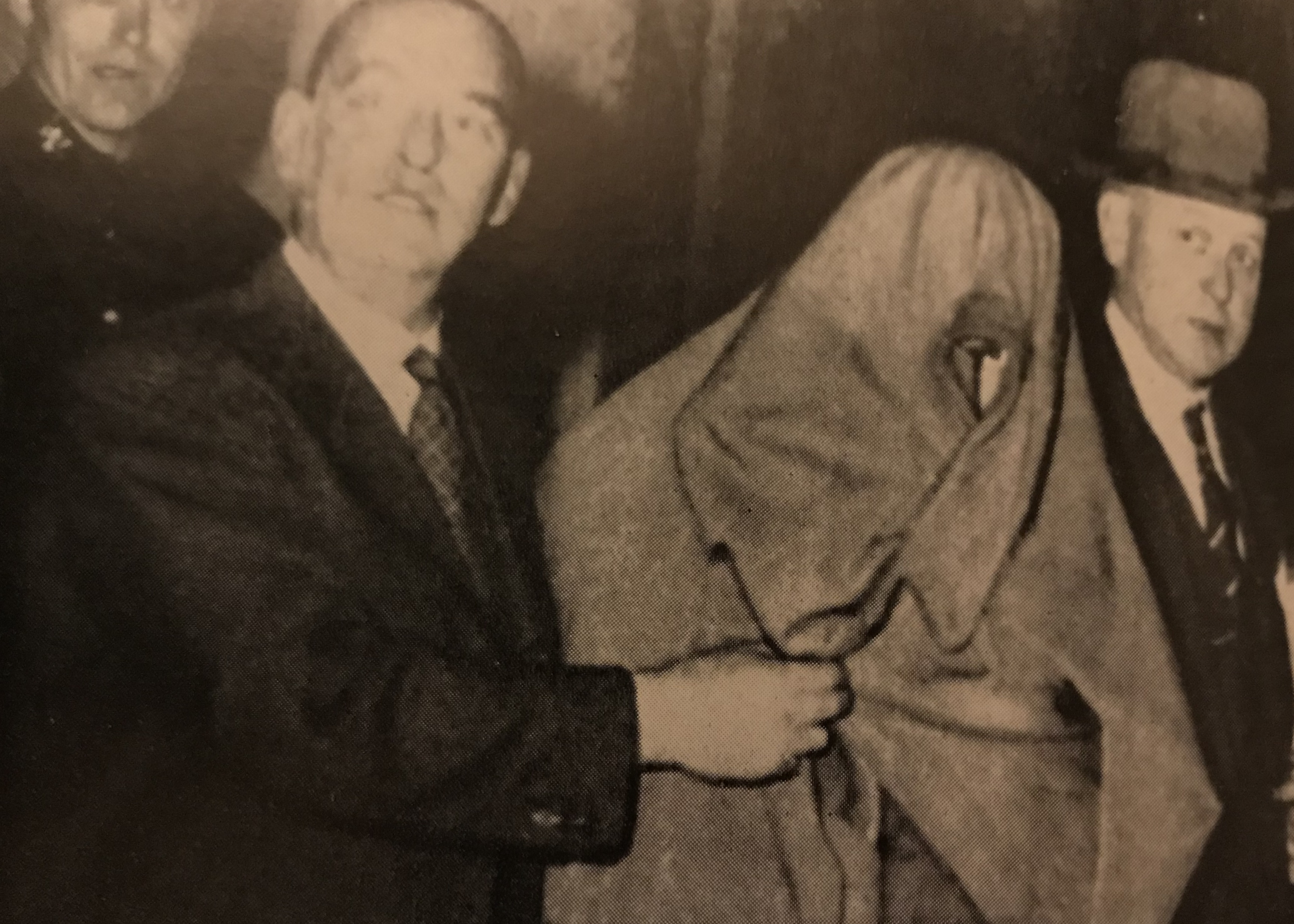
Scott is brought back to Glasgow by Colquhoun

After stealing some valuables from Vincent’s flat, Scott bundled Vincent’s body into the boot of his Sunbeam Alpine and drove it to Longtown in Cumbria, where he abandoned it in a ditch. Phoning the local police, Scott stated “I murdered a man in Glasgow. The body’s in the boot of his car, and I’ll wait till you come.”

At Scott’s trial, the judge, Lord Russell, described the murder as, on one hand, the killing of a worthless man, but stated that the court should not deal in morals. Ultimately, Scott was found guilty and sentenced to life in prison. Eighteen months later Scott was found dead in Perth Prison, having committed suicide. He was described by prison authorities as having been ‘an ideal prisoner’. It is difficult to determine the exact nature of these men’s relationship; Colquhoun ascribed to the view that Vincent was a threat to young working-class men who would be tempted into forming illicit relationships with older men for economic benefit. Andrew Ralston, in his book The Real Taggarts characterises the murder as the result of ‘a deliberate and protracted attempt by an older man to dominate an impressionable youth’, but also highlights the part Vincent’s homosexuality played in proceedings. The former police officer demonstrates considerable empathy for Scott, but none for the victim: “William Vincent died by strangling because he was evil…[the case] show[s] the depravity to which, at times, humans can descend”.

Copyright © Jeff Meek 2013-2024 No part of this site, [QueerScotland.com], may be reproduced in whole or in part in any manner without the permission of the copyright owner.

‘All High Kicks and Low Morals’: My Introduction to Gay Life in 1960s Glasgow

A Guest Post by William Campbell

The myth once perpetrated that schooldays are ‘the happiest days of your life’ certainly did not apply to a shy, quiet, non-sporty, spotty youth like me, who wanted to be a fashion designer. I found myself amongst a bunch of growling wannabe engineers and factory workers. Attending a senior secondary in East Kilbride, I wished every schoolday would finish quickly, so I could get back to the safety of home. I only ever felt accepted, and comfortable, in the Art Department, amongst the most gentle, creative, fellow pupils and my very own ‘Jean Brodie’, Mrs Barclay. You could go to her classroom any lunchtime, and she would be playing classical records on her Dansette record player, while we ate peanut butter sandwiches and drank diluting orange juice. The only time I felt happiness and acceptance was in the 5th year, in that class.

He wore a leatherette coat, green corduroy trilby with feather, and a pair of leather driving gloves

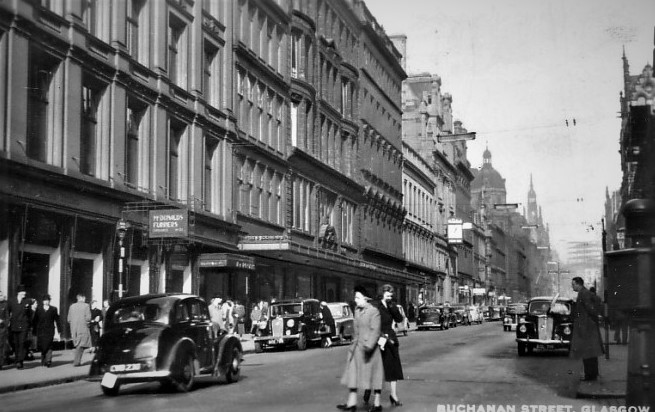
1966 saw me starting work, aged 17, as a junior sales assistant in the menswear department of an upmarket shop in Buchanan Street, Glasgow. For the princely wage of £5 10s 6d a week, I was to learn more about life working in that shop, from a man who would change my perception of myself and other people. He instilled within me the belief that no one was better than you. This was Mr Robertson, the senior salesman, who interviewed me initially for the position. Whilst I had no idea I was gay, he clearly did, possessing a ‘gaydar’ long, long before the birth of the internet dating site. He was 37, quite small, slim, bald, with slightly protruding front teeth, and wore thick horn-rimmed spectacles. He arrived for work drunk most mornings, having spent the evening before on a journey though the 1960s Glasgow gay scene. Starting at the cocktail bar in The Royal, he would then move onto Guys, or The Strand. He wore a leatherette coat, green corduroy trilby with feather, and a pair of leather driving gloves (he had neither a driving licence nor car and bussed it everywhere).

Most mornings Mr R would head straight into the changing room, dim the lights and send me to Ferguson’s (a high-class grocers) in Union Street, for a tin of Epicure white peaches in brandy. It was a long narrow can containing 4 whole fruits in the alcohol liquor. I would hand him the opened can, and having scoffed the contents with a spoon, he would drink the brandy. Then, with an adjustment of his tie knot, and with alcohol level topped up – hey presto! – he was ready to face his public at 9-15am.

Every day in the shop was a performance. You simply did not know what he would say next to the customers (who adored him, I might add). I was both terrified and in awe of him, and could not wait to get in to work every day, just to see what would happen next. He just didn’t care!

He would tell customers he was ‘just back from Tangier’, and ask ‘don’t you love my tan?’, when in fact he had bought a tin of Max Factor Creme Puff, and slathered it on his face.

Mr R lived with his elderly mother in a rented tenement flat in Govan. Yet, when dealing with the mostly wealthy customers in the shop, he spun a web of fantasy about his life. It was so convincing that even I who worked with him, and knew a little about him and his circumstances, had to ask if his stories were true. He would give me a withering look and send me off to make him a coffee. He would tell customers he was ‘just back from Tangier’, and ask ‘don’t you love my tan?’, when in fact he had bought a tin of Max Factor Creme Puff, and slathered it on his face.

One morning he sent me to his mother’s flat for something he had forgotten, and over a cuppa, I said it sounded as if Mr R’s latest holiday in Greece had been fabulous. ‘You must be mistaken’, she said, ‘he spent that two weeks at home, and anyway, he has never owned a passport.’

Mr R would exclaim, ‘Here he comes, all high kicks and low morals’.

Mr R had a frequent visitor to the department, a man called Frank, who in hindsight must have been his boyfriend. Frank was pleasant enough, but a ‘hard ticket’, who was frequently drunk, and black-eyed. They seemed to have been friends for years. They knew a really fun guy, Derek, who was, as they say, ‘a chorus boy’ in variety theatre. He would high-kick his visits to the menswear department, which didn’t go down too well. Mr R would exclaim, ‘Here he comes, all high kicks and low morals’. But actually, he was the sweetest, kindest guy. He was always ‘just going off’ to do summer season in Bridlington or Skegness, and his stories were outrageous.

I worked with Mr R for three of the happiest, funniest years of my life, and before he died, I happened to visit a small menswear boutique on the southside of Glasgow. Thirty years had passed but he still looked pretty much the same. The shop ‘wasn’t quite his style’ and as we chatted, he started sipping on a whiskey he had poured from the side of the till. It was ‘for his nerves’ since he was ‘held up at gunpoint’ a few weeks previously. Held up for some coins and a few pairs of socks? Was that true, or was it right up there with his Moroccan or Greek travels? I have no idea. But I believed it. That’s how good he was.

I understand why the “Mr Robertsons” of those times invented “worlds” for themselves, to just lose themselves in a nicer place where they were safe from harm

Those far off days of the swinging ’60s: Free love, The Beatles, Liberalism. That’s what the media would have you believe anyway. Sure, it was the decade of ‘free love’ but lest we forget, gay men were still going to prison, having to hide their sexuality at work or lose their jobs, were being thrown out of the house for being gay, beaten up…the list is endless and shameful. And all while, Dusty was topping the charts, and having to pretend to be hetero to have a career. I understand why the “Mr Robertsons” of those times invented “worlds” for themselves, to just lose themselves in a nicer place where they were safe from harm.

So, that was my journey: from dreading school, to loving work. Amazing, and all down to him. He would be amazed to be remembered today, but whatever I am today, I owe to him. Here’s to you, Mr Robertson.

Here’s to you, Mr Robertson.

Copyright © Jeff Meek 2013-2024 No part of this site, [QueerScotland.com], may be reproduced in whole or in part in any manner without the permission of the copyright owner.hor.

An Extraordinary Career: Marie alias Johnnie Campbell, 1871

RENFREW, November 1871

A fog had descended over Renfrew, swept in by the brisk November winds. Dr Allison turned his collars up against the chill and peered through the gloom, spying the address on Pinkerton Lane where a desperately ill young man awaited his attention. Discarding his cheroot, the doctor knocked firmly on the front door. He heard steps approaching and the door opened to reveal a tidy, middle-aged woman.

‘Mrs Early?’, Allison enquired.

“Aye doctor. Come in, he’s no’ well at aw!”

The doctor was led through the house to a dimly lit back bedroom, where a figure lay still, illuminated by a single candle, the dancing flame reflecting off his sickly pallor.

Dr Allison approached the patient. “Mr Campbell?” The man nodded, weakly wiping sweat from his brow.

“My back aches”, moaned Campbell, “and my head is fit to burst!”

Dr Allison noted the young man’s light voice, a weakness perhaps? Yet, as the doctor’s hand brushed the man’s cheek, he could not help but notice the smoothness of the skin. The doctor lit another candle and his patient recoiled, pulling the bedclothes further towards his chin. His hands gripped the woollen blanket; they were small hands, chubby with short fingers. He examined the patient, taking his temperature and checking his glands. He tutted loudly.

“Mr Campbell, I am in no doubt that you will need to accompany me to the Infirmary,” said the doctor, placing a reassuring hand on Campbell’s shoulder. “This is a most grave fever.”

The young man closed his eyes and muttered, “That, I cannot.”

“Then I’m afraid,” began the doctor, “you may breathe your last in this room. Your salvation is the hospital. There we can administer treatment that may very well prolong your life.” Campbell was still resistant.

“No,” he responded weakly, his eyes barely opening, “hospital presents all manner of risks.”

The doctor brought his face to within inches of his patient’s.

“Is it because of your sex?”

A New Life in Renfrew

When John Campbell had fallen ill with smallpox, he was residing as a lodger with the Early family in Renfrew, while he laboured at the local shipbuilders, Henderson, Coulborn and Co. Thomas Early had known ‘Johnnie’ for some time, striking up a friendship while they had worked farms in West Lothian, before Early and his wife settled in Renfrew. John had returned to East Calder where he courted and then married Mary Ann McKenna and had begun married life in Kirknewton. Their marriage had raised some eyebrows locally as McKenna’s reputation had been sullied by the birth of two illegitmate children, Julia and Francis, before she was twenty years old. However, the marriage was seemingly illsuited to both parties, and John had left the marital home within 5 months.

When Johnnie had arrived in Renfrew in search of work, he had contacted his friend Thomas Early, who had been happy to offer room and board. Mrs Early later reflected on just how amiable, agreeable and helpful Johnnie had been since his arrival, often helping her in the kitchen, and fellow lodgers with darning and sewing. So attentive had Johnnie been when Mrs Early fell ill with influenza that her husband had become quite jealous of their intimacy. Yet, Johnnie was much more interested in local lass Kate Martin whom he treated to trips to Edinburgh and with whom he shared many of his evenings. Johnnie, throughout his time since leaving Kirknewton, ‘adhered to the old habit of loving and associating with the lassies’. But what Kate and the Earlys were unaware of was that Johnnie had deserted a wife and three children in Kirknewton to start his life afresh on the west coast – the marriage had seemingly produced a third, legitimate, child.

In Kirknewton, Johnnie’s deserted wife Mary Ann had been brought before parish authorities who demanded to know where her husband was, and why he was no longer financially supporting his family. Mary Ann, fearful that her relief would be stopped made a quite extraordinary claim.

“John Campbell is not my husband.”

That was impossible stated her interrogators, for they possessed a copy of the marriage lines.

“I’m am not denying that we stood before God and made our commitment. But it was a fraud! For John is not John, she is Marie.”

A Life Unravels

The parish board dismissed Mary Ann’s claim. Surely a minister with the experience of Henry Smith would not be fooled by such an alleged masquerade? It was simply outrageous. She had also admitted that her recently born child was not her husband’s. So, what was it to be? Was her husband a woman, or, had Mary Ann deceived him and bore another man’s child? Perhaps, filled with betrayal and torment he deserted her? The latter explanation was much more palatable to the authorities; Mary Ann had already bore two illegitimate children. Her habit of lying with men that were not her husband had blackened her reputation. The board were resolute. Mary Ann was a liar and a reputed harlot. They had already experienced Mary Ann’s mendaciousness when investigating the paternity of her two previous illegitimate children, two children whom John Campbell had happily agreed to bring up as his own.

One can only imagine the consternation when news reached Kirknewton of an extraordinary case of fraud from Renfrew involving a woman posing as a man named John or Johnnie Campbell. The parish board gathered together a delegation to travel to Paisley Infirmary to investigate this ‘fraud’.

Mary Ann accompanied the Kirknewton Inspector of the Poor, and Will Waddell who had been a witness at the wedding, to Paisley Infirmary. On seeing her husband in a hospital bed in a female ward, Mary Ann exclaimed, “There she is, my supposed husband!”. John, or Marie, who was now attired in a nightdress, exclaimed, “Is that you Will Waddell? How’s the wife an’ bairns?”

When questioned, Marie claimed that Mary Ann had known full well about her sex: “Mary Ann knew that I was a woman; it was to make us more comfortable that we lived together”. Mary Ann however, claimed that she had married John, then a shale pit labourer, in good faith, and that the revelation had only occurred after the wedding. It seems that unlikely that revelation took so long to occur, as the couple had cohabited for 5 months before John’s desertion. Whatever the truth, Marie Campbell, alias John or Johnnie Campbell, had embarked on an extraordinary career from an early age. Her older brother, on his deathbed, had advised his sister to make her way in life as a man, for a woman’s lot was not a happy one. An alternative reason was given by Marie that she had been subject to ‘bad usage’ at a young age and for her own state of mind and security attired and lived as a man. From the age of 15, John of Johnnie, had worked in various labouring roles, from road surfacing to mining. In the language of the day many people, like Johnnie, may have struggled to accurately and publicly describe their own feelings. They also had to consider the potential opprobrium directed their way by a society largely ignorant of diversity.

Despite the shock that the revelations brought to those who knew Johnnie Campbell, few had scornful words. Former colleagues in Renfrew started a subscription to support their former colleague, stating that “a more kindly and obliging worker never was engaged in the yard”. The Earlys, particularly Mrs Early, thought of Johnnie with such fondness that she could not condemn. Marie faced charges under the Registration Act for fraudulently contracting a marriage; Mary Ann returned to West Lothian; and life in Pinkerton Lane returned to normal. Yet, everyone who knew Marie, alias Johnnie Campbell continued to remember fondly, the young person who had touched their lives.

History does not offer us an opportunity to ask questions of the long deceased, to explore their motivations, and it is difficult to apply 21st century definitions or labels. But it does enable us to demonstrate that within Victorian Scotland, attitudes towards ‘non-conformity’ were not necessarily all negative. Johnnie/Marie was liked, loved even, by the individuals they met and worked with. Prosecution did follow, but for misusing the legal institution of marriage and for fraudulently registering a marriage, and not for any issues relating to sex, sexuality or gender.

“Desperately Seeking Someone (Non-camp, No-effems)”: The Gay Personal Ad in Mid-1980s Scotland

By the 1980s the personal ad was fast becoming a popular medium for Scots gay and bisexual men unsure, tired, or weary of the ‘gay scene’ to meet others. During the 1980s these short advertisements were relatively free of the acronyms that would come to dominate the medium and lead to much head-scratching and confusion. Knowing your GSOH[1], WLTM[2], NS[3], WE[4], NSc[5], and OHAC[6] would prove invaluable by the 1990s. But the 1980s were a simpler time when acronyms were largely absent and ads were often focused on presenting a clear descriptor of what advertisers sought.

Lonely-heart advertising was far from an exact science; there was simply no way of determining that your respondents would match your idea of the perfect partner, thus ads had to be explicit about preferences and expectations.  What is evident is the explicit articulation of potential friends’/lovers’ qualities, and the dismissal of those men who might not meet the performative expectations the advertiser had set. ‘Straight-acting’ does appear, but infrequently, in 1980s ads, becoming more frequent in ads during the 1990s, but ‘non-camp’ and ‘non-effem[inate]’ crop up in around one fifth of personal ads during the period 1984-86, in Scottish LGBT magazines. This might be simply about personal choice, but history demonstrates the emergence of countercultures of gay masculinities during the post-war period, which rejected the stigmatised ‘effeminate’ identity closely associated in popular discourse with male homosexuality.

I have already written about gay and bisexual men’s attitudes to masculinity and effeminacy, and this demonstrates how men perceived to be effeminate were stigmatised by both heterosexual and homosexual communities. What is notable is that the majority of personal ads did not contain obvious references to masculinity, but where preferences were indicated these tended to be well determined.  This advertisement from May 1985 clearly frames the advertiser as a ‘non-effeminate’ man seeking others of that type.

Shetland (31) non-effeminate seeks others, this area or visiting.

The terms non-effeminate (and variations) and non-camp appear to be interchangeable. This advert also from May 1985 uses ‘non-camp’ to indicate the preferred deportment:

Glasgow Anywhere Dave (26) 5’10” blond non-camp into most things seeks sincere mates. Photo if possible, returned.

The use of ‘non-scene’ appears regularly to denote both the advertiser’s ‘position’ and that of expected respondents. As Alan Davidson has noted, the appearance of terms such as ‘non-scene’ and ‘non-effeminate’ were coded expressions of the rejection of ‘“stereotypical” presentations of self’.[7] The following ad includes a double-barrelled rejection of ‘camp’ and ‘effeminate’, firmly positioning the advertiser’s rejection of stereotypes, real or imagined, and any individuals firmly associated with stigmatised identities.

Is there [sic] any gay folks in Dunfermline ? Sincere, honest guy seeks friendship of same (21-23), non-camp-effeminate.

Similarly, ‘Fife Guy’, sets his requirements clearly even although his appears to be seeking friends rather than a relationship or hook-up.

Fife Guy (33) Seeks friends, straight-looking, non-camp, non-scene, non-smoker. Photo appreciated. No effems.

Notably, the addition of ‘no effems’ at the end of the ad may represent ‘Fife Guy’s’ uncertainty that ‘non-camp’ would exclude all men he deemed to be non-straight looking.

The next personal ad, from May 1985, emphasises the advertiser’s own concept of masculinity, strongly indicating a preference for ‘straight-looking’ men, further underlined by the requirement that he should married.

Glasgow Slim 34 year-old, masculine looking, passive seeks well-hung marrieds, straight-looking types for uncomplicated fun.

‘Durham Area’ (January 1986) takes discomfort with effeminate men a step further, emphasising his hatred of effeminate men, and his enjoyment of masculine pursuits. He aims to meet a ‘sincere lad’ who might appreciate some ‘old-fashioned loving’. Being fair and genuine did not stretch to gay men who, the advertiser believed, were engaging in gender transgressions.

Durham Area I’m just a fair, genuine guy, 40s. Hate effems. Looking for sincere lad who likes the country, pubs, humour, and a bit of old-fashioned loving.

Ads which refrain from anti-camp or anti-effeminate language occasionally refer to presumed facets of masculinity. Terms such as ‘macho’, ‘manly’, ‘fit’, ‘sporty’ and ‘active’ set an agenda for intimate interaction that is rooted firmly in conventional understandings of gender and gender roles.

The issue of normalcy also emerges from some personal ads. ‘Edinburgh’ (November 1985) describes himself as ‘bearded’ and ‘hairy’, signifiers of masculinity, while detailing his requirements for a ‘non-camp guy’. He ends his ad with a plea for ‘a normal gay person’, further distancing the ‘camp’ man from such a concept.

Edinburgh, W. Lothian, Glasgow. 29 year old bearded hairy bisexual seeks non-camp guy for fun, good times, 25-35. All I want is a normal gay person!

Notably, when perusing Scottish personal ads during the 1990s, the ‘no camp’, ‘no effems’ content appears to have largely disappeared. Whether this is the result of editorial policy or the rise of the cover-all term ‘straight-acting’ is difficult to gauge. Yet, despite some obvious hostility to and discomfort with gay men who did not perform an ‘approved’ version of masculinity, there are ads that counter these negatives. ‘Glasgow Area Athletic’ describes himself as ‘lightweight’, and makes clear that he seeks someone similar, rejecting ‘macho’ men:

Glasgow Area Athletic lightweight guy seeks similar 21-32 years for fun, wrestling exchange. Photos. Any colour, non-macho.

 This type of advert is much rarer amongst the collection analysed. The limited space within personal ads led to a form of personal, sexual and social prioritising which meant that the advertiser attempted to fill ads with details and requirements most important in their search for love, sex and companionship. This inevitably led to exacting requirements which appear judgemental, exclusive and quite often prioritised codes of masculinity.

Copyright © Jeff Meek 2014

All Rights Reserved.

[1] Good sense of humour

[2] Would like to meet

[3] Non-smoker

[4] Well endowed

[5] Non-scene

[6] Own House and car

[7] Alan G. Davidson, ‘Looking for Love in the Age of Aids: The Language of Gay Personals’, Journal of Sex Research 28 (1991), p. 132

Fear, Shame and Hope: AIDS in 80s and 90s Scotland

In a recent blogpost John D’Emilio argued that AIDS and its impact upon LGBT individuals and organisations, the militancy it provoked, and the heightened attention it drew to LGBT causes needs to be more fully documented and appreciated. This is certainly applicable to Scotland, and its responses, both social and medical, to the significant challenges that HIV/AIDS brought.

My research engaged with the impact that HIV/AIDS had upon gay and bisexual men in Scotland, many of whom were relatively young when their lives were touched or influenced by this new and sinister threat to life. Scotland had only decriminalised consensual gay sex between male adults in 1980, and the drive for equality was realistically still in its infancy. This blog post is not an attempt to document Scottish responses to HIV and AIDS but to reflect the experiences of gay and bisexual men during the 1980s and 1990s.

Chris was in his early 20s when the HIV/AIDS ‘dark cloud’ settled over Scotland:

It was horrendous, absolutely horrendous. Fear, fear of something you had taken for granted that was a big part of your identity and how you find joy and happiness and intimacy with other people that could suddenly wipe you out and do it horribly, you know, horribly…it was specifically, gay men who were isolated at that time, so there was another bit of ammunition for people who had a big grudge against gay men or didn’t like homosexuality for whatever reason, there was another huge big bit of ammunition.

Although the majority of early HIV/AIDS cases in Scotland affected another marginalised group – intravenous drug users, especially in Edinburgh – it was not long before the illnesses began to affect Chris much more directly. The impact was felt on a personal and emotional level, but also in the way that gay men saw themselves and were seen by wider society:

JM – Would you say that it impacted on people’s attitudes towards gay men?

Chris – [And] gay men’s attitudes towards themselves, yeah, definitely, and quite negatively, you know. [There was] the condom issue and the campaign with the tombstones and everything else and a leaflet going through every door in Britain, you couldn’t escape it, you really couldn’t escape it, and very quickly from ’80, ’81 people were actually being diagnosed and the first gay man who was diagnosed that I knew, was a friend, and of course then you think, ‘Oh my God!’. He was ill when he was diagnosed so he already had liver complications with diagnosis and deteriorated within a year and a half, two years, and died. His then long-term partner was positive and other really close friends that had been in that circle and had been intimate, one by one were being diagnosed positive.

Chris saw the impact that the disease was having on individuals he cared about but also the impact that it was having on attitudes to homosexuality. Yet, despite increased opprobrium directed at gay men, responses from LGBT organisations were not tempered by hostile attitudes:

JM – How did that impact on a political level in your life?

Chris – Yeah, I think that was just another injustice really. It all goes back to London, the sort of Stonewall era and Terrence Higgins Trust and a lot of the things that came up then I don’t think would have surfaced in such a strong, such a political way had it not been for HIV.   HIV and the reaction or the backlash against, particularly, gay men at the time meant [that in a way] those organisations gained incredibly in power and status. [That happened in] Scotland as well because Scottish Aids Monitor were seen as coming and doing something for a community and were put there and funded because they were there to prevent or limit this outbreak within a community but I don’t think even at that stage there was the acknowledgment that the gay scene is not the only the ‘scene’… there’s a far larger percentage of men who have sex with men who don’t and will not put that tag on themselves or be put in that box.

For Ed, who spent time in Australia as well as Scotland, the emergence of HIV/AIDS had a cataclysmic impact upon his life and the lives of his partner, friends and family. Ed was not out to his closest family members and an HIV+ diagnosis prompted him to attempt to tackle issues relating to his sexuality and his health:

Well, it was a double whammy actually: my partner had died of AIDS and I got tested and [the test result] came back positive and I thought, ‘Right! I’ve got to tell them all’, so with my mother it was a double whammy, with her letter I wrote, ‘Dear Mum blah, blah, blah, not only am I gay but I’m HIV positive’ and she wrote back saying that ‘the main thing is that you keep healthy but I think it’s against nature that you’re gay’, just a short reply…

Ed has now been living with HIV for over 20 years, something that was unthinkable at the time:

Well, I was thinking about that a few weeks ago and thinking that it now all seems like a dream…you were going to so many funerals from that period, the late 80s right through to 2000, 2001, so many friends that had died. Well, you knew it was there and you were going from week to week to see who the next one was going to be and so you just had to get on with your life and basically, em, accept and deal with what was happening….and I look at it this way: you either accept what is happening or you just turn your back on it and go off and end it all…

Duncan recalled how the appearance of HIV/AIDS in Scotland impacted upon the attitudes and behaviour of many gay men:

I went doon to see a pal in London recently who had moved down from Glasgow and….he says, “Duncan, do you remember the days in Glasgow when it was just like a chocolate box and you could pick and choose any flavour or any variety you wanted, hard, soft?” and it was true, it was a very carefree…no awareness of AIDS and HIV and anything like that, you know, in these days and everybody was…I cannae say promiscuous, because that isn’t the right word for it, but there was a lot of people who were very active…But then, quite quickly, all of my friends were talkin’ about they’ve maybe knew somebody who actually had contracted HIV an’ once ye knew maybe one person or maybe two it really shoots it home to you and you just started to change your behavior.

Other gay men were overwhelmed by the power of AIDS, not just relating to illness, but the way in which terms such as HIV and AIDS had the potential to obscure the individual, their personalities, who they were:

Greg – I had a friend, who was quite ill herself, who volunteered at a hospice, and one afternoon she brought two guys with AIDS to a café near where I worked. I had met them both before, and my friend invited me to join them for a coffee. I’m ashamed to admit that I didn’t really want to face them. I went and I felt so powerless, so impotent. One of the guys was really very poorly and had mild dementia, and being frank, I couldn’t handle it. I’m ashamed of that, as gay man, I am ashamed of that.

HIV and AIDS also had an impact upon the LGBT rights movement in Scotland during the 1980s and 1990s. As mentioned, decriminalization had only occurred in 1980 and just as LGBT organisations were beginning to find their feet, and their voices, the hysteria amongst sections of British society and the British press had implications for non-heterosexual Scots.

Ed – Oh the nonsense, the sensationalism, the terrible way they treated children who were positive and they weren’t allowed to go to schools, and people were terrified to touch, you know. How they treated [them] in hospital at the beginning was terrible, sliding paper trays through the door to the patients, that sort of stuff, thank God that’s all gone.

Ken too lamented the emergence of further stigmatising discourses concerning the ‘gay plague’ just as confidence amongst sexual minorities was growing.

I think that was a sad thing and a difficult thing…there was parity in 1980 but things don’t change overnight, Joe Public was [still largely homophobic]…so maybe by ’82 we were starting to get somewhere but then [there was] the ‘gay plague’ in America, by ’86 it was here, so there was only that little window [of hope].

These recollections of the 1980s and 1990s are not peculiar to Scotland, but it is notable that the threat of HIV and AIDS emerged in Scotland so soon over after decriminalisation. This had implications for the development of LGBT movements, but despite considerable hostility and homophobia the pressing need for directed health services, and advocacy groups meant that voices silent for so long still demanded to be heard.


Copyright © Jeff Meek 2014

All Rights Reserved.

Please do not reproduce  content from this blog in print or any other media without the express permission of the author.
Risk, Embarrassment, Democracy! Glasgow’s ‘Queer’ Scene, 1955-2008

By the mid 20th century Glasgow was home to a growing non-heterosexual population, and wherever such groups exist there are platforms for social engagement. When I interviewed 2 dozen gay and bisexual men in the mid 2000s, stories emerged which detailed the history and development of the queer scene in Glasgow. I have already produced a map which details many of the venues which catered, publicly or privately, for the city’s non-heterosexual population, but in this blog post I want to flesh out beyond the structural history and engage with the emotional and social history of the queer scene in the city.

Stephen (b. 1939) recalled how he became aware that ‘gay’ bars existed in the city, during the mid 1950s:

I was in about 19 maybe 20 and I had overheard a conversation with my father and they were speaking about a local celebrity and my father’s colleague had told him about this celebrity being a ‘nancy-boy’ and he also told where this celebrity drank. So, I made up my mind then that I would need to get to this pub to get to know him, this celebrity, because then I would be on equal terms, I would be in a pub on chatting terms and maybe he would put me wise to things. It wasn’t a notorious gay pub, it was a classy pub and lounge bar and cocktail bar, and that’s where I went. It was the ‘Top Spot Mexicana Bar’ at the top of Hope Street.

Top Spot

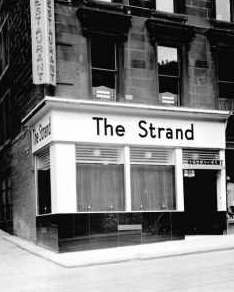
Stephen was keen to underline that although bars such as the Top Spot attracted a small gay clientele, discretion was still important as many of the patrons were unaware of this. However, in some bars there was an opportunity to be a little less discreet, such as in The Strand bar in Hope Street:

Stephen – When I first went in to ‘The Strand’ bar I didn’t realise …that you got ‘names’….you were either given a name or you were to pick a film star that you admired a lot, female, and they gave you that name. I had picked a film star who I looked nothing like but I did admire and they said ‘you don’t look nothing like her; you’ll need to pick somebody else’. I picked another film star and they thought this was ideal and I got her name.

Queer-friendly bar, Glasgow, 1950-60s

When I asked Stephen if all the gay men took female film star names, he told me that it was generally dependent on sexual role and personality:

Say a lad of 19 or 20, blond hair, came into the bar and he was nice and pretty and polite, they would probably have called him ‘Doris Day’. Whereas, if another lad came in who wasn’t blessed with the best of looks but kept himself as well as he could and was always rather acid when he was speaking to anyone, he would probably been called ‘Bette Davis’.

While Stephen indicated that being able to socialise with other non-heterosexual men gave him ‘confidence’, ‘reassurance’ and ‘psychological comfort’ there was always risk attached to meeting men in bars, even in gay bars.

In these days don’t forget, it was also very dangerous because you got people who were called ‘queer bashers’. So they would pretend [to be gay] until they got the guy up a lane or something and they would [beat him up].

While Stephen became a regular visitor to Glasgow’s queer scene during the 1950s and 1960s, other interviewees preferred to mix with a social group who generally avoided ‘popular’ haunts. Alastair (b. 1948), considers himself fortunate that he was able to become part of a group of largely middle-class men in Glasgow who preferred attending the theatre to socialising with the men in the pubs:

Well, you know, some of them were very attractive people but they were a bit rough. Now, let’s define what we mean by rough here, there is nothing nicer than a bit of ‘rough trade’ but they weren’t. As my late elderly gay friend would say, ‘Not quite in our garden’. I didn’t feel I had anything in common with them and then of course I met one or two pivotal people who introduced me to some very interesting, well-connected people.

There does appear to have been an element of a ‘clash of cultures’ on the Glasgow scene, which was largely the result of class differences.

Alastair – A lovely story about a gentleman in Edinburgh: he and his friend had picked up a long-distance lorry driver who was drop dead gorgeous and he brought him to a dinner party and he wouldn’t eat anything. Our host eventually opened a tin of Heinz Tomato Soup and threw a few croutons in and he wouldn’t eat it because of the croutons and the line of the evening was, ‘I’m a mince and tatties man myself’. So, predominantly I would go to these parties and there was a group of people round the city who almost every Saturday night would have a party. [They were] like-minded, probably slightly more effete men would go to them.

Another of my interviewees viewed the social diversity of the queer scene in Glasgow as something of great importance; where economic and social divisions were overcome through a shared sense of belonging.

Brian (b. 1936) –I went to a gay bar from time to time in town…it was in West Nile Street, it was at the back of a restaurant called The Royal. I remember going to this gay bar in The Royal when by that time I was a local celebrity and [I met] two boys who were an item…one was a joiner from Partick who told me wonderful stories about his early years in Partick, about wandering up Byres Road on a Sunday, and it was deserted – because there was nothing in those days – looking for a pick-up. He knew he’d find it in Botanic Gardens. He came from a working-class family living in Partick probably in one of the tenements just along Dumbarton Road. His mate was a boy who had come up from Ayrshire to work in one of the big stores in Glasgow as a window-dresser or something like that, and whose family had thrown him out when they had discovered that he was gay. The extraordinary thing was that the joiner’s family, who as I say were perfectly ordinary working-class family living on the Pollok estate, had taken him in knowing what the situation was between the two of them. I think one of the things about homosexuality is that it is probably one of the most democratic things…it is a sub-section of society that was probably ahead of its time in terms of the way that the social classes mixed, partly because we were all, if you like, aliens together so whether you came from a working-class background or whether you came from [another] it didn’t matter.

As they gay scene developed in Glasgow during the 1970s and into the 1980s, it took on a political edge, and offered a level of support and socialisation. For Chris (b. 1958) his initial visits to Glasgow’s scene offered more than simple entertainment.

It was really exciting, I think that’s the only word I can really describe it as, it was really different, really, really exciting and it wasn’t like anything else you could experience outside the gay scene and probably the gay scene today but I think as a young man today just coming out and feeling okay in his own skin it felt as if all the shackles had just disintegrated.

As a young gay man, Chris also noticed that the scene in Glasgow also equipped the less experienced with sets of guidelines and advice to maintaining your reputation:

You [were advised not to] pick people up in toilets, you know, there were 3 gay bars in Glasgow and the way to have your reputation absolutely trashed was to go to St Vincent’s Street and pick people up in toilets so there were other rules as important if not more important than the law…

What was occurring during the 1970s and 1980s was the further commercialisation of a queer scene in Glasgow, in an effort to provide (profitable) safe spaces for non-heterosexual men and women to meet and socialise. While some of my interviews viewed this development as a stride forward others felt a sense of disconnect, as Joseph (b. 1959) commented:

You go to [named bar] today and you hear young people say, “What’s that old bastard doing in here?”

What is interesting about these recollections is the diversity of experience. The queer scene in Glasgow during the 1950s & 1960s was governed by discretion. Some interviewees spoke of the democracy of the scene, whilst others noted some elements of division. In the 1970s and 1980s a more confident and identifiable scene emerged, but it still contained something like a paternalistic concern for individual and group welfare. This is not to say that the contemporary queer scene lacks any of these features; individual responses and interactions still govern, to some extent, individual experiences.

Copyright © Jeff Meek 2014

All Rights Reserved.

I’m always interested in hearing more experiences of Scotland’s ‘queer scene’, from the 1940s through to the 1990s.  You’ll find my email address here.

Feelings of Nostalgia and Disconnection among Gay and Bisexual Male Elders in Scotland

Andrew King’s recent piece about older people and homophobia published on the website The Conversation got me thinking about my own research interviewees with gay and bisexual male (GBM) elders, which I undertook in the mid 2000s.

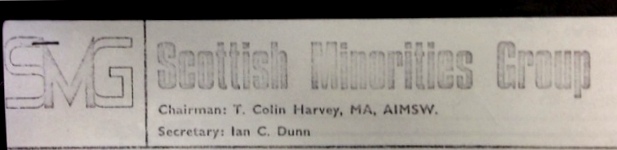
One of the notable issues concerning the homosexual law reform movement in Scotland during the late 1960s and 1970s was that it took on a largely ‘assimilst’ rhetoric. The Scottish Minorities Group (SMG), Scotland’s foremost homosexual law reform organisation believed firmly in the integration of LGB Scots into mainstream society, and demonstrated a sceptical attitude towards more radical organisations such as the Gay Liberation Front. Whether his was the result of a keen understanding of the cultural temperature of Scotland or a deeply held belief that assimilation was most desirable is debatable. What is not open to debate is that the SMG were successful in their campaign. However, some members were uncomfortable with this desire to conform; during the 1970s SMG were to suggest that although the use of police agents provocateurs to catch queer men cottaging was quite wrong, yet they also suggested that men who cruised for sex suffered from behavioural or mental difficulties.

SMGNews

When I interviewed two dozen older gay or bisexual men I was keen to understand whether assimilation and conformity was something that they had sought. Or had they been influenced by more radical approaches. ‘Brian’, born in 1936, saw more radical, politicised campaigning as unnecessarily confrontational. He included PRIDE events in this:

I’ve never taken part in [PRIDE]…and I don’t think I ever would; not my scene… Self-advertisement, there is a lot of that in it too, you know… But there is a certain breed of homosexual that wants to challenge all the time, they want to thrust it in your face.

 Perhaps unsurprisingly, Brian never participated in the gay rights or homosexual law reform movement, but does donate to LGBT support groups and charities. Brian was content separating his life into public and private spheres, only occasionally merging the two. Brian also feels uncomfortable about the contemporary gay ‘scene’; never venturing into gay bars. For Brian the ‘queer scene’ during the 1950s was governed by discretion, a quality that he has become rather nostalgic about. A lack of discretion, according to Brian can be problematic for today’s generation of LGBT Scots, as he described in a recollection of the experiences of a younger gay neighbour:

Until quite recently there were two gay boys living in this street. Funnily enough they had told me that certain people in this street actually shunned them because they were a gay couple. Now, I can believe it up to a point but I think that one of them in particular was kind of challenging people all the time to acknowledge him. He would go on about how they refused to acknowledge my partner…there was this sort of aggressive thing about, ‘You’ve got to recognise me for what I am and not for something else’. Is that necessary?

 Nostalgia for a previous, less ‘complicated’ era may sound rather contradictory. The era is which my interviewees operated was an era where homosexual acts were illegal (although rarely prosecuted unless they took place in public), so discretion was not a choice it was a necessity. All of my interviewees were pleased that things have changed in Scotland, and many were envious of today’s generation who largely avoid engrained homophobia and scepticism. Yet, for some, something had been lost.

Robert, born in 1937:

It’s that slight double life thing and there is a feeling of pleasure in that. [It] fed something in me.

 Yet, despite the ‘simplicity’ of the double life, it has left its mark on Robert’s ability to engage with a modern generation of GBM, and engage in meaningful relationships:

I’m deeply fucking annoyed that I have got to this age and I’m still so unfulfilled in areas of having a good connecting relationship and what fucking chance do I have now because of age and there is a bit of me that knows that I can’t do it but I do feel quite resentful that I have been deprived of that…

Alastair (b. 1948) was also quite nostalgic about being queer in Scotland during the 1960s and 1970s:

[There was a] lot of excitement because there was so much going on and whether or not it was legal didn’t actually matter too much. I can’t remember anybody having a great celebration party when the law changed, it just happened. [There was] a little bit of fear and a GREAT deal of excitement. The 60s were so exciting anyway and you know what they say, if you remember the 60s you weren’t there but I do actually remember quite a lot about it and the 70s were pretty wonderful too!

Queer-friendly bar, Glasgow, 1950-60s

However, one must be careful not to assume that because Alastair, Robert and Brian enjoyed the excitement and thrills of queer life in post-war Scotland, that they were unconcerned about the denial of basic human rights to non-heterosexual men. Perhaps there is a temptation to view the years before decriminalisation as characterised by unrelenting misery, loneliness and isolation but what became clear from my interviews was that queer men created opportunities for pleasure, sex, love and companionship.

When I asked Morris (b. 1933) if he was in any way envious of young LGBT Scots of today he gave it considerable thought:

[Long pause] I think they are enjoying a remarkable freedom….I think they are lucky and yet at the same time, I don’t know. [It’s much easier now] and maybe they just don’t appreciate that. It was fun when you are being criminal you know, and getting away with it, it was fun doing it right under their very noses. You were having the time of your life and they didn’t know, well you hope they didn’t know!

 Morris told me he would much rather have experienced queer life today as a young man rather than queer life in the 1950s but, at the same time, he would not change his past. His experiences, good and bad, helped form who he has become. However, the dramatic shift in lived experience for GBM today as compared to 50 years ago has led, in many instances, to a feeling of disconnect for some of my interviewees. I’ve already detailed Brian’s frustration caused by, in some part, so many years living a double life. Other interviewees told me how they find it difficult or challenging to relate to the ‘younger generation’.

Chris (b. 1958) told me:

When I am talking to gay men just now who are their teens or 20s it’s something they don’t even think about it [the struggle]… Just to be on that Gay Pride march every year in the early stages when people would throw things at you, was a political statement…

For Chris and other interviewees, the past was not another country: it played a part in forming the fabric of today, and some queer Scots of a younger generation are unaware or perhaps unappreciative at the endeavours, both personal and political, of their LGBT elders. While Joseph (b. 1959) has great admiration for this younger generation of LGBT Scots, who he believes, in the main, are aware of past sacrifices and battles, he does believe that commercial interests now dominate the ‘gay community’, which has been reshaped to attract certain groups:

I’m trying no’ tae generalise as it’s important no’ tae generalise but I do find on the commercial gay scene that there is an ageism which is very prevalent. I don’t actually buy into the idea that the gay scene is necessarily welcoming and affirming to everybody. I think individuals in that scene are but I don’t think that the commercial gay scene as a whole necessarily is and I think there is a lot of discrimination at work. You go to [a popular Glasgow gay bar] and you hear young people say, “What’s that old bastard doing here?”

 Of course, ageism isn’t restricted to aspects of LGBT communities but is perhaps more pronounced due to its spatial limitations. Colin (b. 1945) acknowledges the problems of elder LGBT visibility, not only within queer commercial enterprises but within wider society, ‘it’s as if they’re not there…invisible’, but accepts that when he was younger and visiting gay bars in London he also participated, to some extent, in this process: ‘I was drawn into that consumerist world’. Joseph argued that LGBT life should not be measured by the merits and failures of a commercial LGBT ‘scene’, which he feels has been dressed up as being reflective of LGBT experiences. He argued that for many years the LGBT commercial scene was more a ghetto than a community; a place where a marginalised group could theoretically meet, communicate and engage. But as with most ghettos, Joseph feels that it offers you what you want/need for a while until A – you need or are able to find something more rewarding, or B – you no longer feel part of it, or are excluded.

My interviews with these GBM over 50 offered an alternative view of ageing, connection and disconnection, community, and isolation experienced by a sexual minority in Scotland. None of these men wished a return to some sepia-tinted, halcyon queer past but wished to make two main points: queer life during the post-war period wasn’t all misery, gloom and furtive fumblings; there was colour, vigour and plenty of evidence of how queer men shaped their own experiences in the face of hostility, homophobia and potential criminalisation. Secondly, the march of progress, and widening rights was met with relief and joy by these men but they were conscious of how their experiences had led to a measure of disconnection with a later generation of LGBT Scots.

Buggery, Body Snatchers and Bewitchings

Throughout early modern and modern history homosexual acts have been the focus of condemnation, religious outrage, penal sanctions and considerable suspicion. In the 16th century further connections between the act and sinister superstition were made, contradicting earlier works which suggested that even demons drew the line at buggery. The new narrative claimed that witches, in particular male witches, engaged in diabolical sex (I’m sure we’ve all experienced this) and is evident in the, admittedly rare, references to sodomy in 16th and 17th century Scotland. Michael Erskine was accused of engaging in both sorcery and sodomy in 1630 and on being found guilty on both charges was burnt at the stake.  Half a century earlier, a John Litster and John Swan shared a similar grisly fate.

While the Dutch were busily garroting ‘sodomites’ during the 18th century, the Scots, particularly legal theorists, were ambivalent on the thorny issue of same-sex desire. Whilst some classed it amongst the ‘sodomitic sins’ (including buggery, bestiality, and opposite sex ‘unnatural fornication’), others such as John Millar viewed sodomy as a victimless crime (although it still warranted punishment). However, the taint of the diabolical apparently remained reasonably strong in popular discourses of same-sex desire well beyond the age of enlightenment. Take for example the case of George Provand, a successful young Glasgow oil and colour merchant, whose home in West Clyde Street was attacked and vandalised in early 1822. Provand’s tale of terror has been told numerous times on Glasgow local history sites and by the well-known Glasgow journalist Jack House in his book The Heart of Glasgow. According to these popular sources, Provand was accused of abducting local children, butchering them and adding their remains to his oils and colours. One ‘witness’ swore that he saw in Provand’s basement a flowing river of blood upon which bobbed the decapitated heads of children. Provand was also accused by the mob of being involved in black magic, or, in the supply of fresh corpses (albeit missing their heads it seems) to medical instructors.  There seemed no end to Provand’s devilish pursuits.

However, what these popular sources often ignore is that he was also accused of inviting the sexual favours of young local men. The riot, which led to the ransacking of Provand’s mansion, may have been instigated by the claims of 17 year-old John Graham (amongst others) who stated that Provand had paid him 6d ‘to work his privates’ (a description which occurs frequently in cases relating to homosexual acts). Criminal charges were laid against the rioters and looters, with one ‘whipped through the town’, and another 4 sentenced to transportation.  Provand was charged in April of that year with sodomy and was initially found guilty. His failure to appear in court led him to be outlawed and ‘put to the horn’, but ultimately the allegations were viewed as being an attempt to discredit the victim of (or to justify) violent crimes. Whether Provand did enjoy the regular physical company of men is open to debate but these accusations grew legs and ultimately alluded to demonic pursuits, which although hysterical, bring to mind the accusations made against 16th and 17th century male ‘witches’, whose fates were considerably bleaker than Provand’s.

Further Reading

Theo van der Meer, ‘Sodomy and the Pursuit of a Third Sex in the Early Modern Period’ in Third Sex, Third Gender: Beyond Sexual Dimorphism in Culture and History, ed. by Gilbert Herdt (New York : Zone Books ; Cambridge, Mass. : MIT Press, 1996, c1993), pp. 407-429

Tamar Herzig, The Demons’ Reaction to Sodomy: Witchcraft and Homosexuality in Gianfrancesco Pico della Mirandola’s “Strix”, The Sixteenth Century Journal , Vol. 34, No. 1 (Spring, 2003) , pp. 53-72

Langside Hall: A Concise History

langsidemod

By the midpoint of the 19th century successful businesses wished to build offices that reflected their optimism, growing wealth and confidence, especially at a time when Glasgow was cementing its position as the second city of the Empire. One such organisation, which emerged during the early part of the century was The National Bank of Scotland (NBS) (established in 1825) and after a failure to acquire the Glasgow and Ship Bank, the NBS undertook to open their first Glasgow branch in 1843.  Occupying temporary accommodation in the first instance the bank launched a public competition to design a more suitable building. A young London architect, John Gibson (1817-92), then working under Charles Barry, entered the competition and his plan was unanimously chosen as the winner. On Gibson’s first official trip to the city he was treated to a public dinner given by the ‘principal gentlemen of Glasgow’ and commented that ‘I was much gratified by the kindness shown to me in Glasgow, and surprised to see so many public monuments, and all by the best sculptors’. After the final plans were approved construction of the new building, in Queen Street, began that winter and was completed within 4 years.

According to ‘The Glasgow Tourist and Itinerary’ (1850) the completed building was ‘commodious and elegant; the telling-room being elaborately ornamented, and its polychromatic decorations [executed by H. Bogle & Co., Glasgow, house painters to the Queen] are tasteful and appropriate’.  An article in The Civil Engineer and Architect’s Journal in September 1849 confidently stated that ‘there is not yet one building of the class in all the metropolis which offers anything like the same degree and completeness of embellishment’.

PTDC0020

An engraving of the National Bank building, 1849

The exterior of the building was similarly lauded for its beauty. The building’s inspiration was to be found in the work of Vincenzo Scamozzi, the Venetian architect, with the ground floor rusticated with five arched openings, the centre opening housing the doorway.  The entrance is flanked by double Ionic columns.  The windows are separated by pilasters (flat columns, flush to wall), which appear in double form at the corners of the building. The original door was of a bronze-green colour and was ornamented with bronze paterae (circular ornaments) and studs.

PTDC0021

The Telling Room of the Bank

The architectural design of the building was impressive but was further improved by the addition of sculptures designed by London’s John Thomas (1818-62), who was to work often within Glasgow, and worked on the Houses of Parliament, Balmoral, Windsor, and Buckingham Palace, and became a favourite artist of Prince Albert. The Prince commissioned Thomas to create two large bas-reliefs of ‘Peace’ and ‘War’ for the latter palace. Thomas was to create the Graeco-Egyptian Houldsworth Mausoleum at the Necropolis and the designs for the industrialist Houldsworth’s new home at 1 Park Terrace. For the National Bank, Thomas ornamented the windows with carved keystones representing major rivers of Britain (the Clyde, Thames, Tweed, Severn & Humber – although there has been some dispute as to whether the latter two were in fact the Shannon and Wye).

A small bust of Queen Victoria was placed in the centre of the attic frieze. Portland stone Vase finials and the Royal Arms, supported by a unicorn and lion,  ornament the roof frontage of the building which was faced with stone with a light-grey tint, supplied by the Binnie Quarries near Edinburgh, and the masonry was executed by John Buchanan.  The side of the building was similar in design to the front but had only three windows per floor, divided by double pilasters. The rear of the bank had an out-standing gallery, within which stood another entrance which was ornamented by Ionic columns.

The interior of the building was resplendent with the telling-room of the bank boasting a 23-foot in diameter dome filled with colourful stained glass, provided by Ballantine & Allan of Edinburgh, who had also provided the stained glass for the House of Lords.  The walls were decorated with columns and pilasters painted a deep red, with white bases and tops. Near the base of the pilasters a band of black marble framed the flooring. The frieze above the columns was adorned with roses, shamrocks and thistles. The ceiling, following this colourful design, was crimson, blue and gold, with this work being undertaken by the Glasgow firm, Bogle & Co. The floor between telling counters (carved from mahogany), directly beneath the dome, was paved with coloured marbles, which in the centre formed a radiating star. The telling-room was positioned to the rear of the building and the front area was to be found along a handsome corridor, adorned with panels of contrasting colours, which led to a committee room, manager’s room, and waiting room.

So enthralled with the design of the building, The Civil Engineer and Architect’s Journal (1849) enthused that ‘the Scotch seem to have got greatly ahead of us in tasteful as well as liberal decoration of places of public business’. However, such splendour, which had initially excited the Bank’s directors, was to lose its appeal as the 19th century progressed. By 1896 the NBS was seeking new and more suitable premises for its business in Buchanan Street, at the junction of Buchanan Street and St Vincent’s Street. In a letter to architects a representative of the Bank’s directors stated ‘My directors do not favour the idea of anything of the nature of elaborate decoration…and have expressed a leaning towards a thoroughly businesslike building…of chaste design’.

Thus, the future of the building appeared bleak by the tail end of the century.  However, efforts were already underway to purchase the building from the NBS. In November 1896 an offer from Mr Richard H. Hunter, philanthropist and chairman of Hunter, Barr & Co Ltd, wholesale warehousemen & shipowners, was accepted on the provision that the Bank could continue to occupy the building for a further 4 years, while their new premises were constructed. However, this initial bid failed, but the same company made another offer in July 1898 to purchase the building for £59,000. The Bank rejected this bid and were holding out for an offer of £60,000, which they received in August the same year with provision to allow the bank to remain in the premises until 1901. Hunter was to retain the land from the sale and on this built the Hunter Barr Building (which still occupies the site today) designed by David Barclay.

From Bank to Public Hall: The Rebirth

One of the problems Glasgow Corporation had faced in supplying a public building for the Langside, Battlefield and Mount Florida districts (promised after annexation) was where to build.  After annexation a committee was appointed by the ratepayers of the districts to negotiate with the corporation.  After much discussion, bickering and frank exchange of opinions 3 main ‘preferred’ sites were identified: 1. The north side of Battle Place, on the Camphill Estate 2. The south side of Battle Place on ground owned by two proprietors 3. At the junction of Langside Avenue and Pollokshaws Road, also in the grounds of Camphill (the least preferred).  Positioning the halls at the place of Queen Mary’s defeat at the Battle of Langside was initially viewed by the corporation as the victory of sentiment over practicality.   In 1899 Bailie John Oatts suggested that the south side of Battle Place was the most preferred site but purchasing the ground would prove to be too expensive. The north side was problematic as the elevation of the ground would prove troublesome to builders. The land at the junction of Langside Avenue and Pollokshaws Road was problematic as the position of the new halls would favour the residents of one district.  It would appear that the chosen site, the latter of the options, was a compromise.

Yet, the decision met with considerable protest from sections of the local community who took exception on two grounds: the encroachment onto the Camphill grounds & the geographical positioning of the new halls. Indeed, in 1901 a committee of ratepayers took their objections before Sheriff Guthrie and the corporation were accused of being ‘high handed’ while the objectors were accused of ‘humbugging’. Further, the objectors did not believe that the former National Bank building, newly acquired by the corporation, was fit for purpose. The building had not been retained by Hunter after he purchased the site in Queen Street and the offer of a ready-made public hall was too tempting for Glasgow Corporation to dismiss, even if it meant bringing it, brick-by-brick, to the Southside.

Once the lengthy discussions had ceased and legal objections had been rejected Alexander Beith McDonald was instructed to re-design the building’s interior (although the bulk of the work was undertaken by Robert Horn).  A utilitarian building was needed so, regrettably, much of lavish interior was removed (the interior had previously been altered under the direction of James Salmon in the mid 1850s).  The entrance was given a green-tiled hallway and a double staircase was constructed which led up to the lesser hall (with gallery), which when finished could house 320. The upper hall was designed to accommodate a further 100 souls, while the former telling-room was turned into the large hall, which could accommodate 850.  Sadly, the splendid stained glass-filled dome was removed entirely and the plasterwork replaced.  A reception room was designed to accommodate around 20 people, and several smaller spaces were created. The new Langside Public Halls were also equipped with cloakrooms, a buffet, and kitchen.

After much delay, deliberation and some dissent, the new halls for Langside were officially opened on the 24 December 1903.  The Lord Provost John Ure Primrose, Baronet, was unable to attend due to a prior commitment and his place was taken by Councillor William Martin, the convener of the special committee of halls, Councillor W. F. Anderson and Bailie Finlay.  Finlay, acting on behalf of the Watching and Lighting Committee accepted custody of the halls.

Councillor Anderson informed the gathered crowd that the builders who had re-erected the building using the 70,000 numbered stones recovered from the demolished bank building did so without seeking a farthing of profit, which was met with applause. Those attending the opening were treated to vocal and orchestral concert.  This grand opening was covered by the Glasgow Herald and The Scotsman newspapers, amongst others, in their Christmas Day 1903 editions.

Over the past century Langside Public Halls have played a significant role in the south Glasgow community. The halls have figured prominently in the rich and diverse social and political history of the city, playing host to John Mclean and the famous Red Clydesiders (Maclean was arrested 4 times outside the halls), Sylvia Pankhurst and the Scottish branch of the Women’s Social and Political Union, and the Scottish Young Conservatives annual conference.  It has been a true community hall where Glasgow Progressive Synagogue was temporarily based, where the annual Glasgow Congress ‘International’ chess event packed out the main halls, where the world famous Smetana Quartet of Prague performed in concert, and where the resident band The Crackerjacks filled the floor of the large hall in the 1950s.

John Maclean

The story of Langside Public Halls is a truly remarkable one.  It is a story of architectural excellence and a story of survival.  With the removal of the National Bank of Scotland, Queen Street Office to the southside of the city one of Glasgow’s most admired buildings survived to play a central role in the social and community history of the area.


Copyright © Jeff Meek 2013

All Rights Reserved.

James Adair: Lord Protector of Scottish Morality

Few names will stir the emotions amongst LGBT Scots, who were alive during the deliberations of the Wolfenden Committee, than James Adair OBE. Adair wasn’t the only Scot to sit alongside John Wolfenden, but he is probably the most in/famous. He was to disagree fundamentally with the recommendations of the committee regarding homosexual offences and produced a minority report that questioned the moral reasoning of decriminalising homosexual acts between men.

James Adair
James Adair c.1957

In the 2007 BBC 4 drama, Consenting Adults, Adair was played as a somewhat disagreeable and pompous man, by the actor Sean Scanlan. Just how pompous and disagreeable he was is difficult to ascertain as we know so very little about this former procurator-fiscal, who had a long and successful career as a prosecutor. What we do know is that he was an elder of the Church of Scotland who grabbed many column inches through his unwavering opposition to homosexual law reform. He lived to see the change in law in England and Wales in 1967, and in Scotland in 1980, as he died in January 1982 at the ripe old age of 95 (this is despite being ‘killed off’ by Lord Ferrier – Victor Noel Paton – in a debate regarding homosexual law reform in Scotland, in 1977). Adair outlived his wife Isabel, by 32 years.

The purpose of this blog post is to flesh out the rather one dimensional view we have of Adair, whose portrait above does little to add personality or vigour to the name. Born in Barrhead in 1886, Adair was the eldest son of William, an iron turner and Catherine, and he grew up in George Street and Barnes Street, Barrhead. On leaving school at 13, young Adair took employment as a clerk in a local legal office. Adair was obviously motivated by this early exposure to the legal profession, as he studied law at Glasgow University, eventually qualifying as a solicitor in 1909, and entering private practice in criminal defence, serving his apprenticeship with Glasgow solicitors Brownlie, Watson & Beckett. In 1919, at the instruction of J. D. Strathern, he was appointed procurator-fiscal depute, with his first case, the George Square Riots of 1919. In 1933, a year after he transferred to Edinburgh,  he was involved in the Kosmo Club trial regarding ‘immoral earnings’. In 1937, he succeeded Strathern as procurator-fiscal at Glasgow.

Adair had a particular interest in morality, perhaps fostered by his membership of the Church of Scotland, and was associated with the National Vigilance Association of Scotland, particularly during the period of WWII, when he was delighted to announce to the NVAS that in Scotland the war had resulted in very few ‘fallen women’. Away from his legal and moral duties, Adair was to build a reputation as an entertaining public speaker on topics such as; Old Glasgow Streets, Old Glasgow Characters, and Edinburgh Life. He also had a long association with the Scottish Burns Federation (I wonder what he made of Burns’ ‘interesting’ sexual life), and with the Young Men’s Christian Association (he was the chairman of the Scottish National Council & from 1962, World President).

But it was Wolfenden that pushed Adair onto the public stage. Adair’s greatest fear was that law reform would have a devastating effect on the young in Scotland (Lord Arran appears to have picked up this particular baton recently). He stated that: “The presence in a district of…adult male lovers living openly and notoriously…is bound to have a pernicious effect on the young people of that community”. Adair’s proclamations of doom were seized upon by the Scottish press, with The Bulletin & Scots Pictorial lauding his input: “We should be glad if the things discussed…could be wiped out altogether…There is not much doubt that this disgusting vice has been becoming…more ‘fashionable’…”. The Scotsman took a similar editorial stance, and the Daily Record could barely conceal its outrage. Speaking at the General Assembly of the Church of Scotland in 1958, Adair caused panic in the cloisters by claiming that within weeks of the publication of the Wolfenden Report, a homosexual ‘club’ in London, offering information on meeting places including public lavatories, had received nearly 50 applications for membership, and in one square mile of London there were over 100 male prostitutes offering depraved services. Adair’s fear was that any change in law would enable ‘perverts to practice sin for the sake of sinning’ in Scotland.

Yet, there was an element of mendacity about Adair’s claims. He would have known, first hand, that homosexual prostitution was already thriving in Scotland by the turn of the 20th century and by the 1920s there were organised groups of male prostitutes operating in Glasgow – a city, he had previously hinted, with a a greater attraction for gay men. In reality Adair was upset that the previous policy of ‘silence’ regarding same-sex desire in Scotland was under threat, and by emphasising the potential for moral turpitude, he hoped to consign homosexual law reform in Scotland to the dustbin. In any event this was what effectively happened due to the peculiarities of Scots Law. Adair became a representative, a figurehead, for moral objections to homosexual law reform in Scotland, and would have been quietly satisfied that within a few months of the publication of the Wolfenden Report, Scottish silence had been restored (albeit to be resurrected in the mid 1960s, but with a similar result). Adair, his job done, could retire into relative obscurity, appearing now and again from his home in Pollokshields to offer a talk on old Glasgow, or to attend meetings of The Galloway Association of Glasgow.

Copyright © Jeff Meek 2013

All Rights Reserved.