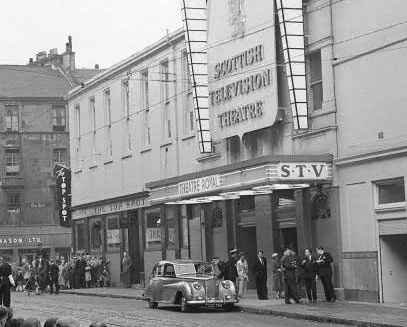
Our Myriad lgbtqi+ Lives

3pm, Wednesday 12th February, Dalhousie 2F11

Speaker, Brian Dempsey, School of Law

All welcome, registration required. Please visit here to register.   

We have always been part of Scottish history, and we continue to make Scottish history.

  • From the 6th century man-loving priest Findchän to the unnamed trans or intersex person (‘skartht’) whose very existence was supposedly a portent of James II’s death (1460)
  • via the ‘female sodomites’ Elspeth Faulds and Margaret Armour (1625), the ‘lesbian         schoolmistresses’ Jane Pirie and Marianne Woods (1810) and the gender fluid paganist William Sharpe/Fiona Macleod (d. 1905)
  • to the fight for repeal of ‘Section 28’ (2000), for marriage rights (2014) and for respect for trans autonomy (ongoing) and infinitely more.

Let’s share and celebrate some of Scotland’s many lgbtqi+ lives.

Homosexuality and the Scottish Press 1880-1930

A guest post by Dr Michael Shaw, Senior Lecturer in English Studies at the University of Stirling.

In his History of Sexuality, Michel Foucault famously critiqued the ‘repressive hypothesis’. Far from simply being repressed or restricted over the nineteenth to twentieth centuries, Foucault argued that there was a proliferation of discussion on sexuality at this time, an ‘incitement to speak about it’. I’ve often wondered about how this idea might apply to Scotland, which is sometimes portrayed as a nation that was either silent or quiet on homosexuality before the 1960s. How extensively would homosexuality have been discussed in Scotland between the end of the nineteenth century and the beginning of the twentieth, and in what contexts? How would it have been alluded to? Was the treatment always hostile? And what materials might still exist to help us understand these discourses today?

Over the past year I’ve been working on a Royal Society of Edinburgh-funded project, titled ‘Homosexuality and the Scottish Periodical Press 1885-1928’, to address the above and related questions. Having done some initial research on the representation of the Oscar Wilde trials in the Scottish press, and knowing how extensively his trials were covered in some Scottish newspapers, I wanted to think more broadly about the ways in which Scottish print culture engaged with homosexuality, beyond criminal trials and police reports. How might queer novels, or sexological writings, have been received in Scotland, for instance? Were poems or stories alluding to same-sex love published in the Scottish press?

I knew I would likely have to confront a range of ‘negative results’ during this project: there would undoubtedly be newspapers and magazines that enforced a studied silence on homosexuality. Those silences themselves are of interest, but I suspected that there would also be more coverage of homosexuality, beyond criminal cases, than tends to be acknowledged.

The project took me to various locations, ranging from Dumfries to Dingwall. Rather than rely on electronic databases, I wanted to work with physical collections as much as possible – making sure that lesser-known titles were consulted as much as the more obvious newspapers and magazines. Given the vibrancy of Scottish periodical culture c.1880-1930, I knew there was no way I could be exhaustive with this study. But I wanted to build a thorough sample, by exploring how periodicals from different locations, with differing political persuasions and religious associations, speaking to different professions or groups, discussed (or didn’t discuss) homosexuality.

What became clear was that there were a number of discussions of, and allusions to, homosexuality in Scotland over this period in the press, although there were differences in the way the topic was handled across different years and locations. It also became clear that discussion of homosexuality and homosexuals was not always hostile (future publications will discuss these findings in more detail).

Sometimes, it was in seemingly unlikely places that expressions of sympathy were found. The Scots Observer (1926-34), for instance, was a weekly newspaper devoted to representing the presbyterian churches of Scotland, hoping to express ‘the collective aims and ideas of the Scottish Presbyterian Churches’. The Scots Observer was also concerned with the Scottish literary renaissance and intellectual developments of the day, and it did not always manage to reconcile its differing concerns. The editor, William Power – who was not only a supporter of the Renaissance, but would go on to become the leader of the Scottish National Party during the Second World War – later noted that the political and intellectual sympathies of the paper drew critique from some of the church leaders.

The Scots Observer’s more provocative dimensions are evident in an anonymous 1927 review of a book titled The Invert and his Social Adjustment by ‘Anomaly’ (who describes himself in the book as a Roman Catholic, aged 40). The review not only discusses homosexuality but calls for greater tolerance of homosexuals:

Of recent years it has been found that a certain proportion of people […] are as instinctively homosexual as the normal individual is heterosexual. […] Such people have special and very difficult problems in life to face, and an idea of what these are and how they may be faced is given in a recently published book “The Invert and His Social Adjustment’. […] The writer, who is himself an invert, and also a devout Roman Catholic, makes it clear that the incidence of immorality among inverts is precisely the same as among normal people, and he also shows how, in the necessary process of “sublimation,” socially valuable qualities may be developed.

Much like the book, homosexuality is represented as ‘abnormal’ here but it is simultaneously characterised as being as ‘instinctive’ as heterosexuality, and the review highlights the difficulties homosexuals in the early twentieth century had to face. The reviewer also appears to be convinced by the author’s dissociation of homosexuality from immorality. Following these comments, a quote is included from the ‘wisely written’ introduction to the book by Dr Robert H Thouless, a Lecturer in Psychology at the University of Glasgow at that time. Thouless stated that the book helps to ‘approach the problems of inversion with knowledge and charity’, which is the note the review ends on. In his introduction, Thouless also noted that ‘the virtuous love of a homosexual is as clean, as decent, and as beautiful a thing as the virtuous love of one normally sexed’.

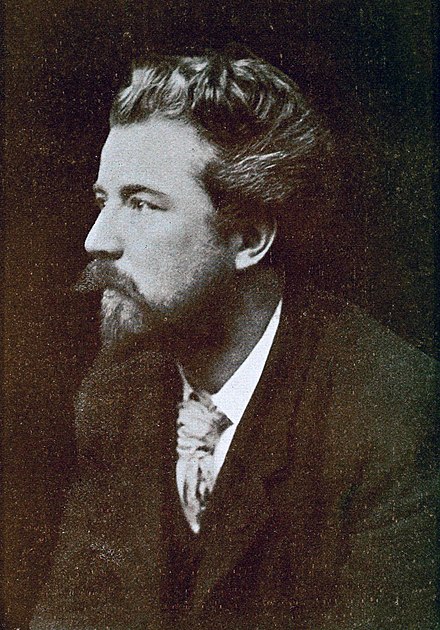
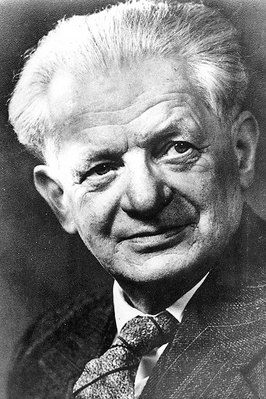
Dr Robert H Thouless

The Scots Observer’s review does stress the ‘necessary’ process of sublimation (deflecting sexual thoughts towards non-sexual activities), which appears to depart from the book’s ambivalence around physical intimacy: ‘Anomaly’ focuses on challenging ‘excessive indulgence’, while noting that homosexual love is ‘no more susceptible to sublimation into an absolutely non-physical emotion than the love of man for a woman’. While there is no negative commentary on the ideas voiced in The Invert and his Social Adjustment, The Scots Observer does appear to take a more conservative stance on physical intimacy in its review.

Nevertheless, in choosing to give notice to this book, and in sympathising with its calls for greater toleration of homosexuals, we witness an example of the ways in which Scottish newspapers and magazines, including religious titles, could contribute to expanding awareness of homosexuality in the 1920s, even if – going back to Power – this may have been one of the contributions that certain church leaders disapproved of. It is clear that Scottish periodicals were not always concerned with repressing discourse around homosexuality; not uncommonly, they were sites to discuss, analyse, condemn and sympathise with homosexuals across the 1885-1928 period.

If you would like to provide a guest article for QueerScotland, please do get in touch.

The Trial of William Merrilees, 4 April 2024

This April, the James Arnott Theatre at the University of Glasgow will present The Trial of William Merrilees, a free Judicial Theatre performance by doctoral researcher Kfir Lapid-Mashall, based on a collaboration with Dr. Jeff Meek and his book Queer Trades, Sex and Society: Male Prostitution and the War on Homosexuality in Interwar Scotland.

Join this one-night-only, unscripted performance, where you get to decide the verdict.  

William Merrilees

About the show

When law and desire clash, which side do you choose?

Edinburgh, 1934. In a city plagued by illicit acts, detective inspector William Merrilees wages war against ‘deviants’ committing sexual offences in urinals, bathhouses and parks. Breaking the law, queer men use these clandestine spaces to express their desires. They are persecuted by the authorities, face criminal charges, and imprisoned.

Glasgow, 2024. Charged with Misconduct in Public Office, detective inspector William Merrilees will stand trial for the alleged abuse of power in his campaign against homosexuality.

Be the jury in an unscripted performance of Judicial Theatre, hear both sides, ask questions of the witnesses, and decide the fate of controversial figures from Scotland’s queer history.

The Trial of William Merrilees will take place on Thursday, 4 April 2024, at 7:00 pm at the James Arnott Theatre (Gilmorehill Centre, 9 University Avenue G12 8QQ).

Tickets are available for free here. For more information about the show, please visit the show’s website.

This event is presented by Thinking Culture, a cultural programme supported by the School of Culture & Creative Arts, University of Glasgow.

Content advisory: The performance will include explicit references to sex and sexuality, and police abuse of power.

No Villains or Heroes?: The Whitehats and Rosebery Boys

My book Queer Trades, Sex & Society: Male Prostitution and the War on Homosexuality in Interwar Scotland is out now. This is a little taster.

I first encountered the Whitehats in Angus McLaren’s Sexual Blackmail, almost 20 years ago. He noted that the group had caused some anxiety in Glasgow and had exercised local MP George Buchanan. As I was, at the time, undertaking oral history interviews with gay and bisexual men for my PhD, I put the Whitehats to the side. That was until I met Andrew Davies at a conference in St Andrews. I had given a paper in which I had briefly mentioned the Whitehats and he pointed me in the direction of Glasgow police archives. I had already uncovered a trial record for the ‘leader’ of the Whitehats, William Patton or Paton, but at the Glasgow archives, I was able to put a face to the name. Also there, were police records for the other members of the gang, a group of stoney-faced men in their twenties, images that contrasted with their descriptions in the press and trial records. Perhaps ‘stylishly-dressed’ and ‘fashionably-dressed’ looked different then. That is, compared to William Paton (aka Liz Paton), with his wing collars, thin tie and baker’s boy flat cap. But I did not know quite how to categorise men such as Paton, John Townsley (aka Florence Ramsay), Thomas Robb (aka Maria Santoye), Patrick Neville (aka Ella Shields), Joseph McMahon (aka Happy Fanny Fields) ,and the others. While their working or camp names (and their use of ‘powder and paint’) expressed a level of femininity or queerness – and some of them had convictions for homosexual ‘offences’ – most had convictions for other crimes; theft, robbery, violence, and sexual assault. Buchanan had also suggested that the group engaged in (homo)sexual blackmail but had not been prosecuted due to the victim’s unwillingness to appear in court. But this was a group identified by the police and courts as a ‘gang composed of male prostitutes’.

The more I dug, the murkier it became. Paton’s ’empire’ had begun with organising illegal nightclubs and female prostitution in the West End of Glasgow (one being above The Arlington Pub ). Paton would rent premises by presenting himself under a pseudonym, with a ‘fake’ wife (generally one of the sex workers) to the letting agencies, sometimes calling himself William Dallas or Greig or Robertson. Once the premises were secured and furnished with a full bar, and some ladies, Paton and his associates would stake out the main railway stations seeking male visitors to the city, who they entice back to the premises with promises of cheap drink and sex. Once the operation was smashed by the police, Paton would be described in the press as the leader of the underworld of Glasgow (something of an exaggeration) and ‘the dynamic force among a number of notorious men and women of fashionable appearance’. Paton got 18 months. That 18 months added to his considerable criminal record. Paton was by then 31 years of age and he already held a number of convictions in Dundee, Edinburgh and Glasgow. As did his mother Agnes. Agnes ran the ‘legitimate’ side of their enterprise, first a cafe in Stobcross Street and then a fish restaurant on the Broomielaw. The rear living quarters of the restaurant would act as a brothel for male sex work.

Paton was released early from his sentence suffering from colo-rectal cancer. He survived. But his influence and desire had diminished. The restaurant on the Broomielaw was not proving to be a success, so Paton returned to queer male sex work (actually where his criminal career in Glasgow had begun). The restaurant acted as a form of hub for the Whitehats, as the cafe in Stobcross Street had previously. But by now, Paton was a marked man, followed by the police wherever he went. And on one evening in September 1928, it all came to an end. After escorting a soldier back to the Broomielaw ‘brothel’, Paton was caught in the act, thanks to an electric lightbulb, an uncurtained window and a nephew suffering from encephalitis lethargica – the uncurtained window and lightbulb presented the police with a perfect view, and the nephew asleep in the same room, made the act ‘public’. Paton got 3 years. Some of the Whitehats had died while Paton was in prison, others had returned to ‘normal’ trades (some were married with children), while others like John Townsley drifted into petty criminality and alcoholism (he was prosecuted at least once every year between 1926 and 1937 for either theft or assault). The Whitehats may have offered some of these men regular income but perhaps without Paton, the group disintegrated. Agnes held on for couple of years until the restaurant failed and became dependent on poor relief, as did WiIliam on his release from prison. In one application Agnes states that none of her other 5 children were willling or able to assist.

While it is possible to admire some of Paton’s brashness (such as ‘dragging up’ as a Spanish cabaret artiste to fraudulently collect donations for a charity – it was a fancy dress event), he and his confederates engaged in a range of criminal activities. They might well have been ‘queer’ but they posed a threat to to other queer men through blackmail and harrassment. Paton cared for his ageing mother until her death in 1943, aged 90. He then moved to Edinburgh where he worked in a number of hotels including the North British Hotel (now The Balmoral), flirted with marriage, before ending his days living in Stockbridge with his male ‘intimate partner’. He died from heart failure in 1968. The story of the Whitehats offers one interpretation or insight into queer male prostition/sex work. The story of the Rosebery Boys in Edinburgh in the 1930s offers another; a much more human and personal insight into queer male identity and sex work. And you can read more in Queer Trades, Sex & Society. But I will leave you with an extract from a letter from one Rosebery Boy to another.

Well Princes [sic] I met a swell sheik on Sat. and I am madly in love with him. Honest M. I love that chap the way I’ve loved no one else. Gee he is a swell guy. I have been crying all day when I think of the way he was smiling last night […] I told him on Sat. that I loved him and I told him last night […] I give up the game for good. I will camp to men but I won’t go with them. I am serious M., if I can’t get him I don’t want anyone else; he is everything to me.

The Killing of a Worthless Man

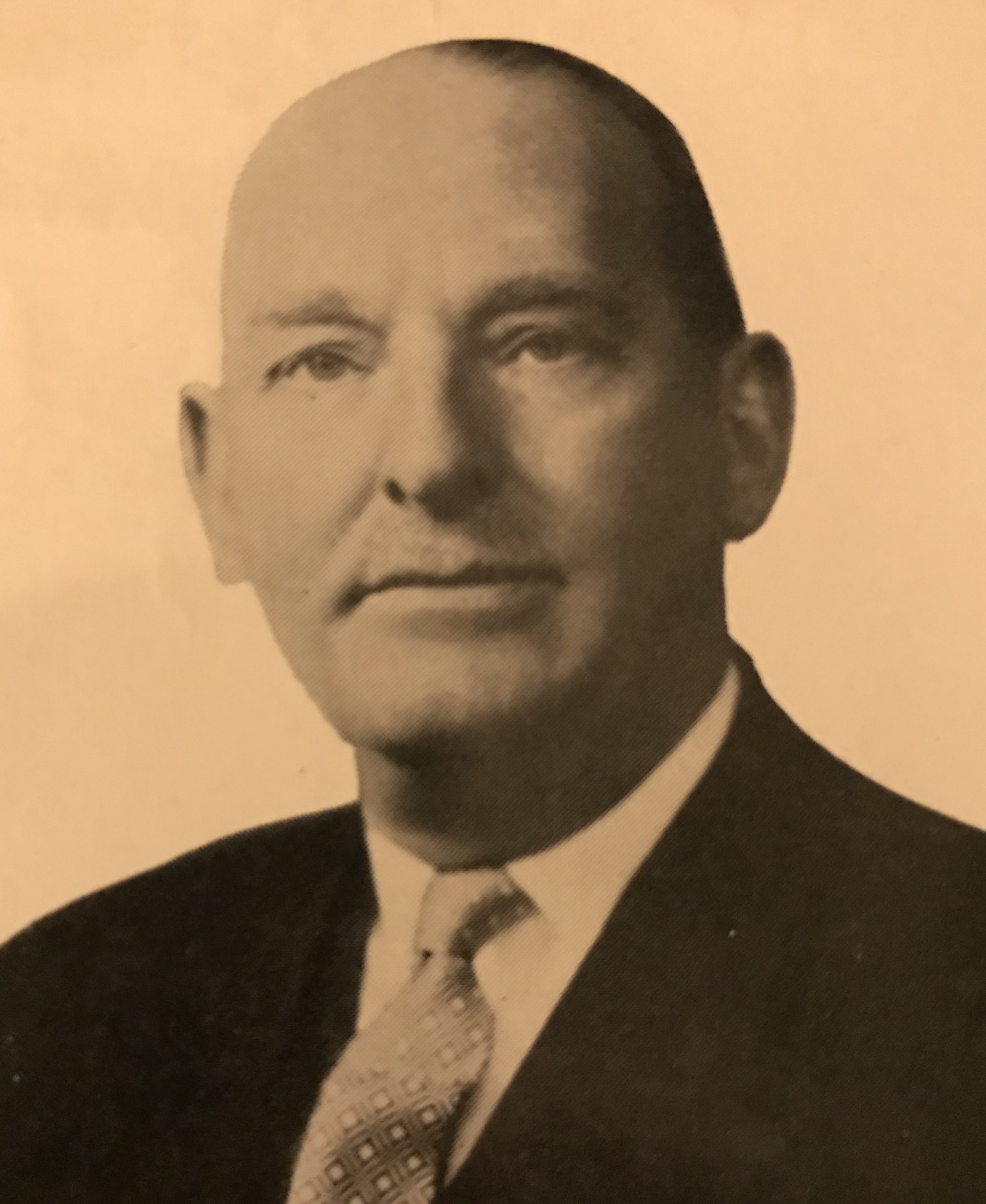
I have previously written about William Merrilees, the Edinburgh detective, who undertook a ‘war on homosexuality’ in interwar Edinburgh. This triggered a fascination with the memoirs of retired Scottish police officers, particularly any reference to homosexuality and homosexual offences. I recently read works by ex-Detective Chief Superintendent Robert Colquhoun, and Douglas Grant, a former inspector in Glasgow. But it’s Colquhoun’s recollections that I wish to focus on, chiefly because he recounts the arrest of 21 year-old Robert Scott in 1958 for the murder of 51 year-old police informant and car sprayer William Vincent.

IMG_1160
William Vincent
IMG_1158
Robert Colquhoun

As a prelude to his account of the murder, Colquhoun states that ‘police powers are very limited when it comes to consenting homosexuals’, reflecting the difficulties faced by the police and the legal agencies in securing successful convictions in Scotland. It is difficult to determine whether this was a lament or a simple statement of fact. Vincent’s violent end would be mourned by few, even amongst the police force in Glasgow where Vincent had been in receipt of a commendation from Glasgow police for his ‘tip offs’. Yet, for Colquhoun these actions were undoubtedly an attempt by Vincent to protect him from police investigation. For Colquhoun, Vincent was a predator, often luring ‘a young man, friendless, or alone’ with promises of money, accommodation and a job (Colquhoun refers to this as a ‘baited trap’). This was viewed as risky behaviour and Vincent had himself contacted the police on occasion to report being attacked and robbed by men he had invited home. Indeed, in 1957 he had been assualted and restrained by a 19 year-old man, who then proceeded to rob Vincent of money and goods to the value of £260.

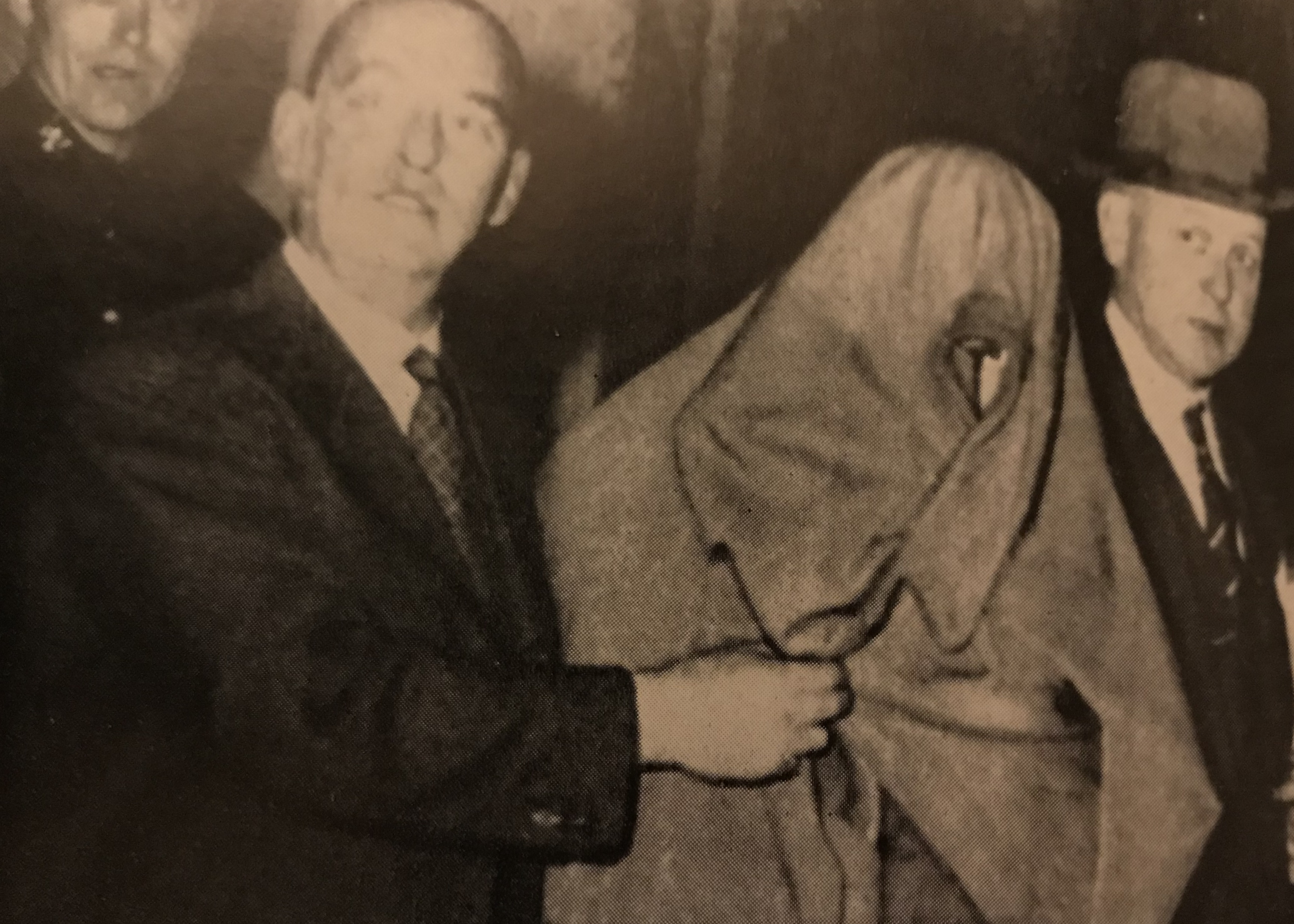
Robert Scott had met Vincent at a motor auction when he was 17, and the two had struck up a friendship sparked by a mutual love of cars. A year or so later, when Scott was called to do his national service, Vincent had unsuccessfully attempted to ‘buy him out of the army’, but after being demobbed Vincent was keen for their friendship to continue. Scott was less keen having become uncomfortable about the older man’s apparent obsession with him, which included pestering him with love letters. Five weeks later, a period during which the men had not met, Scott telelphoned Vincent and arranged a meeting at Vincent’s West End mews flat. According to Scott’s testimony, the older man was in an instant ‘a pleading, desperate figure who had abandoned all dignity’ and who had attempted kiss him. The two men struggled, before Scott strangled the slightly built Vincent, finishing him off with a sock tourniquet.

IMG_1162
Scott is brought back to Glasgow by Colquhoun

After stealing some valuables from Vincent’s flat, Scott bundled Vincent’s body into the boot of his Sunbeam Alpine and drove it to Longtown in Cumbria, where he abandoned it in a ditch. Phoning the local police, Scott stated “I murdered a man in Glasgow. The body’s in the boot of his car, and I’ll wait till you come.”

At Scott’s trial, the judge, Lord Russell, described the murder as, on one hand, the killing of a worthless man, but stated that the court should not deal in morals. Ultimately, Scott was found guilty and sentenced to life in prison. Eighteen months later Scott was found dead in Perth Prison, having committed suicide. He was described by prison authorities as having been ‘an ideal prisoner’. It is difficult to determine the exact nature of these men’s relationship; Colquhoun ascribed to the view that Vincent was a threat to young working-class men who would be tempted into forming illicit relationships with older men for economic benefit. Andrew Ralston, in his book The Real Taggarts characterises the murder as the result of ‘a deliberate and protracted attempt by an older man to dominate an impressionable youth’, but also highlights the part Vincent’s homosexuality played in proceedings. The former police officer demonstrates considerable empathy for Scott, but none for the victim: “William Vincent died by strangling because he was evil…[the case] show[s] the depravity to which, at times, humans can descend”.

Copyright © Jeff Meek 2013-2024 No part of this site, [QueerScotland.com], may be reproduced in whole or in part in any manner without the permission of the copyright owner.

“Desperately Seeking Someone (Non-camp, No-effems)”: The Gay Personal Ad in Mid-1980s Scotland

By the 1980s the personal ad was fast becoming a popular medium for Scots gay and bisexual men unsure, tired, or weary of the ‘gay scene’ to meet others. During the 1980s these short advertisements were relatively free of the acronyms that would come to dominate the medium and lead to much head-scratching and confusion. Knowing your GSOH[1], WLTM[2], NS[3], WE[4], NSc[5], and OHAC[6] would prove invaluable by the 1990s. But the 1980s were a simpler time when acronyms were largely absent and ads were often focused on presenting a clear descriptor of what advertisers sought.

Lonely-heart advertising was far from an exact science; there was simply no way of determining that your respondents would match your idea of the perfect partner, thus ads had to be explicit about preferences and expectations.  What is evident is the explicit articulation of potential friends’/lovers’ qualities, and the dismissal of those men who might not meet the performative expectations the advertiser had set. ‘Straight-acting’ does appear, but infrequently, in 1980s ads, becoming more frequent in ads during the 1990s, but ‘non-camp’ and ‘non-effem[inate]’ crop up in around one fifth of personal ads during the period 1984-86, in Scottish LGBT magazines. This might be simply about personal choice, but history demonstrates the emergence of countercultures of gay masculinities during the post-war period, which rejected the stigmatised ‘effeminate’ identity closely associated in popular discourse with male homosexuality.

I have already written about gay and bisexual men’s attitudes to masculinity and effeminacy, and this demonstrates how men perceived to be effeminate were stigmatised by both heterosexual and homosexual communities. What is notable is that the majority of personal ads did not contain obvious references to masculinity, but where preferences were indicated these tended to be well determined.  This advertisement from May 1985 clearly frames the advertiser as a ‘non-effeminate’ man seeking others of that type.

Shetland (31) non-effeminate seeks others, this area or visiting.

The terms non-effeminate (and variations) and non-camp appear to be interchangeable. This advert also from May 1985 uses ‘non-camp’ to indicate the preferred deportment:

Glasgow Anywhere Dave (26) 5’10” blond non-camp into most things seeks sincere mates. Photo if possible, returned.

The use of ‘non-scene’ appears regularly to denote both the advertiser’s ‘position’ and that of expected respondents. As Alan Davidson has noted, the appearance of terms such as ‘non-scene’ and ‘non-effeminate’ were coded expressions of the rejection of ‘“stereotypical” presentations of self’.[7] The following ad includes a double-barrelled rejection of ‘camp’ and ‘effeminate’, firmly positioning the advertiser’s rejection of stereotypes, real or imagined, and any individuals firmly associated with stigmatised identities.

Is there [sic] any gay folks in Dunfermline ? Sincere, honest guy seeks friendship of same (21-23), non-camp-effeminate.

Similarly, ‘Fife Guy’, sets his requirements clearly even although his appears to be seeking friends rather than a relationship or hook-up.

Fife Guy (33) Seeks friends, straight-looking, non-camp, non-scene, non-smoker. Photo appreciated. No effems.

Notably, the addition of ‘no effems’ at the end of the ad may represent ‘Fife Guy’s’ uncertainty that ‘non-camp’ would exclude all men he deemed to be non-straight looking.

The next personal ad, from May 1985, emphasises the advertiser’s own concept of masculinity, strongly indicating a preference for ‘straight-looking’ men, further underlined by the requirement that he should married.

Glasgow Slim 34 year-old, masculine looking, passive seeks well-hung marrieds, straight-looking types for uncomplicated fun.

‘Durham Area’ (January 1986) takes discomfort with effeminate men a step further, emphasising his hatred of effeminate men, and his enjoyment of masculine pursuits. He aims to meet a ‘sincere lad’ who might appreciate some ‘old-fashioned loving’. Being fair and genuine did not stretch to gay men who, the advertiser believed, were engaging in gender transgressions.

Durham Area I’m just a fair, genuine guy, 40s. Hate effems. Looking for sincere lad who likes the country, pubs, humour, and a bit of old-fashioned loving.

Ads which refrain from anti-camp or anti-effeminate language occasionally refer to presumed facets of masculinity. Terms such as ‘macho’, ‘manly’, ‘fit’, ‘sporty’ and ‘active’ set an agenda for intimate interaction that is rooted firmly in conventional understandings of gender and gender roles.

The issue of normalcy also emerges from some personal ads. ‘Edinburgh’ (November 1985) describes himself as ‘bearded’ and ‘hairy’, signifiers of masculinity, while detailing his requirements for a ‘non-camp guy’. He ends his ad with a plea for ‘a normal gay person’, further distancing the ‘camp’ man from such a concept.

Edinburgh, W. Lothian, Glasgow. 29 year old bearded hairy bisexual seeks non-camp guy for fun, good times, 25-35. All I want is a normal gay person!

Notably, when perusing Scottish personal ads during the 1990s, the ‘no camp’, ‘no effems’ content appears to have largely disappeared. Whether this is the result of editorial policy or the rise of the cover-all term ‘straight-acting’ is difficult to gauge. Yet, despite some obvious hostility to and discomfort with gay men who did not perform an ‘approved’ version of masculinity, there are ads that counter these negatives. ‘Glasgow Area Athletic’ describes himself as ‘lightweight’, and makes clear that he seeks someone similar, rejecting ‘macho’ men:

Glasgow Area Athletic lightweight guy seeks similar 21-32 years for fun, wrestling exchange. Photos. Any colour, non-macho.

 This type of advert is much rarer amongst the collection analysed. The limited space within personal ads led to a form of personal, sexual and social prioritising which meant that the advertiser attempted to fill ads with details and requirements most important in their search for love, sex and companionship. This inevitably led to exacting requirements which appear judgemental, exclusive and quite often prioritised codes of masculinity.

Copyright © Jeff Meek 2014

All Rights Reserved.

[1] Good sense of humour

[2] Would like to meet

[3] Non-smoker

[4] Well endowed

[5] Non-scene

[6] Own House and car

[7] Alan G. Davidson, ‘Looking for Love in the Age of Aids: The Language of Gay Personals’, Journal of Sex Research 28 (1991), p. 132

Fear, Shame and Hope: AIDS in 80s and 90s Scotland

In a recent blogpost John D’Emilio argued that AIDS and its impact upon LGBT individuals and organisations, the militancy it provoked, and the heightened attention it drew to LGBT causes needs to be more fully documented and appreciated. This is certainly applicable to Scotland, and its responses, both social and medical, to the significant challenges that HIV/AIDS brought.

My research engaged with the impact that HIV/AIDS had upon gay and bisexual men in Scotland, many of whom were relatively young when their lives were touched or influenced by this new and sinister threat to life. Scotland had only decriminalised consensual gay sex between male adults in 1980, and the drive for equality was realistically still in its infancy. This blog post is not an attempt to document Scottish responses to HIV and AIDS but to reflect the experiences of gay and bisexual men during the 1980s and 1990s.

Chris was in his early 20s when the HIV/AIDS ‘dark cloud’ settled over Scotland:

It was horrendous, absolutely horrendous. Fear, fear of something you had taken for granted that was a big part of your identity and how you find joy and happiness and intimacy with other people that could suddenly wipe you out and do it horribly, you know, horribly…it was specifically, gay men who were isolated at that time, so there was another bit of ammunition for people who had a big grudge against gay men or didn’t like homosexuality for whatever reason, there was another huge big bit of ammunition.

Although the majority of early HIV/AIDS cases in Scotland affected another marginalised group – intravenous drug users, especially in Edinburgh – it was not long before the illnesses began to affect Chris much more directly. The impact was felt on a personal and emotional level, but also in the way that gay men saw themselves and were seen by wider society:

JM – Would you say that it impacted on people’s attitudes towards gay men?

Chris – [And] gay men’s attitudes towards themselves, yeah, definitely, and quite negatively, you know. [There was] the condom issue and the campaign with the tombstones and everything else and a leaflet going through every door in Britain, you couldn’t escape it, you really couldn’t escape it, and very quickly from ’80, ’81 people were actually being diagnosed and the first gay man who was diagnosed that I knew, was a friend, and of course then you think, ‘Oh my God!’. He was ill when he was diagnosed so he already had liver complications with diagnosis and deteriorated within a year and a half, two years, and died. His then long-term partner was positive and other really close friends that had been in that circle and had been intimate, one by one were being diagnosed positive.

Chris saw the impact that the disease was having on individuals he cared about but also the impact that it was having on attitudes to homosexuality. Yet, despite increased opprobrium directed at gay men, responses from LGBT organisations were not tempered by hostile attitudes:

JM – How did that impact on a political level in your life?

Chris – Yeah, I think that was just another injustice really. It all goes back to London, the sort of Stonewall era and Terrence Higgins Trust and a lot of the things that came up then I don’t think would have surfaced in such a strong, such a political way had it not been for HIV.   HIV and the reaction or the backlash against, particularly, gay men at the time meant [that in a way] those organisations gained incredibly in power and status. [That happened in] Scotland as well because Scottish Aids Monitor were seen as coming and doing something for a community and were put there and funded because they were there to prevent or limit this outbreak within a community but I don’t think even at that stage there was the acknowledgment that the gay scene is not the only the ‘scene’… there’s a far larger percentage of men who have sex with men who don’t and will not put that tag on themselves or be put in that box.

For Ed, who spent time in Australia as well as Scotland, the emergence of HIV/AIDS had a cataclysmic impact upon his life and the lives of his partner, friends and family. Ed was not out to his closest family members and an HIV+ diagnosis prompted him to attempt to tackle issues relating to his sexuality and his health:

Well, it was a double whammy actually: my partner had died of AIDS and I got tested and [the test result] came back positive and I thought, ‘Right! I’ve got to tell them all’, so with my mother it was a double whammy, with her letter I wrote, ‘Dear Mum blah, blah, blah, not only am I gay but I’m HIV positive’ and she wrote back saying that ‘the main thing is that you keep healthy but I think it’s against nature that you’re gay’, just a short reply…

Ed has now been living with HIV for over 20 years, something that was unthinkable at the time:

Well, I was thinking about that a few weeks ago and thinking that it now all seems like a dream…you were going to so many funerals from that period, the late 80s right through to 2000, 2001, so many friends that had died. Well, you knew it was there and you were going from week to week to see who the next one was going to be and so you just had to get on with your life and basically, em, accept and deal with what was happening….and I look at it this way: you either accept what is happening or you just turn your back on it and go off and end it all…

Duncan recalled how the appearance of HIV/AIDS in Scotland impacted upon the attitudes and behaviour of many gay men:

I went doon to see a pal in London recently who had moved down from Glasgow and….he says, “Duncan, do you remember the days in Glasgow when it was just like a chocolate box and you could pick and choose any flavour or any variety you wanted, hard, soft?” and it was true, it was a very carefree…no awareness of AIDS and HIV and anything like that, you know, in these days and everybody was…I cannae say promiscuous, because that isn’t the right word for it, but there was a lot of people who were very active…But then, quite quickly, all of my friends were talkin’ about they’ve maybe knew somebody who actually had contracted HIV an’ once ye knew maybe one person or maybe two it really shoots it home to you and you just started to change your behavior.

Other gay men were overwhelmed by the power of AIDS, not just relating to illness, but the way in which terms such as HIV and AIDS had the potential to obscure the individual, their personalities, who they were:

Greg – I had a friend, who was quite ill herself, who volunteered at a hospice, and one afternoon she brought two guys with AIDS to a café near where I worked. I had met them both before, and my friend invited me to join them for a coffee. I’m ashamed to admit that I didn’t really want to face them. I went and I felt so powerless, so impotent. One of the guys was really very poorly and had mild dementia, and being frank, I couldn’t handle it. I’m ashamed of that, as gay man, I am ashamed of that.

HIV and AIDS also had an impact upon the LGBT rights movement in Scotland during the 1980s and 1990s. As mentioned, decriminalization had only occurred in 1980 and just as LGBT organisations were beginning to find their feet, and their voices, the hysteria amongst sections of British society and the British press had implications for non-heterosexual Scots.

Ed – Oh the nonsense, the sensationalism, the terrible way they treated children who were positive and they weren’t allowed to go to schools, and people were terrified to touch, you know. How they treated [them] in hospital at the beginning was terrible, sliding paper trays through the door to the patients, that sort of stuff, thank God that’s all gone.

Ken too lamented the emergence of further stigmatising discourses concerning the ‘gay plague’ just as confidence amongst sexual minorities was growing.

I think that was a sad thing and a difficult thing…there was parity in 1980 but things don’t change overnight, Joe Public was [still largely homophobic]…so maybe by ’82 we were starting to get somewhere but then [there was] the ‘gay plague’ in America, by ’86 it was here, so there was only that little window [of hope].

These recollections of the 1980s and 1990s are not peculiar to Scotland, but it is notable that the threat of HIV and AIDS emerged in Scotland so soon over after decriminalisation. This had implications for the development of LGBT movements, but despite considerable hostility and homophobia the pressing need for directed health services, and advocacy groups meant that voices silent for so long still demanded to be heard.


Copyright © Jeff Meek 2014

All Rights Reserved.

Please do not reproduce  content from this blog in print or any other media without the express permission of the author.
Risk, Embarrassment, Democracy! Glasgow’s ‘Queer’ Scene, 1955-2008

By the mid 20th century Glasgow was home to a growing non-heterosexual population, and wherever such groups exist there are platforms for social engagement. When I interviewed 2 dozen gay and bisexual men in the mid 2000s, stories emerged which detailed the history and development of the queer scene in Glasgow. I have already produced a map which details many of the venues which catered, publicly or privately, for the city’s non-heterosexual population, but in this blog post I want to flesh out beyond the structural history and engage with the emotional and social history of the queer scene in the city.

Stephen (b. 1939) recalled how he became aware that ‘gay’ bars existed in the city, during the mid 1950s:

I was in about 19 maybe 20 and I had overheard a conversation with my father and they were speaking about a local celebrity and my father’s colleague had told him about this celebrity being a ‘nancy-boy’ and he also told where this celebrity drank. So, I made up my mind then that I would need to get to this pub to get to know him, this celebrity, because then I would be on equal terms, I would be in a pub on chatting terms and maybe he would put me wise to things. It wasn’t a notorious gay pub, it was a classy pub and lounge bar and cocktail bar, and that’s where I went. It was the ‘Top Spot Mexicana Bar’ at the top of Hope Street.

Top Spot

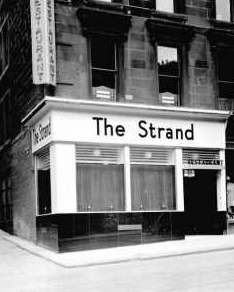
Stephen was keen to underline that although bars such as the Top Spot attracted a small gay clientele, discretion was still important as many of the patrons were unaware of this. However, in some bars there was an opportunity to be a little less discreet, such as in The Strand bar in Hope Street:

Stephen – When I first went in to ‘The Strand’ bar I didn’t realise …that you got ‘names’….you were either given a name or you were to pick a film star that you admired a lot, female, and they gave you that name. I had picked a film star who I looked nothing like but I did admire and they said ‘you don’t look nothing like her; you’ll need to pick somebody else’. I picked another film star and they thought this was ideal and I got her name.

Queer-friendly bar, Glasgow, 1950-60s

When I asked Stephen if all the gay men took female film star names, he told me that it was generally dependent on sexual role and personality:

Say a lad of 19 or 20, blond hair, came into the bar and he was nice and pretty and polite, they would probably have called him ‘Doris Day’. Whereas, if another lad came in who wasn’t blessed with the best of looks but kept himself as well as he could and was always rather acid when he was speaking to anyone, he would probably been called ‘Bette Davis’.

While Stephen indicated that being able to socialise with other non-heterosexual men gave him ‘confidence’, ‘reassurance’ and ‘psychological comfort’ there was always risk attached to meeting men in bars, even in gay bars.

In these days don’t forget, it was also very dangerous because you got people who were called ‘queer bashers’. So they would pretend [to be gay] until they got the guy up a lane or something and they would [beat him up].

While Stephen became a regular visitor to Glasgow’s queer scene during the 1950s and 1960s, other interviewees preferred to mix with a social group who generally avoided ‘popular’ haunts. Alastair (b. 1948), considers himself fortunate that he was able to become part of a group of largely middle-class men in Glasgow who preferred attending the theatre to socialising with the men in the pubs:

Well, you know, some of them were very attractive people but they were a bit rough. Now, let’s define what we mean by rough here, there is nothing nicer than a bit of ‘rough trade’ but they weren’t. As my late elderly gay friend would say, ‘Not quite in our garden’. I didn’t feel I had anything in common with them and then of course I met one or two pivotal people who introduced me to some very interesting, well-connected people.

There does appear to have been an element of a ‘clash of cultures’ on the Glasgow scene, which was largely the result of class differences.

Alastair – A lovely story about a gentleman in Edinburgh: he and his friend had picked up a long-distance lorry driver who was drop dead gorgeous and he brought him to a dinner party and he wouldn’t eat anything. Our host eventually opened a tin of Heinz Tomato Soup and threw a few croutons in and he wouldn’t eat it because of the croutons and the line of the evening was, ‘I’m a mince and tatties man myself’. So, predominantly I would go to these parties and there was a group of people round the city who almost every Saturday night would have a party. [They were] like-minded, probably slightly more effete men would go to them.

Another of my interviewees viewed the social diversity of the queer scene in Glasgow as something of great importance; where economic and social divisions were overcome through a shared sense of belonging.

Brian (b. 1936) –I went to a gay bar from time to time in town…it was in West Nile Street, it was at the back of a restaurant called The Royal. I remember going to this gay bar in The Royal when by that time I was a local celebrity and [I met] two boys who were an item…one was a joiner from Partick who told me wonderful stories about his early years in Partick, about wandering up Byres Road on a Sunday, and it was deserted – because there was nothing in those days – looking for a pick-up. He knew he’d find it in Botanic Gardens. He came from a working-class family living in Partick probably in one of the tenements just along Dumbarton Road. His mate was a boy who had come up from Ayrshire to work in one of the big stores in Glasgow as a window-dresser or something like that, and whose family had thrown him out when they had discovered that he was gay. The extraordinary thing was that the joiner’s family, who as I say were perfectly ordinary working-class family living on the Pollok estate, had taken him in knowing what the situation was between the two of them. I think one of the things about homosexuality is that it is probably one of the most democratic things…it is a sub-section of society that was probably ahead of its time in terms of the way that the social classes mixed, partly because we were all, if you like, aliens together so whether you came from a working-class background or whether you came from [another] it didn’t matter.

As they gay scene developed in Glasgow during the 1970s and into the 1980s, it took on a political edge, and offered a level of support and socialisation. For Chris (b. 1958) his initial visits to Glasgow’s scene offered more than simple entertainment.

It was really exciting, I think that’s the only word I can really describe it as, it was really different, really, really exciting and it wasn’t like anything else you could experience outside the gay scene and probably the gay scene today but I think as a young man today just coming out and feeling okay in his own skin it felt as if all the shackles had just disintegrated.

As a young gay man, Chris also noticed that the scene in Glasgow also equipped the less experienced with sets of guidelines and advice to maintaining your reputation:

You [were advised not to] pick people up in toilets, you know, there were 3 gay bars in Glasgow and the way to have your reputation absolutely trashed was to go to St Vincent’s Street and pick people up in toilets so there were other rules as important if not more important than the law…

What was occurring during the 1970s and 1980s was the further commercialisation of a queer scene in Glasgow, in an effort to provide (profitable) safe spaces for non-heterosexual men and women to meet and socialise. While some of my interviews viewed this development as a stride forward others felt a sense of disconnect, as Joseph (b. 1959) commented:

You go to [named bar] today and you hear young people say, “What’s that old bastard doing in here?”

What is interesting about these recollections is the diversity of experience. The queer scene in Glasgow during the 1950s & 1960s was governed by discretion. Some interviewees spoke of the democracy of the scene, whilst others noted some elements of division. In the 1970s and 1980s a more confident and identifiable scene emerged, but it still contained something like a paternalistic concern for individual and group welfare. This is not to say that the contemporary queer scene lacks any of these features; individual responses and interactions still govern, to some extent, individual experiences.

Copyright © Jeff Meek 2014

All Rights Reserved.

I’m always interested in hearing more experiences of Scotland’s ‘queer scene’, from the 1940s through to the 1990s.  You’ll find my email address here.

Buggery, Body Snatchers and Bewitchings

Throughout early modern and modern history homosexual acts have been the focus of condemnation, religious outrage, penal sanctions and considerable suspicion. In the 16th century further connections between the act and sinister superstition were made, contradicting earlier works which suggested that even demons drew the line at buggery. The new narrative claimed that witches, in particular male witches, engaged in diabolical sex (I’m sure we’ve all experienced this) and is evident in the, admittedly rare, references to sodomy in 16th and 17th century Scotland. Michael Erskine was accused of engaging in both sorcery and sodomy in 1630 and on being found guilty on both charges was burnt at the stake.  Half a century earlier, a John Litster and John Swan shared a similar grisly fate.

While the Dutch were busily garroting ‘sodomites’ during the 18th century, the Scots, particularly legal theorists, were ambivalent on the thorny issue of same-sex desire. Whilst some classed it amongst the ‘sodomitic sins’ (including buggery, bestiality, and opposite sex ‘unnatural fornication’), others such as John Millar viewed sodomy as a victimless crime (although it still warranted punishment). However, the taint of the diabolical apparently remained reasonably strong in popular discourses of same-sex desire well beyond the age of enlightenment. Take for example the case of George Provand, a successful young Glasgow oil and colour merchant, whose home in West Clyde Street was attacked and vandalised in early 1822. Provand’s tale of terror has been told numerous times on Glasgow local history sites and by the well-known Glasgow journalist Jack House in his book The Heart of Glasgow. According to these popular sources, Provand was accused of abducting local children, butchering them and adding their remains to his oils and colours. One ‘witness’ swore that he saw in Provand’s basement a flowing river of blood upon which bobbed the decapitated heads of children. Provand was also accused by the mob of being involved in black magic, or, in the supply of fresh corpses (albeit missing their heads it seems) to medical instructors.  There seemed no end to Provand’s devilish pursuits.

However, what these popular sources often ignore is that he was also accused of inviting the sexual favours of young local men. The riot, which led to the ransacking of Provand’s mansion, may have been instigated by the claims of 17 year-old John Graham (amongst others) who stated that Provand had paid him 6d ‘to work his privates’ (a description which occurs frequently in cases relating to homosexual acts). Criminal charges were laid against the rioters and looters, with one ‘whipped through the town’, and another 4 sentenced to transportation.  Provand was charged in April of that year with sodomy and was initially found guilty. His failure to appear in court led him to be outlawed and ‘put to the horn’, but ultimately the allegations were viewed as being an attempt to discredit the victim of (or to justify) violent crimes. Whether Provand did enjoy the regular physical company of men is open to debate but these accusations grew legs and ultimately alluded to demonic pursuits, which although hysterical, bring to mind the accusations made against 16th and 17th century male ‘witches’, whose fates were considerably bleaker than Provand’s.

Further Reading

Theo van der Meer, ‘Sodomy and the Pursuit of a Third Sex in the Early Modern Period’ in Third Sex, Third Gender: Beyond Sexual Dimorphism in Culture and History, ed. by Gilbert Herdt (New York : Zone Books ; Cambridge, Mass. : MIT Press, 1996, c1993), pp. 407-429

Tamar Herzig, The Demons’ Reaction to Sodomy: Witchcraft and Homosexuality in Gianfrancesco Pico della Mirandola’s “Strix”, The Sixteenth Century Journal , Vol. 34, No. 1 (Spring, 2003) , pp. 53-72