The Killing of a Worthless Man

I have previously written about William Merrilees, the Edinburgh detective, who undertook a ‘war on homosexuality’ in interwar Edinburgh. This triggered a fascination with the memoirs of retired Scottish police officers, particularly any reference to homosexuality and homosexual offences. I recently read works by ex-Detective Chief Superintendent Robert Colquhoun, and Douglas Grant, a former inspector in Glasgow. But it’s Colquhoun’s recollections that I wish to focus on, chiefly because he recounts the arrest of 21 year-old Robert Scott in 1958 for the murder of 51 year-old police informant and car sprayer William Vincent.

IMG_1160
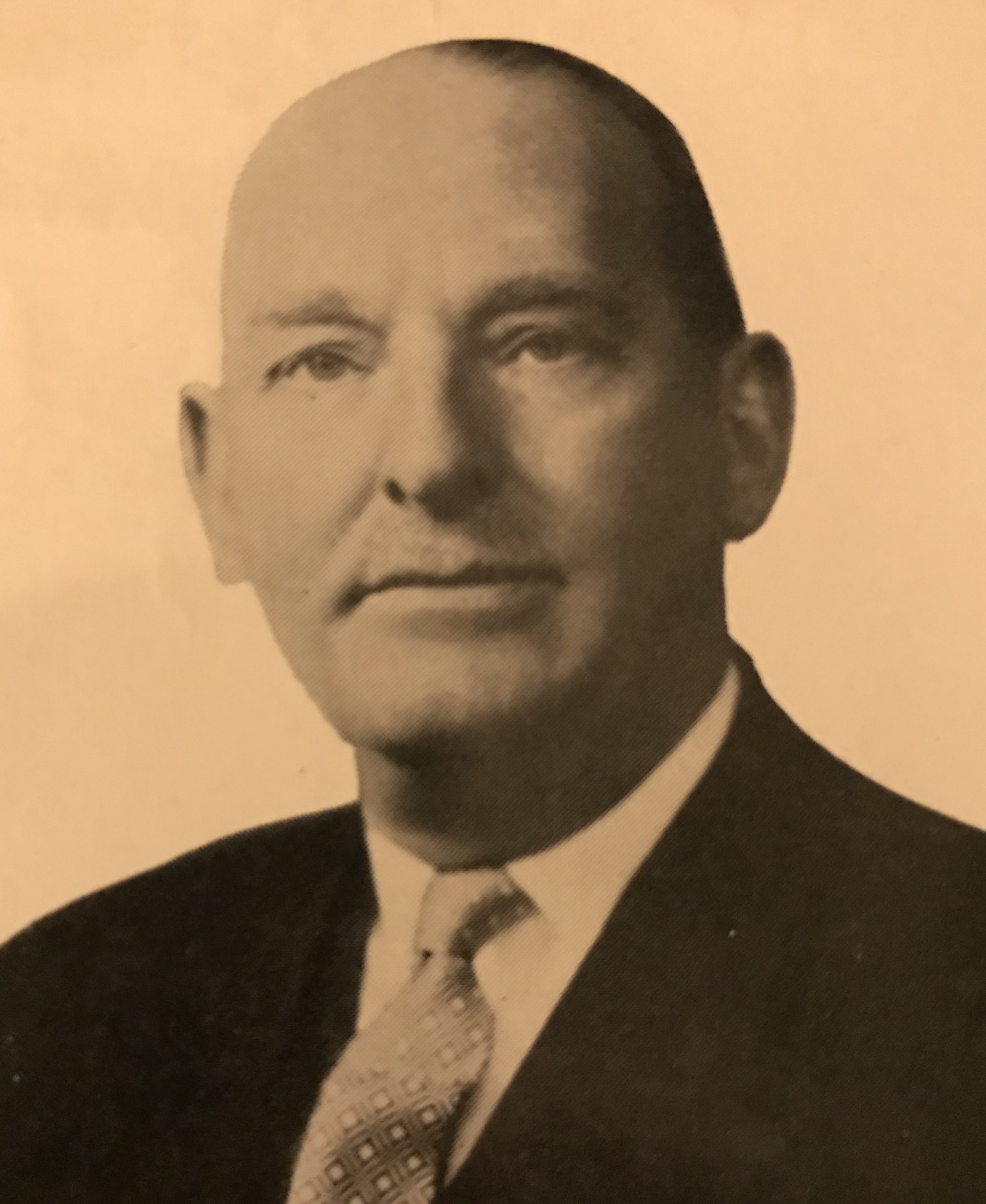
William Vincent
IMG_1158
Robert Colquhoun

As a prelude to his account of the murder, Colquhoun states that ‘police powers are very limited when it comes to consenting homosexuals’, reflecting the difficulties faced by the police and the legal agencies in securing successful convictions in Scotland. It is difficult to determine whether this was a lament or a simple statement of fact. Vincent’s violent end would be mourned by few, even amongst the police force in Glasgow where Vincent had been in receipt of a commendation from Glasgow police for his ‘tip offs’. Yet, for Colquhoun these actions were undoubtedly an attempt by Vincent to protect him from police investigation. For Colquhoun, Vincent was a predator, often luring ‘a young man, friendless, or alone’ with promises of money, accommodation and a job (Colquhoun refers to this as a ‘baited trap’). This was viewed as risky behaviour and Vincent had himself contacted the police on occasion to report being attacked and robbed by men he had invited home. Indeed, in 1957 he had been assualted and restrained by a 19 year-old man, who then proceeded to rob Vincent of money and goods to the value of £260.

Robert Scott had met Vincent at a motor auction when he was 17, and the two had struck up a friendship sparked by a mutual love of cars. A year or so later, when Scott was called to do his national service, Vincent had unsuccessfully attempted to ‘buy him out of the army’, but after being demobbed Vincent was keen for their friendship to continue. Scott was less keen having become uncomfortable about the older man’s apparent obsession with him, which included pestering him with love letters. Five weeks later, a period during which the men had not met, Scott telelphoned Vincent and arranged a meeting at Vincent’s West End mews flat. According to Scott’s testimony, the older man was in an instant ‘a pleading, desperate figure who had abandoned all dignity’ and who had attempted kiss him. The two men struggled, before Scott strangled the slightly built Vincent, finishing him off with a sock tourniquet.

IMG_1162
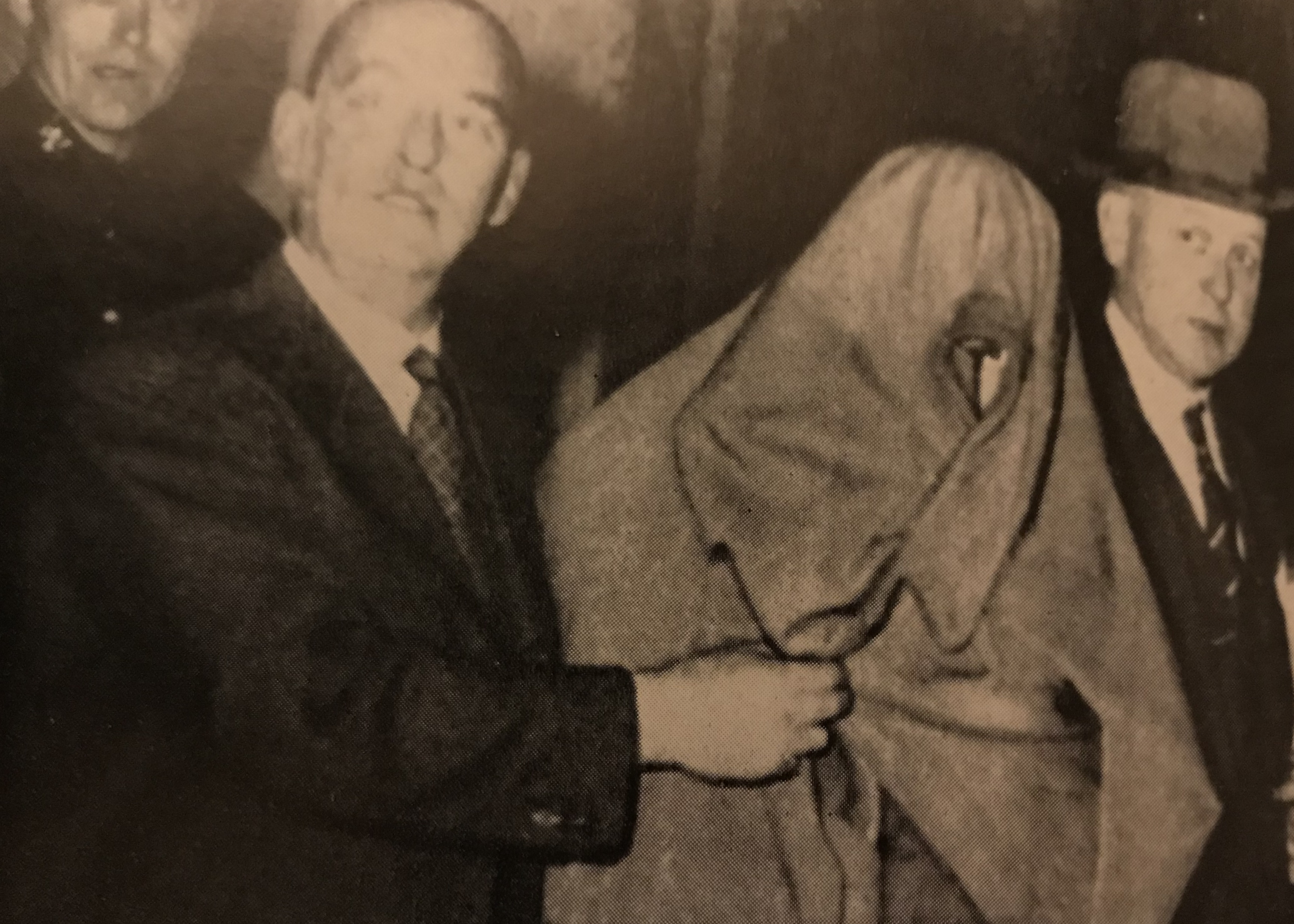
Scott is brought back to Glasgow by Colquhoun

After stealing some valuables from Vincent’s flat, Scott bundled Vincent’s body into the boot of his Sunbeam Alpine and drove it to Longtown in Cumbria, where he abandoned it in a ditch. Phoning the local police, Scott stated “I murdered a man in Glasgow. The body’s in the boot of his car, and I’ll wait till you come.”

At Scott’s trial, the judge, Lord Russell, described the murder as, on one hand, the killing of a worthless man, but stated that the court should not deal in morals. Ultimately, Scott was found guilty and sentenced to life in prison. Eighteen months later Scott was found dead in Perth Prison, having committed suicide. He was described by prison authorities as having been ‘an ideal prisoner’. It is difficult to determine the exact nature of these men’s relationship; Colquhoun ascribed to the view that Vincent was a threat to young working-class men who would be tempted into forming illicit relationships with older men for economic benefit. Andrew Ralston, in his book The Real Taggarts characterises the murder as the result of ‘a deliberate and protracted attempt by an older man to dominate an impressionable youth’, but also highlights the part Vincent’s homosexuality played in proceedings. The former police officer demonstrates considerable empathy for Scott, but none for the victim: “William Vincent died by strangling because he was evil…[the case] show[s] the depravity to which, at times, humans can descend”.

Copyright © Jeff Meek 2013-2024 No part of this site, [QueerScotland.com], may be reproduced in whole or in part in any manner without the permission of the copyright owner.

‘All High Kicks and Low Morals’: My Introduction to Gay Life in 1960s Glasgow

A Guest Post by William Campbell

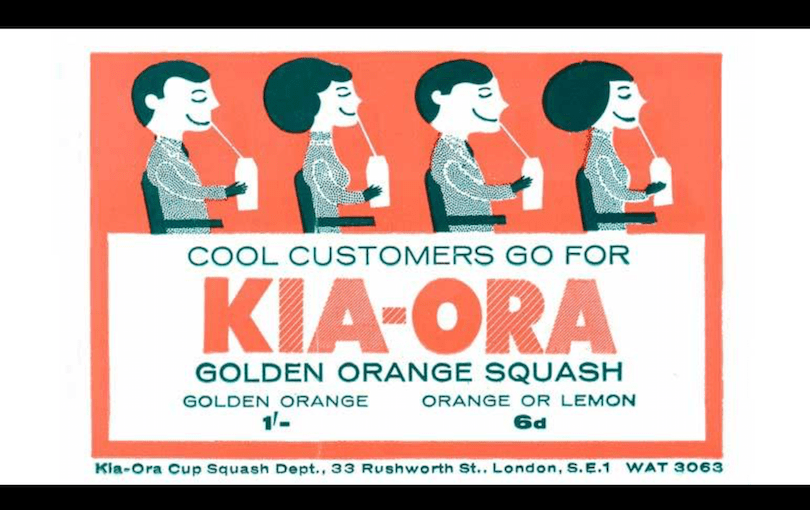
The myth once perpetrated that schooldays are ‘the happiest days of your life’ certainly did not apply to a shy, quiet, non-sporty, spotty youth like me, who wanted to be a fashion designer. I found myself amongst a bunch of growling wannabe engineers and factory workers. Attending a senior secondary in East Kilbride, I wished every schoolday would finish quickly, so I could get back to the safety of home. I only ever felt accepted, and comfortable, in the Art Department, amongst the most gentle, creative, fellow pupils and my very own ‘Jean Brodie’, Mrs Barclay. You could go to her classroom any lunchtime, and she would be playing classical records on her Dansette record player, while we ate peanut butter sandwiches and drank diluting orange juice. The only time I felt happiness and acceptance was in the 5th year, in that class.

He wore a leatherette coat, green corduroy trilby with feather, and a pair of leather driving gloves

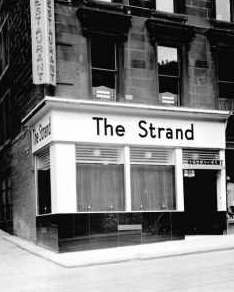
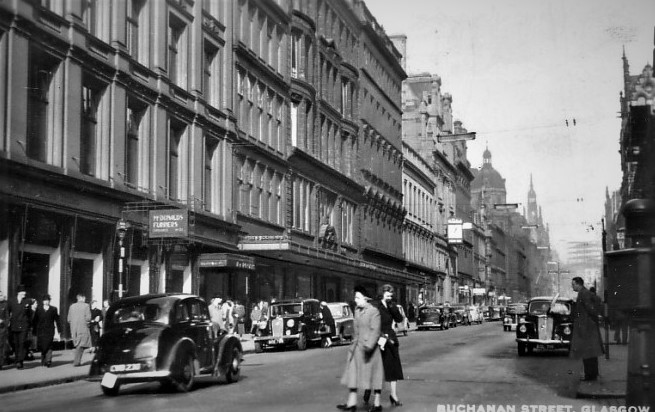
1966 saw me starting work, aged 17, as a junior sales assistant in the menswear department of an upmarket shop in Buchanan Street, Glasgow. For the princely wage of £5 10s 6d a week, I was to learn more about life working in that shop, from a man who would change my perception of myself and other people. He instilled within me the belief that no one was better than you. This was Mr Robertson, the senior salesman, who interviewed me initially for the position. Whilst I had no idea I was gay, he clearly did, possessing a ‘gaydar’ long, long before the birth of the internet dating site. He was 37, quite small, slim, bald, with slightly protruding front teeth, and wore thick horn-rimmed spectacles. He arrived for work drunk most mornings, having spent the evening before on a journey though the 1960s Glasgow gay scene. Starting at the cocktail bar in The Royal, he would then move onto Guys, or The Strand. He wore a leatherette coat, green corduroy trilby with feather, and a pair of leather driving gloves (he had neither a driving licence nor car and bussed it everywhere).

Most mornings Mr R would head straight into the changing room, dim the lights and send me to Ferguson’s (a high-class grocers) in Union Street, for a tin of Epicure white peaches in brandy. It was a long narrow can containing 4 whole fruits in the alcohol liquor. I would hand him the opened can, and having scoffed the contents with a spoon, he would drink the brandy. Then, with an adjustment of his tie knot, and with alcohol level topped up – hey presto! – he was ready to face his public at 9-15am.

Every day in the shop was a performance. You simply did not know what he would say next to the customers (who adored him, I might add). I was both terrified and in awe of him, and could not wait to get in to work every day, just to see what would happen next. He just didn’t care!

He would tell customers he was ‘just back from Tangier’, and ask ‘don’t you love my tan?’, when in fact he had bought a tin of Max Factor Creme Puff, and slathered it on his face.

Mr R lived with his elderly mother in a rented tenement flat in Govan. Yet, when dealing with the mostly wealthy customers in the shop, he spun a web of fantasy about his life. It was so convincing that even I who worked with him, and knew a little about him and his circumstances, had to ask if his stories were true. He would give me a withering look and send me off to make him a coffee. He would tell customers he was ‘just back from Tangier’, and ask ‘don’t you love my tan?’, when in fact he had bought a tin of Max Factor Creme Puff, and slathered it on his face.

One morning he sent me to his mother’s flat for something he had forgotten, and over a cuppa, I said it sounded as if Mr R’s latest holiday in Greece had been fabulous. ‘You must be mistaken’, she said, ‘he spent that two weeks at home, and anyway, he has never owned a passport.’

Mr R would exclaim, ‘Here he comes, all high kicks and low morals’.

Mr R had a frequent visitor to the department, a man called Frank, who in hindsight must have been his boyfriend. Frank was pleasant enough, but a ‘hard ticket’, who was frequently drunk, and black-eyed. They seemed to have been friends for years. They knew a really fun guy, Derek, who was, as they say, ‘a chorus boy’ in variety theatre. He would high-kick his visits to the menswear department, which didn’t go down too well. Mr R would exclaim, ‘Here he comes, all high kicks and low morals’. But actually, he was the sweetest, kindest guy. He was always ‘just going off’ to do summer season in Bridlington or Skegness, and his stories were outrageous.

I worked with Mr R for three of the happiest, funniest years of my life, and before he died, I happened to visit a small menswear boutique on the southside of Glasgow. Thirty years had passed but he still looked pretty much the same. The shop ‘wasn’t quite his style’ and as we chatted, he started sipping on a whiskey he had poured from the side of the till. It was ‘for his nerves’ since he was ‘held up at gunpoint’ a few weeks previously. Held up for some coins and a few pairs of socks? Was that true, or was it right up there with his Moroccan or Greek travels? I have no idea. But I believed it. That’s how good he was.

I understand why the “Mr Robertsons” of those times invented “worlds” for themselves, to just lose themselves in a nicer place where they were safe from harm

Those far off days of the swinging ’60s: Free love, The Beatles, Liberalism. That’s what the media would have you believe anyway. Sure, it was the decade of ‘free love’ but lest we forget, gay men were still going to prison, having to hide their sexuality at work or lose their jobs, were being thrown out of the house for being gay, beaten up…the list is endless and shameful. And all while, Dusty was topping the charts, and having to pretend to be hetero to have a career. I understand why the “Mr Robertsons” of those times invented “worlds” for themselves, to just lose themselves in a nicer place where they were safe from harm.

So, that was my journey: from dreading school, to loving work. Amazing, and all down to him. He would be amazed to be remembered today, but whatever I am today, I owe to him. Here’s to you, Mr Robertson.

Here’s to you, Mr Robertson.

Copyright © Jeff Meek 2013-2024 No part of this site, [QueerScotland.com], may be reproduced in whole or in part in any manner without the permission of the copyright owner.hor.

Risk, Embarrassment, Democracy! Glasgow’s ‘Queer’ Scene, 1955-2008

By the mid 20th century Glasgow was home to a growing non-heterosexual population, and wherever such groups exist there are platforms for social engagement. When I interviewed 2 dozen gay and bisexual men in the mid 2000s, stories emerged which detailed the history and development of the queer scene in Glasgow. I have already produced a map which details many of the venues which catered, publicly or privately, for the city’s non-heterosexual population, but in this blog post I want to flesh out beyond the structural history and engage with the emotional and social history of the queer scene in the city.

Stephen (b. 1939) recalled how he became aware that ‘gay’ bars existed in the city, during the mid 1950s:

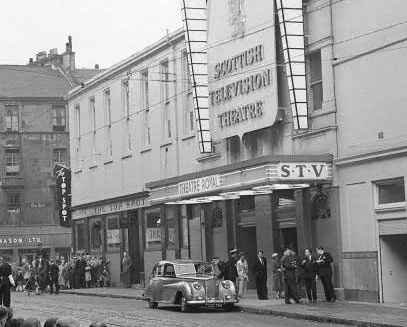
I was in about 19 maybe 20 and I had overheard a conversation with my father and they were speaking about a local celebrity and my father’s colleague had told him about this celebrity being a ‘nancy-boy’ and he also told where this celebrity drank. So, I made up my mind then that I would need to get to this pub to get to know him, this celebrity, because then I would be on equal terms, I would be in a pub on chatting terms and maybe he would put me wise to things. It wasn’t a notorious gay pub, it was a classy pub and lounge bar and cocktail bar, and that’s where I went. It was the ‘Top Spot Mexicana Bar’ at the top of Hope Street.

Top Spot

Stephen was keen to underline that although bars such as the Top Spot attracted a small gay clientele, discretion was still important as many of the patrons were unaware of this. However, in some bars there was an opportunity to be a little less discreet, such as in The Strand bar in Hope Street:

Stephen – When I first went in to ‘The Strand’ bar I didn’t realise …that you got ‘names’….you were either given a name or you were to pick a film star that you admired a lot, female, and they gave you that name. I had picked a film star who I looked nothing like but I did admire and they said ‘you don’t look nothing like her; you’ll need to pick somebody else’. I picked another film star and they thought this was ideal and I got her name.

Queer-friendly bar, Glasgow, 1950-60s

When I asked Stephen if all the gay men took female film star names, he told me that it was generally dependent on sexual role and personality:

Say a lad of 19 or 20, blond hair, came into the bar and he was nice and pretty and polite, they would probably have called him ‘Doris Day’. Whereas, if another lad came in who wasn’t blessed with the best of looks but kept himself as well as he could and was always rather acid when he was speaking to anyone, he would probably been called ‘Bette Davis’.

While Stephen indicated that being able to socialise with other non-heterosexual men gave him ‘confidence’, ‘reassurance’ and ‘psychological comfort’ there was always risk attached to meeting men in bars, even in gay bars.

In these days don’t forget, it was also very dangerous because you got people who were called ‘queer bashers’. So they would pretend [to be gay] until they got the guy up a lane or something and they would [beat him up].

While Stephen became a regular visitor to Glasgow’s queer scene during the 1950s and 1960s, other interviewees preferred to mix with a social group who generally avoided ‘popular’ haunts. Alastair (b. 1948), considers himself fortunate that he was able to become part of a group of largely middle-class men in Glasgow who preferred attending the theatre to socialising with the men in the pubs:

Well, you know, some of them were very attractive people but they were a bit rough. Now, let’s define what we mean by rough here, there is nothing nicer than a bit of ‘rough trade’ but they weren’t. As my late elderly gay friend would say, ‘Not quite in our garden’. I didn’t feel I had anything in common with them and then of course I met one or two pivotal people who introduced me to some very interesting, well-connected people.

There does appear to have been an element of a ‘clash of cultures’ on the Glasgow scene, which was largely the result of class differences.

Alastair – A lovely story about a gentleman in Edinburgh: he and his friend had picked up a long-distance lorry driver who was drop dead gorgeous and he brought him to a dinner party and he wouldn’t eat anything. Our host eventually opened a tin of Heinz Tomato Soup and threw a few croutons in and he wouldn’t eat it because of the croutons and the line of the evening was, ‘I’m a mince and tatties man myself’. So, predominantly I would go to these parties and there was a group of people round the city who almost every Saturday night would have a party. [They were] like-minded, probably slightly more effete men would go to them.

Another of my interviewees viewed the social diversity of the queer scene in Glasgow as something of great importance; where economic and social divisions were overcome through a shared sense of belonging.

Brian (b. 1936) –I went to a gay bar from time to time in town…it was in West Nile Street, it was at the back of a restaurant called The Royal. I remember going to this gay bar in The Royal when by that time I was a local celebrity and [I met] two boys who were an item…one was a joiner from Partick who told me wonderful stories about his early years in Partick, about wandering up Byres Road on a Sunday, and it was deserted – because there was nothing in those days – looking for a pick-up. He knew he’d find it in Botanic Gardens. He came from a working-class family living in Partick probably in one of the tenements just along Dumbarton Road. His mate was a boy who had come up from Ayrshire to work in one of the big stores in Glasgow as a window-dresser or something like that, and whose family had thrown him out when they had discovered that he was gay. The extraordinary thing was that the joiner’s family, who as I say were perfectly ordinary working-class family living on the Pollok estate, had taken him in knowing what the situation was between the two of them. I think one of the things about homosexuality is that it is probably one of the most democratic things…it is a sub-section of society that was probably ahead of its time in terms of the way that the social classes mixed, partly because we were all, if you like, aliens together so whether you came from a working-class background or whether you came from [another] it didn’t matter.

As they gay scene developed in Glasgow during the 1970s and into the 1980s, it took on a political edge, and offered a level of support and socialisation. For Chris (b. 1958) his initial visits to Glasgow’s scene offered more than simple entertainment.

It was really exciting, I think that’s the only word I can really describe it as, it was really different, really, really exciting and it wasn’t like anything else you could experience outside the gay scene and probably the gay scene today but I think as a young man today just coming out and feeling okay in his own skin it felt as if all the shackles had just disintegrated.

As a young gay man, Chris also noticed that the scene in Glasgow also equipped the less experienced with sets of guidelines and advice to maintaining your reputation:

You [were advised not to] pick people up in toilets, you know, there were 3 gay bars in Glasgow and the way to have your reputation absolutely trashed was to go to St Vincent’s Street and pick people up in toilets so there were other rules as important if not more important than the law…

What was occurring during the 1970s and 1980s was the further commercialisation of a queer scene in Glasgow, in an effort to provide (profitable) safe spaces for non-heterosexual men and women to meet and socialise. While some of my interviews viewed this development as a stride forward others felt a sense of disconnect, as Joseph (b. 1959) commented:

You go to [named bar] today and you hear young people say, “What’s that old bastard doing in here?”

What is interesting about these recollections is the diversity of experience. The queer scene in Glasgow during the 1950s & 1960s was governed by discretion. Some interviewees spoke of the democracy of the scene, whilst others noted some elements of division. In the 1970s and 1980s a more confident and identifiable scene emerged, but it still contained something like a paternalistic concern for individual and group welfare. This is not to say that the contemporary queer scene lacks any of these features; individual responses and interactions still govern, to some extent, individual experiences.

Copyright © Jeff Meek 2014

All Rights Reserved.

I’m always interested in hearing more experiences of Scotland’s ‘queer scene’, from the 1940s through to the 1990s.  You’ll find my email address here.

Buggery, Body Snatchers and Bewitchings

Throughout early modern and modern history homosexual acts have been the focus of condemnation, religious outrage, penal sanctions and considerable suspicion. In the 16th century further connections between the act and sinister superstition were made, contradicting earlier works which suggested that even demons drew the line at buggery. The new narrative claimed that witches, in particular male witches, engaged in diabolical sex (I’m sure we’ve all experienced this) and is evident in the, admittedly rare, references to sodomy in 16th and 17th century Scotland. Michael Erskine was accused of engaging in both sorcery and sodomy in 1630 and on being found guilty on both charges was burnt at the stake.  Half a century earlier, a John Litster and John Swan shared a similar grisly fate.

While the Dutch were busily garroting ‘sodomites’ during the 18th century, the Scots, particularly legal theorists, were ambivalent on the thorny issue of same-sex desire. Whilst some classed it amongst the ‘sodomitic sins’ (including buggery, bestiality, and opposite sex ‘unnatural fornication’), others such as John Millar viewed sodomy as a victimless crime (although it still warranted punishment). However, the taint of the diabolical apparently remained reasonably strong in popular discourses of same-sex desire well beyond the age of enlightenment. Take for example the case of George Provand, a successful young Glasgow oil and colour merchant, whose home in West Clyde Street was attacked and vandalised in early 1822. Provand’s tale of terror has been told numerous times on Glasgow local history sites and by the well-known Glasgow journalist Jack House in his book The Heart of Glasgow. According to these popular sources, Provand was accused of abducting local children, butchering them and adding their remains to his oils and colours. One ‘witness’ swore that he saw in Provand’s basement a flowing river of blood upon which bobbed the decapitated heads of children. Provand was also accused by the mob of being involved in black magic, or, in the supply of fresh corpses (albeit missing their heads it seems) to medical instructors.  There seemed no end to Provand’s devilish pursuits.

However, what these popular sources often ignore is that he was also accused of inviting the sexual favours of young local men. The riot, which led to the ransacking of Provand’s mansion, may have been instigated by the claims of 17 year-old John Graham (amongst others) who stated that Provand had paid him 6d ‘to work his privates’ (a description which occurs frequently in cases relating to homosexual acts). Criminal charges were laid against the rioters and looters, with one ‘whipped through the town’, and another 4 sentenced to transportation.  Provand was charged in April of that year with sodomy and was initially found guilty. His failure to appear in court led him to be outlawed and ‘put to the horn’, but ultimately the allegations were viewed as being an attempt to discredit the victim of (or to justify) violent crimes. Whether Provand did enjoy the regular physical company of men is open to debate but these accusations grew legs and ultimately alluded to demonic pursuits, which although hysterical, bring to mind the accusations made against 16th and 17th century male ‘witches’, whose fates were considerably bleaker than Provand’s.

Further Reading

Theo van der Meer, ‘Sodomy and the Pursuit of a Third Sex in the Early Modern Period’ in Third Sex, Third Gender: Beyond Sexual Dimorphism in Culture and History, ed. by Gilbert Herdt (New York : Zone Books ; Cambridge, Mass. : MIT Press, 1996, c1993), pp. 407-429

Tamar Herzig, The Demons’ Reaction to Sodomy: Witchcraft and Homosexuality in Gianfrancesco Pico della Mirandola’s “Strix”, The Sixteenth Century Journal , Vol. 34, No. 1 (Spring, 2003) , pp. 53-72

Langside Hall: A Concise History

langsidemod

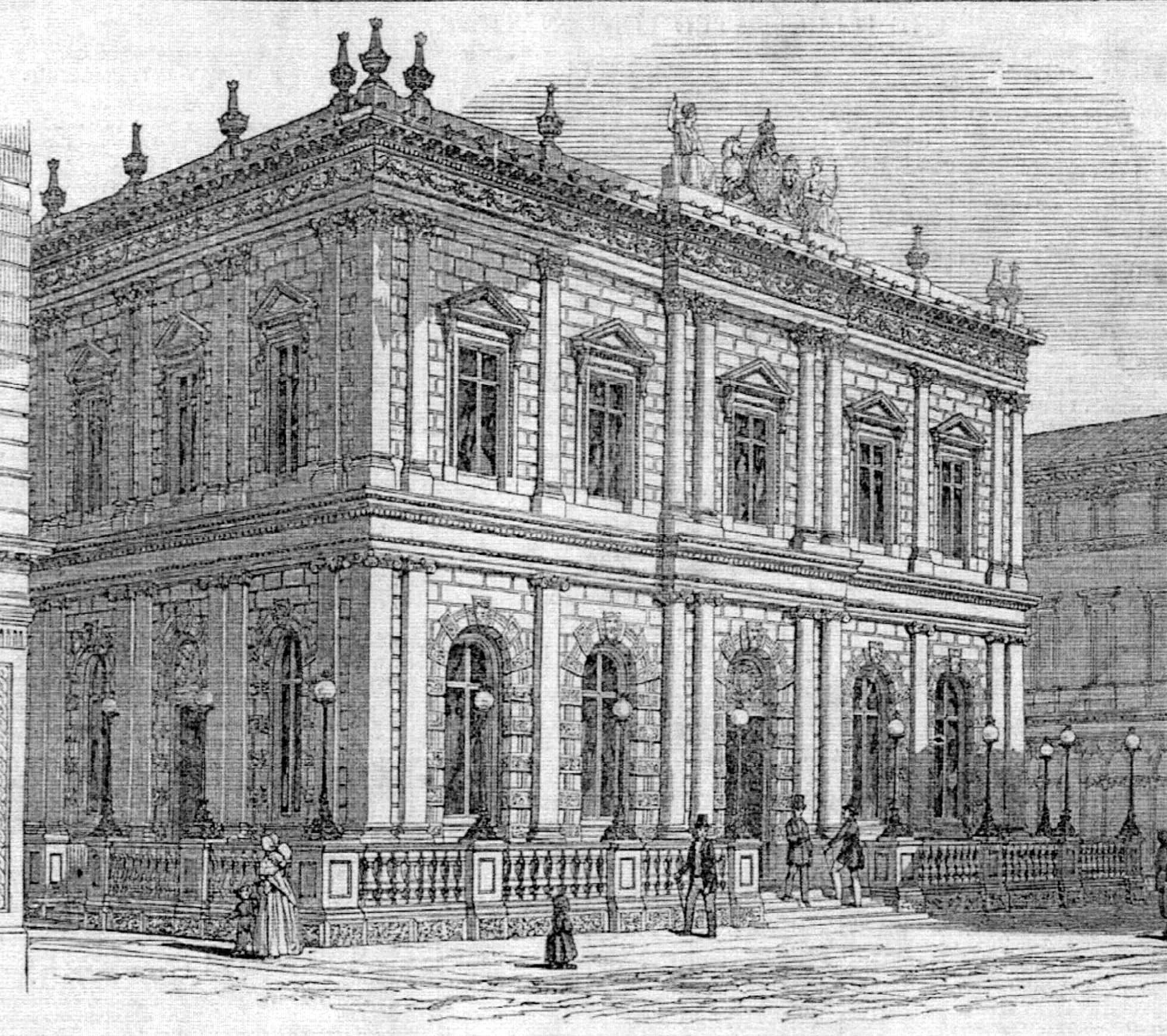
By the midpoint of the 19th century successful businesses wished to build offices that reflected their optimism, growing wealth and confidence, especially at a time when Glasgow was cementing its position as the second city of the Empire. One such organisation, which emerged during the early part of the century was The National Bank of Scotland (NBS) (established in 1825) and after a failure to acquire the Glasgow and Ship Bank, the NBS undertook to open their first Glasgow branch in 1843.  Occupying temporary accommodation in the first instance the bank launched a public competition to design a more suitable building. A young London architect, John Gibson (1817-92), then working under Charles Barry, entered the competition and his plan was unanimously chosen as the winner. On Gibson’s first official trip to the city he was treated to a public dinner given by the ‘principal gentlemen of Glasgow’ and commented that ‘I was much gratified by the kindness shown to me in Glasgow, and surprised to see so many public monuments, and all by the best sculptors’. After the final plans were approved construction of the new building, in Queen Street, began that winter and was completed within 4 years.

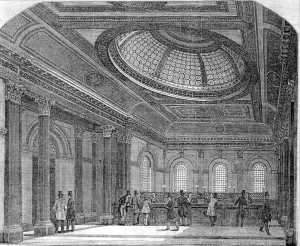
According to ‘The Glasgow Tourist and Itinerary’ (1850) the completed building was ‘commodious and elegant; the telling-room being elaborately ornamented, and its polychromatic decorations [executed by H. Bogle & Co., Glasgow, house painters to the Queen] are tasteful and appropriate’.  An article in The Civil Engineer and Architect’s Journal in September 1849 confidently stated that ‘there is not yet one building of the class in all the metropolis which offers anything like the same degree and completeness of embellishment’.

PTDC0020

An engraving of the National Bank building, 1849

The exterior of the building was similarly lauded for its beauty. The building’s inspiration was to be found in the work of Vincenzo Scamozzi, the Venetian architect, with the ground floor rusticated with five arched openings, the centre opening housing the doorway.  The entrance is flanked by double Ionic columns.  The windows are separated by pilasters (flat columns, flush to wall), which appear in double form at the corners of the building. The original door was of a bronze-green colour and was ornamented with bronze paterae (circular ornaments) and studs.
PTDC0021

The Telling Room of the Bank

The architectural design of the building was impressive but was further improved by the addition of sculptures designed by London’s John Thomas (1818-62), who was to work often within Glasgow, and worked on the Houses of Parliament, Balmoral, Windsor, and Buckingham Palace, and became a favourite artist of Prince Albert. The Prince commissioned Thomas to create two large bas-reliefs of ‘Peace’ and ‘War’ for the latter palace. Thomas was to create the Graeco-Egyptian Houldsworth Mausoleum at the Necropolis and the designs for the industrialist Houldsworth’s new home at 1 Park Terrace. For the National Bank, Thomas ornamented the windows with carved keystones representing major rivers of Britain (the Clyde, Thames, Tweed, Severn & Humber – although there has been some dispute as to whether the latter two were in fact the Shannon and Wye).

A small bust of Queen Victoria was placed in the centre of the attic frieze. Portland stone Vase finials and the Royal Arms, supported by a unicorn and lion,  ornament the roof frontage of the building which was faced with stone with a light-grey tint, supplied by the Binnie Quarries near Edinburgh, and the masonry was executed by John Buchanan.  The side of the building was similar in design to the front but had only three windows per floor, divided by double pilasters. The rear of the bank had an out-standing gallery, within which stood another entrance which was ornamented by Ionic columns.

The interior of the building was resplendent with the telling-room of the bank boasting a 23-foot in diameter dome filled with colourful stained glass, provided by Ballantine & Allan of Edinburgh, who had also provided the stained glass for the House of Lords.  The walls were decorated with columns and pilasters painted a deep red, with white bases and tops. Near the base of the pilasters a band of black marble framed the flooring. The frieze above the columns was adorned with roses, shamrocks and thistles. The ceiling, following this colourful design, was crimson, blue and gold, with this work being undertaken by the Glasgow firm, Bogle & Co. The floor between telling counters (carved from mahogany), directly beneath the dome, was paved with coloured marbles, which in the centre formed a radiating star. The telling-room was positioned to the rear of the building and the front area was to be found along a handsome corridor, adorned with panels of contrasting colours, which led to a committee room, manager’s room, and waiting room.

So enthralled with the design of the building, The Civil Engineer and Architect’s Journal (1849) enthused that ‘the Scotch seem to have got greatly ahead of us in tasteful as well as liberal decoration of places of public business’. However, such splendour, which had initially excited the Bank’s directors, was to lose its appeal as the 19th century progressed. By 1896 the NBS was seeking new and more suitable premises for its business in Buchanan Street, at the junction of Buchanan Street and St Vincent’s Street. In a letter to architects a representative of the Bank’s directors stated ‘My directors do not favour the idea of anything of the nature of elaborate decoration…and have expressed a leaning towards a thoroughly businesslike building…of chaste design’.

Thus, the future of the building appeared bleak by the tail end of the century.  However, efforts were already underway to purchase the building from the NBS. In November 1896 an offer from Mr Richard H. Hunter, philanthropist and chairman of Hunter, Barr & Co Ltd, wholesale warehousemen & shipowners, was accepted on the provision that the Bank could continue to occupy the building for a further 4 years, while their new premises were constructed. However, this initial bid failed, but the same company made another offer in July 1898 to purchase the building for £59,000. The Bank rejected this bid and were holding out for an offer of £60,000, which they received in August the same year with provision to allow the bank to remain in the premises until 1901. Hunter was to retain the land from the sale and on this built the Hunter Barr Building (which still occupies the site today) designed by David Barclay.

From Bank to Public Hall: The Rebirth

One of the problems Glasgow Corporation had faced in supplying a public building for the Langside, Battlefield and Mount Florida districts (promised after annexation) was where to build.  After annexation a committee was appointed by the ratepayers of the districts to negotiate with the corporation.  After much discussion, bickering and frank exchange of opinions 3 main ‘preferred’ sites were identified: 1. The north side of Battle Place, on the Camphill Estate 2. The south side of Battle Place on ground owned by two proprietors 3. At the junction of Langside Avenue and Pollokshaws Road, also in the grounds of Camphill (the least preferred).  Positioning the halls at the place of Queen Mary’s defeat at the Battle of Langside was initially viewed by the corporation as the victory of sentiment over practicality.   In 1899 Bailie John Oatts suggested that the south side of Battle Place was the most preferred site but purchasing the ground would prove to be too expensive. The north side was problematic as the elevation of the ground would prove troublesome to builders. The land at the junction of Langside Avenue and Pollokshaws Road was problematic as the position of the new halls would favour the residents of one district.  It would appear that the chosen site, the latter of the options, was a compromise.

Yet, the decision met with considerable protest from sections of the local community who took exception on two grounds: the encroachment onto the Camphill grounds & the geographical positioning of the new halls. Indeed, in 1901 a committee of ratepayers took their objections before Sheriff Guthrie and the corporation were accused of being ‘high handed’ while the objectors were accused of ‘humbugging’. Further, the objectors did not believe that the former National Bank building, newly acquired by the corporation, was fit for purpose. The building had not been retained by Hunter after he purchased the site in Queen Street and the offer of a ready-made public hall was too tempting for Glasgow Corporation to dismiss, even if it meant bringing it, brick-by-brick, to the Southside.

Once the lengthy discussions had ceased and legal objections had been rejected Alexander Beith McDonald was instructed to re-design the building’s interior (although the bulk of the work was undertaken by Robert Horn).  A utilitarian building was needed so, regrettably, much of lavish interior was removed (the interior had previously been altered under the direction of James Salmon in the mid 1850s).  The entrance was given a green-tiled hallway and a double staircase was constructed which led up to the lesser hall (with gallery), which when finished could house 320. The upper hall was designed to accommodate a further 100 souls, while the former telling-room was turned into the large hall, which could accommodate 850.  Sadly, the splendid stained glass-filled dome was removed entirely and the plasterwork replaced.  A reception room was designed to accommodate around 20 people, and several smaller spaces were created. The new Langside Public Halls were also equipped with cloakrooms, a buffet, and kitchen.

After much delay, deliberation and some dissent, the new halls for Langside were officially opened on the 24 December 1903.  The Lord Provost John Ure Primrose, Baronet, was unable to attend due to a prior commitment and his place was taken by Councillor William Martin, the convener of the special committee of halls, Councillor W. F. Anderson and Bailie Finlay.  Finlay, acting on behalf of the Watching and Lighting Committee accepted custody of the halls.

Councillor Anderson informed the gathered crowd that the builders who had re-erected the building using the 70,000 numbered stones recovered from the demolished bank building did so without seeking a farthing of profit, which was met with applause. Those attending the opening were treated to vocal and orchestral concert.  This grand opening was covered by the Glasgow Herald and The Scotsman newspapers, amongst others, in their Christmas Day 1903 editions.

Over the past century Langside Public Halls have played a significant role in the south Glasgow community. The halls have figured prominently in the rich and diverse social and political history of the city, playing host to John Mclean and the famous Red Clydesiders (Maclean was arrested 4 times outside the halls), Sylvia Pankhurst and the Scottish branch of the Women’s Social and Political Union, and the Scottish Young Conservatives annual conference.  It has been a true community hall where Glasgow Progressive Synagogue was temporarily based, where the annual Glasgow Congress ‘International’ chess event packed out the main halls, where the world famous Smetana Quartet of Prague performed in concert, and where the resident band The Crackerjacks filled the floor of the large hall in the 1950s.

John Maclean

The story of Langside Public Halls is a truly remarkable one.  It is a story of architectural excellence and a story of survival.  With the removal of the National Bank of Scotland, Queen Street Office to the southside of the city one of Glasgow’s most admired buildings survived to play a central role in the social and community history of the area.


Copyright © Jeff Meek 2013

All Rights Reserved.